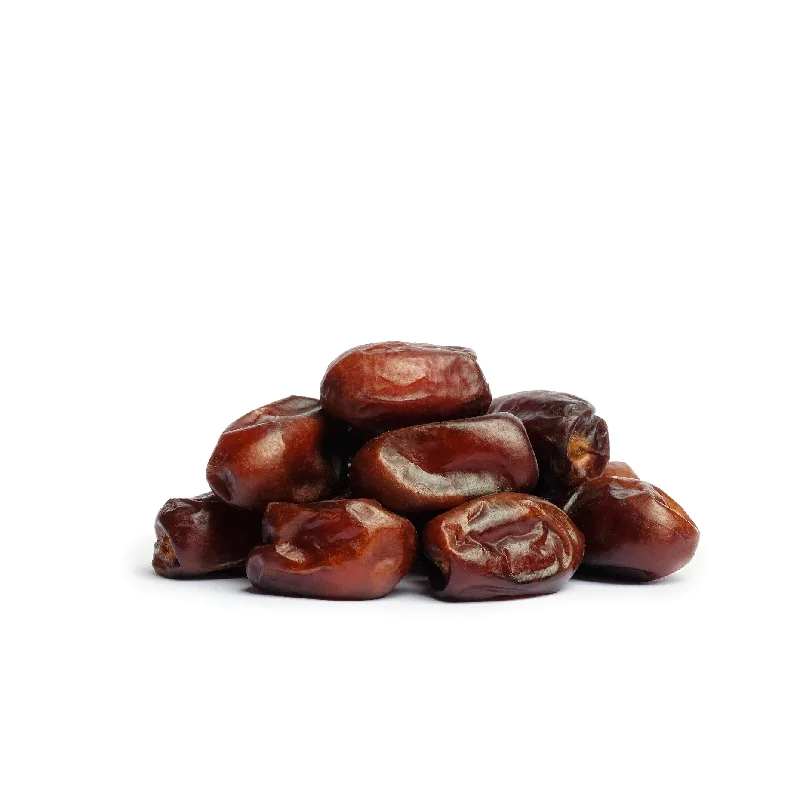
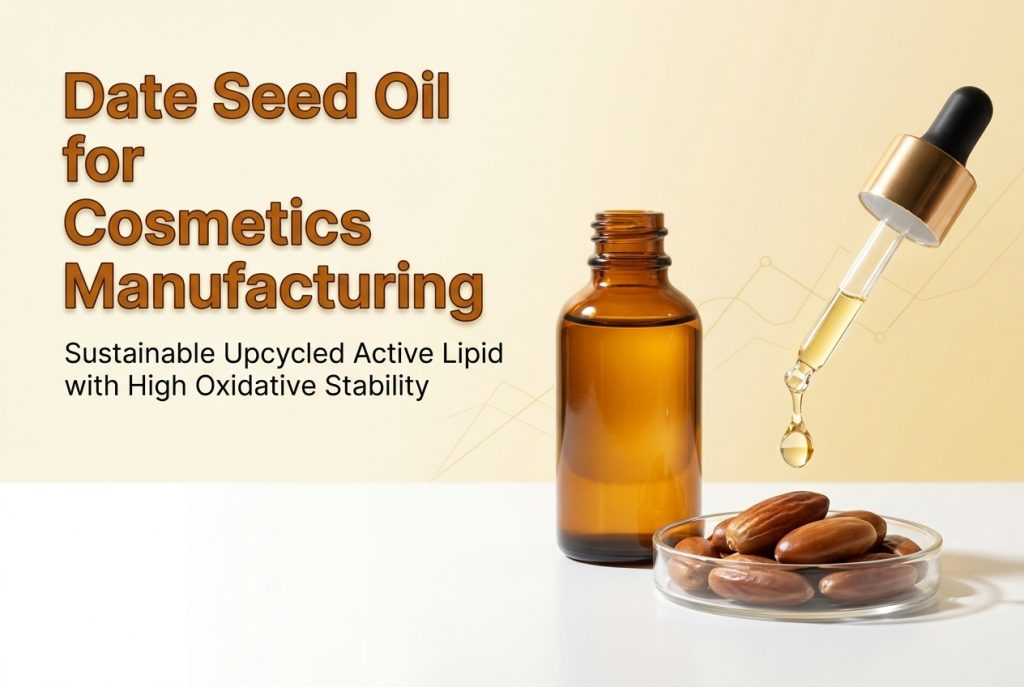
Sourcing date seed oil from Iran for cosmetics manufacturing provides R&D chemists and procurement professionals with a highly stable and sustainable active lipid. Extracted from the upcycled kernels of Phoenix dactylifera, this antioxidant-dense botanical ingredient offers a cost-effective and circular supply chain. Iran is one of the top date producers globally, ensuring consistent availability for bulk buyers. This guide covers biochemical profiling, extraction standards, formulation parameters, and bulk sourcing protocols.
What Is Date Seed Oil and Why Formulators Use It
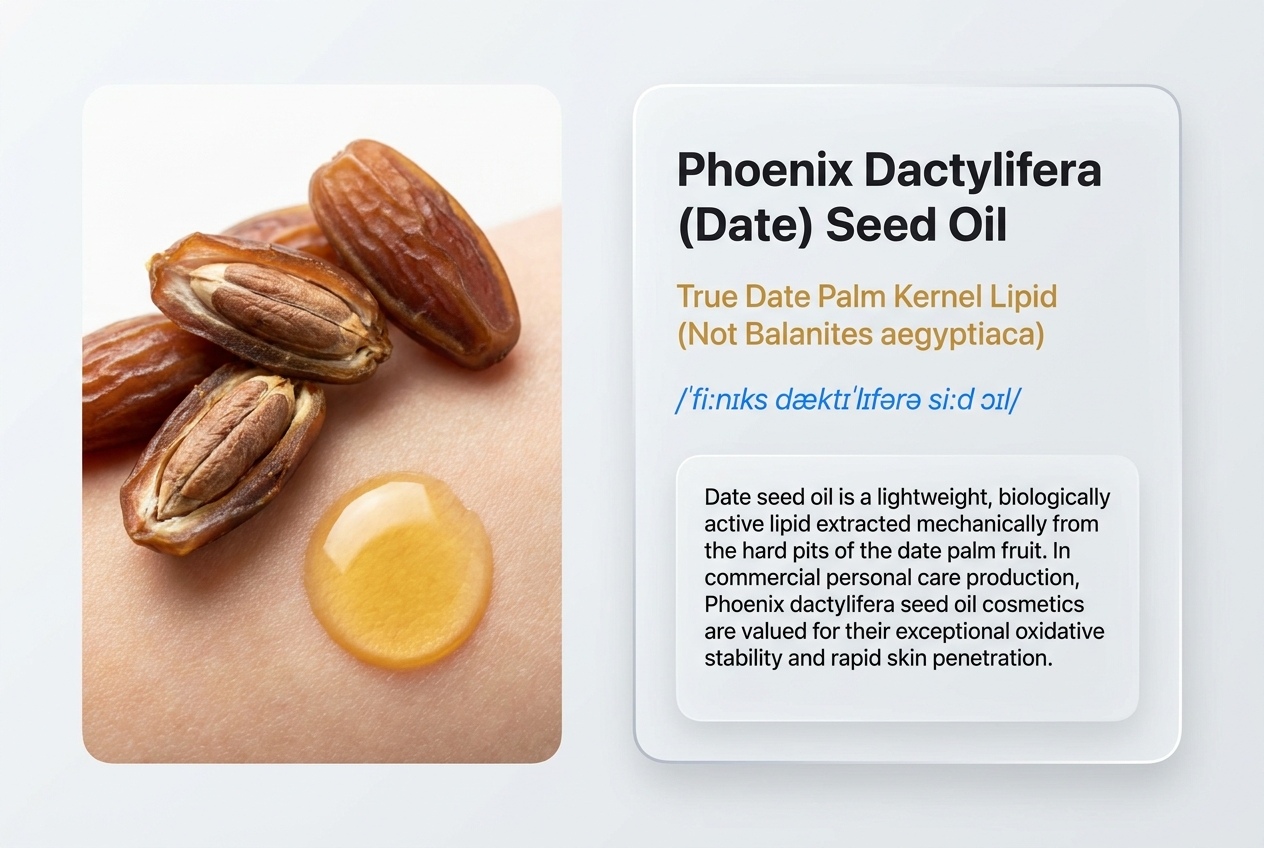
Date seed oil is a lightweight, biologically active lipid extracted mechanically from the hard pits of the date palm fruit. In commercial personal care production, Phoenix dactylifera seed oil cosmetics are valued for their exceptional oxidative stability and rapid skin penetration.
Formulators must clearly distinguish true date seed oil from “Desert Date” oil (Balanites aegyptiaca). While the two are frequently confused in INCI registrations, they originate from entirely different botanical families and possess distinct lipid profiles. True Phoenix dactylifera seed oil offers a light amber hue, a mild nutty aroma, and a remarkably lightweight skin-feel.
It has a low comedogenic rating of 1 to 2, making it highly suitable for facial applications without clogging pores. Moreover, this oil represents a practical approach to sustainability. Date seeds make up 10% to 15% of the total fruit mass. By utilizing these seeds, the industry turns agricultural food processing waste into high-value cosmetic actives. Consequently, formulators rely on this ingredient for concrete biochemical advantages. It provides profound emolliency without greasiness, acts as an excellent carrier for other oil-soluble actives, and strongly resists rancidity.
Fatty Acid and Antioxidant Profile
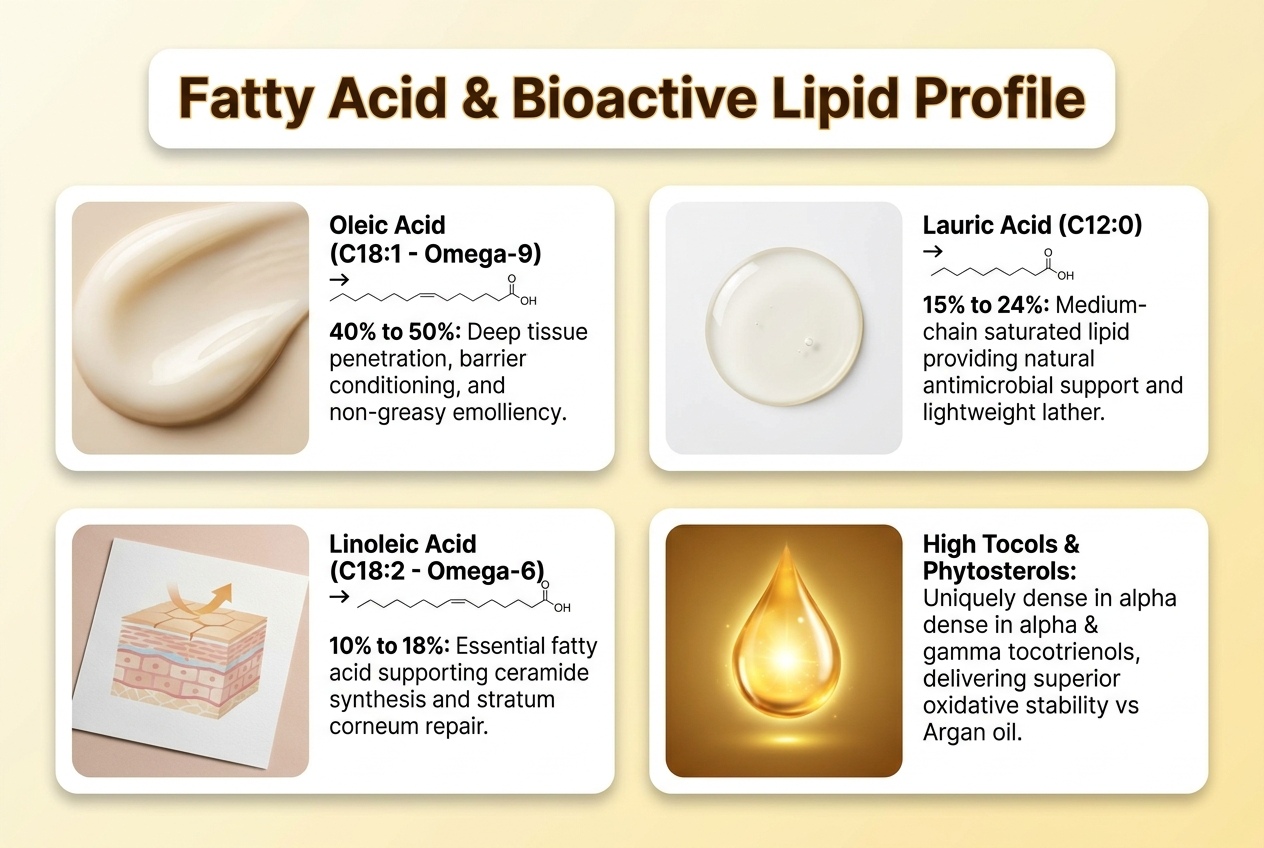
Understanding the date kernel oil fatty acid profile is critical for R&D chemists evaluating its compatibility with existing emulsion systems. The oil presents a highly balanced ratio of saturated to unsaturated fatty acids.
| Fatty Acid Component | Lipid Classification | Typical Range | Primary Cosmetic Function |
|---|---|---|---|
| Oleic Acid (C18:1) | Omega-9 Monounsaturated | 40% to 50% | Deep tissue penetration, barrier conditioning, emolliency |
| Lauric Acid (C12:0) | Medium-Chain Saturated | 15% to 24% | Antimicrobial properties, lightweight texture, lather enhancement |
| Linoleic Acid (C18:2) | Omega-6 Polyunsaturated | 10% to 18% | Ceramide synthesis support, epidermal barrier restoration |
| Palmitic Acid (C16:0) | Long-Chain Saturated | 9% to 12% | Emulsion stabilization, mild occlusion |
| Myristic Acid (C14:0) | Long-Chain Saturated | 8% to 12% | Cleansing support, skin conditioning |
| Stearic Acid (C18:0) | Long-Chain Saturated | 2% to 5% | Structural viscosity, protective film formation |
Beyond its foundational triglycerides, date seed oil is distinguished by its high non-saponifiable fraction. Specifically, the lipid matrix is uniquely dense in tocols, including alpha-tocopherol, alpha-tocotrienol, and gamma-tocopherol. Tocotrienols provide superior antioxidant defense compared to standard tocopherols. Alongside naturally occurring phytosterols and polyphenols, this bioactive profile grants the oil a highly favorable oxidative stability index. As a result, when compared to high-polyunsaturated oils like rosehip or borage, date seed oil resists lipid peroxidation far more effectively.
Skin and Hair Care Applications

The biological mechanisms of date seed oil make it a versatile functional ingredient across various cosmetic categories.
- Stratum Corneum Repair & TEWL Reduction: The precise balance of oleic and linoleic acids reinforces the intercorneocyte lipid matrix. This action effectively patches micro-fissures in the skin barrier, halting transepidermal water loss (TEWL) and maintaining cellular hydration.
- Environmental Defense & Photo-Aging Support: The high concentration of tocotrienols acts as a potent scavenger of reactive oxygen species (ROS) induced by UV and blue light exposure. Therefore, this mechanism helps protect structural proteins like collagen and elastin from oxidative degradation.
- Hair Follicle & Cuticle Conditioning: The notable lauric acid fraction allows the oil to penetrate the hair cortex effectively. Similar in mechanism to coconut oil, date seed oil has a much lighter molecular feel. It prevents intrinsic protein loss, smooths raised cuticular scales, and enhances light refraction for visible shine.
- Scalp Sebum Balance: The inherent antimicrobial and anti-inflammatory properties of lauric and myristic acids assist in soothing irritated or dandruff-prone scalps without leaving heavy residues.
How Iranian Date Seed Oil Is Extracted
The transition from agricultural byproduct to a premium cosmetic grade date seed oil Iran export requires highly controlled industrial processing. The structural density of the date pit presents a unique engineering challenge that mandates specialized extraction technology.
First, clean date pits are collected directly from commercial packing facilities. These seeds undergo rigorous mechanical washing to remove any residual fruit flesh. Next, the biomass is subjected to controlled dehydration, bringing the internal moisture content strictly below 10%. Because date seeds are exceptionally hard, heavy-duty mechanical expellers equipped with specialized crushing screws are required to release the lipid content.
Cold-Press vs Solvent Extraction
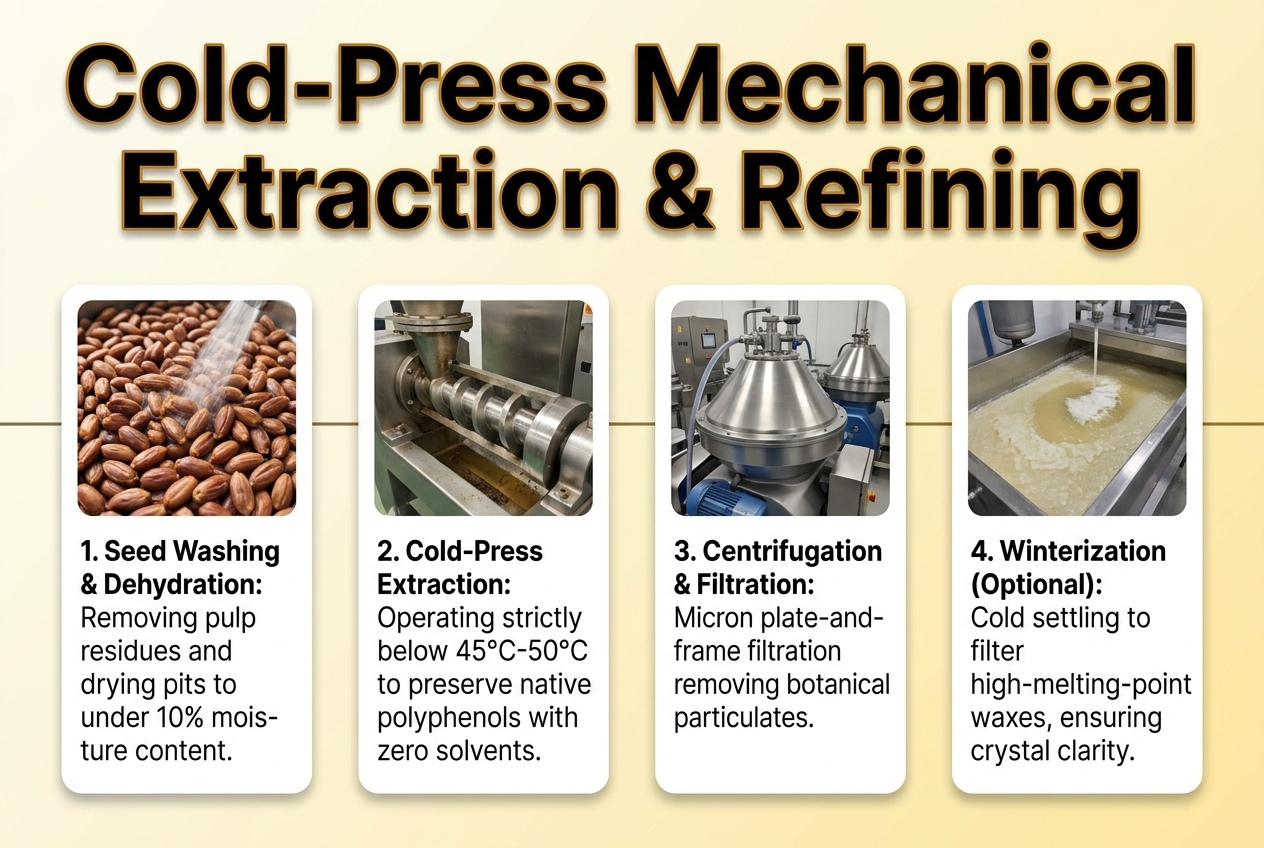
Procurement managers purchasing raw cosmetic oils wholesale must carefully specify the extraction methodology.
- Cold-Press Mechanical Extraction (Cosmetic Grade): In this method, the operating temperature is maintained strictly below 45°C to 50°C. While the yield is relatively low (approximately 6% to 8%), this process preserves native tocopherols, phytosterols, and delicate phenolic compounds. Crucially, it leaves no chemical solvent residues. Buyers should explicitly mandate “Cold-Pressed / Expeller-Pressed Cosmetic Grade” in supplier contracts.
- Solvent Extraction (Hexane/Industrial Grade): This method utilizes chemical solvents to extract a higher yield of 10% to 12%. However, the high-heat distillation required to evaporate the solvent strips the oil of its natural aroma and bioactive fractions. Consequently, this grade is generally reserved for industrial soap bases.
Refining and Filtration Steps
After extraction, the cold pressed date seed oil wholesale product undergoes mechanical purification.
- Primary Mechanical Filtration: The raw oil is processed through high-speed centrifugation and micron plate-and-frame filtration. This step eliminates solid botanical particulates and suspended moisture.
- Winterization / Cold Settling: This is an optional cooling stage where high-melting-point waxes precipitate and are filtered out. It prevents the oil from turning cloudy during cold-climate storage.
- Virgin vs. RDB: Formulators must choose between virgin oil, which retains a golden-yellow hue and maximum bioactivity, versus Refined, Deodorized, Bleached (RDB) oil. RDB grades are gently deodorized for formulations that are highly sensitive to natural scent or color shifts.
Cosmetic Formulation Uses
Integrating date seed oil into personal care products requires an understanding of its solubility. As a non-polar lipid, date pit oil cosmetic formulations require the ingredient to be added to the oil phase of an emulsion.
The oil is insoluble in water but highly miscible with other botanical oils and synthetic esters. For cold-process manufacturing, it can be blended directly. For hot-process emulsions, its high oxidative stability allows it to withstand standard heating parameters of 70°C to 75°C without degrading.
Moisturizers, Serums and Anti-Aging Products
When formulating a date seed oil anti aging serum, chemists leverage the oil’s high spreadability.
- Anhydrous Facial Oils & Radiance Serums: The recommended inclusion rate ranges from 10% to 100%. Date seed oil exhibits exceptional synergy with squalane and jojoba oils. Together, they create a rapidly absorbing anti-aging elixir that leaves a dry, satin finish.
- O/W and W/O Emulsions: The recommended inclusion rate is 2% to 8%. In creams and lotions, it contributes to velvety spreadability and a rich skin-feel without post-application tackiness.
- Eye Creams & Barrier Balms: The recommended inclusion rate is 3% to 10%. Here, the high concentration of phytosterols supports periorbital microcirculation and fortifies the delicate skin barrier around the eyes.
Hair and Lip Care Formulations
Beyond facial skincare, date seed oil is highly effective in structural hair conditioning and color cosmetics.
- Conditioning Hair Oils: The recommended inclusion rate is 5% to 30%. It formulates exceptionally well in silicone-free hair oils, delivering vital heat protection without weighing down fine hair textures.
- Rinse-Off Masks & Shampoos: The recommended inclusion rate is 0.5% to 3%. In surfactant-heavy systems, it acts as a re-fatting agent, cushioning the harshness of anionic surfactants and improving wet-combing friction.
- Lip Balms & Lipsticks: The recommended inclusion rate is 5% to 20%. It functions as an effective pigment dispersant and emollient, preventing formula bleeding and creating a flexible occlusive film.
Why Source Date Seed Oil from Iran
Identifying a reliable bulk date seed oil supplier requires evaluating macroeconomic agricultural data. Iran consistently ranks among the top three date producers globally, harvesting over 1.3 million metric tons of dates annually.
This massive agricultural output is concentrated across major southern cultivation hubs. Because Iran possesses an immense industrial date processing sector, it generates an uninterrupted, localized supply of pits. This centralization allows dedicated extraction facilities to operate at maximum efficiency.
Byproduct Supply Chain from Date Processing
Procuring upcycled cosmetic oils Iran offers a distinct circular economy advantage. Because the seeds come from the same packing lines that grade and pack Iranian dates for export, seed supply follows the main harvest calendar.
- True Upcycling Sustainability: Date seed oil extraction requires zero additional land clearing or water irrigation. It converts an agro-industrial waste stream into a premium cosmetic active.
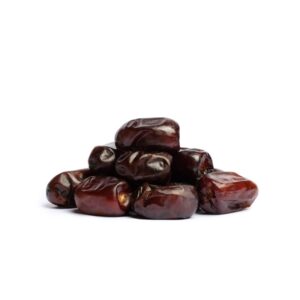
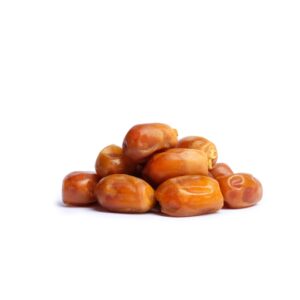
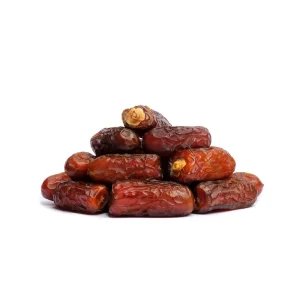
- Cultivar Diversity: Iranian suppliers utilize prominent commercial date varieties like Kabkab, Mazafati, and Sayer. Reputable industrial processors blend specific batches to ensure tight batch-to-batch analytical conformity for international buyers.
Cost and Availability Advantages
When analyzing date seed oil vs argan oil from a procurement perspective, the Iranian supply chain offers compelling economic advantages.
North African suppliers of specialty oils often command high price premiums due to smaller-scale crushing capacities. In contrast, Iran’s industrial scale yields significant cost efficiencies per kilogram. Furthermore, extensive cold storage infrastructure ensures a continuous processing schedule for the seeds, completely insulating buyers from seasonal raw material shortages.
Quality Specs and Certifications to Request
To ensure formulation safety, buyers must request comprehensive documentation. Validating date seed oil COA and INCI data is the first step in establishing supplier credibility.
| Specification Parameter | Acceptable Cosmetic Threshold | Formulator Relevance |
|---|---|---|
| Appearance | Clear, pale yellow to golden amber liquid | Indicates proper mechanical filtration |
| Specific Gravity (20°C) | 0.910 to 0.930 | Required for precise volumetric formulations |
| Refractive Index (20°C) | 1.460 to 1.480 | Confirms lipid purity and authenticity |
| Acid Value | < 1.0 to 2.0 mg KOH/g | Low values indicate freshness and proper seed storage |
| Peroxide Value | < 5.0 to 10.0 meq O2/kg | Confirms the oil is freshly pressed and not oxidized |
| Saponification Value | 180 to 210 mg KOH/g | Essential for emulsifier calculations |
| Heavy Metals (Total) | < 10 ppm (Pb, As, Cd, Hg) | Mandatory toxicological safety compliance |
| Microbiology | < 100 CFU/g bacteria; < 10 CFU/g yeast | Ensures absence of pathogenic contamination |
According to peer-reviewed data from the National Center for Biotechnology Information, date seeds possess high oxidative stability that is critical for extending the shelf life of commercial cosmetic products.
COA and INCI Documentation
Regulatory compliance dictates a strict paper trail for international cosmetic dossiers.
- Standard INCI Name: The globally recognized identifier is Phoenix Dactylifera (Date) Seed Oil. Buyers must reject mislabeled documentation citing Balanites.
- CAS Number: The standard Chemical Abstracts Service registry number is 93165-34-5.
- Mandatory Batch Documents: Every bulk shipment must be accompanied by a lot-specific Certificate of Analysis (COA), a Gas Chromatography (GC-MS) report, a Technical Data Sheet (TDS), and a Safety Data Sheet (SDS/MSDS).
Certifications (ISO, Halal, Organic)
To facilitate global market entry, reputable extraction facilities maintain internationally recognized standards.
- ISO Standards: High-tier suppliers manufacture under ISO 9001 and ISO 22716 (GMP for Cosmetics), ensuring rigorous contamination control.
- Halal Certification: This is an essential regulatory requirement for brands targeting the MENA and ASEAN personal care markets.
- Organic / Eco Compliance: Many suppliers meet COSMOS and Ecocert compatibility criteria. This verifies that no synthetic chemical solvents were utilized during production.
Packaging, MOQ and Bulk Ordering Options
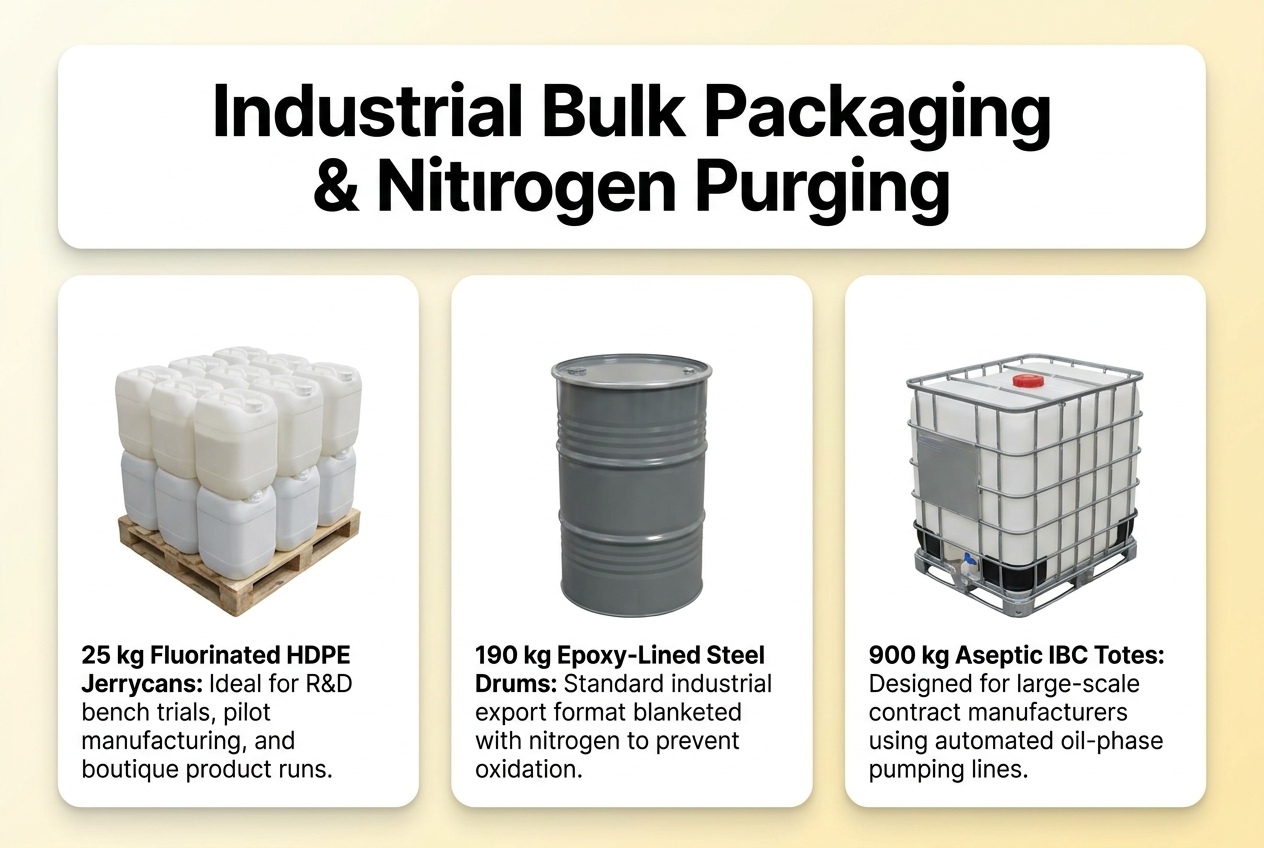
Securing a reliable date seed oil MOQ and ensuring proper transit conditions are vital for maintaining oil integrity.
- Packaging Options: Food-grade fluorinated HDPE jerrycans (25 kg) are standard for pilot trials. Epoxy-lined steel drums (190 kg) serve as the standard industrial container, while Intermediate Bulk Containers (900 kg) are utilized for high-volume contract manufacturers.
- Nitrogen Blanketing: It is an absolute necessity to require nitrogen purging in all containers prior to sealing. Removing atmospheric oxygen prevents oxidative degradation during lengthy transit.
- Typical MOQs: Standard commercial minimum order quantities range from 25 kg to 100 kg. Buyers can access discounted tier pricing by ordering a full pallet.
- Storage & Shelf Life: Upon arrival, the oil should be stored at 15°C to 25°C, away from direct sunlight. When maintained in unopened, nitrogen-purged containers, the typical shelf life reliably reaches 24 months.
How to Request Samples and Place a Bulk Order
Establishing a secure supply chain requires a methodical commercial workflow.
- Step 1: Sample Requisition: Begin by requesting a 100 ml to 500 ml representative sample. Formulators must use this sample for R&D bench testing and preservative challenge testing.
- Step 2: Specification Agreement: Finalize the target quality parameters in writing. Negotiate the Incoterms and confirm the volume pricing tiers on the Proforma Invoice.
- Step 3: Quality Pre-Shipment Inspection (PSI): To mitigate import risk, arrange for a third-party quality inspection before the cargo leaves the extraction facility.
- Step 4: Logistics & Export Documentation: Coordinate with the supplier to generate the mandatory export paperwork. Ensure the shipment is correctly declared under the international HS Code 1515.90.
FAQ
What is the comedogenic rating of date seed oil, and will it cause breakouts in facial formulations?
Date seed oil has a low comedogenic rating of 1 to 2, making it non-clogging and well-tolerated across acne-prone skin types due to its balanced oleic and linoleic acid ratio. It absorbs rapidly into the epidermis without leaving a heavy barrier that traps sebum.
What is the difference between Phoenix dactylifera seed oil and Balanites aegyptiaca (Desert Date) oil?
Phoenix dactylifera is true Date Palm seed oil derived as a byproduct of the edible date fruit. Conversely, Balanites aegyptiaca (Desert Date) is a wild-harvested thorny desert tree from Africa with a completely distinct fatty acid profile and separate INCI identity.
How does the oxidative stability and shelf life of date seed oil compare to argan and marula oil?
Date seed oil exhibits exceptionally high oxidative stability, outperforming many unsaturated plant oils due to its natural balance of saturated fatty acids and high tocotrienol concentrations. This innate resistance to rancidity provides a typical shelf life of 18 to 24 months.
What is the official INCI name and customs HS code for importing Iranian date seed oil?
The globally recognized INCI name is Phoenix Dactylifera (Date) Seed Oil (CAS No. 93165-34-5). The standard international Harmonized System customs tariff code used for export and import declarations is HS 1515.90.
Conclusion
Sourcing cold-pressed date seed oil from Iran provides cosmetic manufacturers with a highly stable, bio-active, and economically advantageous raw material. By utilizing the Phoenix dactylifera seed, brands can formulate high-performance skincare and haircare products that align with circular economy principles. To ensure seamless procurement, buyers must mandate strict technical parameters, specifically requiring nitrogen-blanketed, cold-pressed cosmetic grades backed by comprehensive COA, GC-MS, and INCI documentation.
Related Products