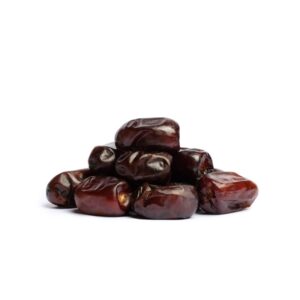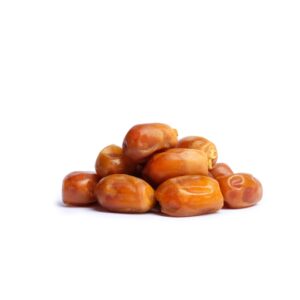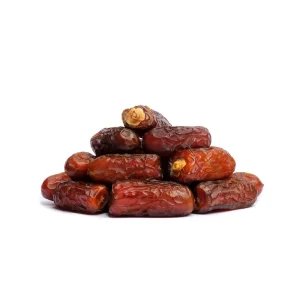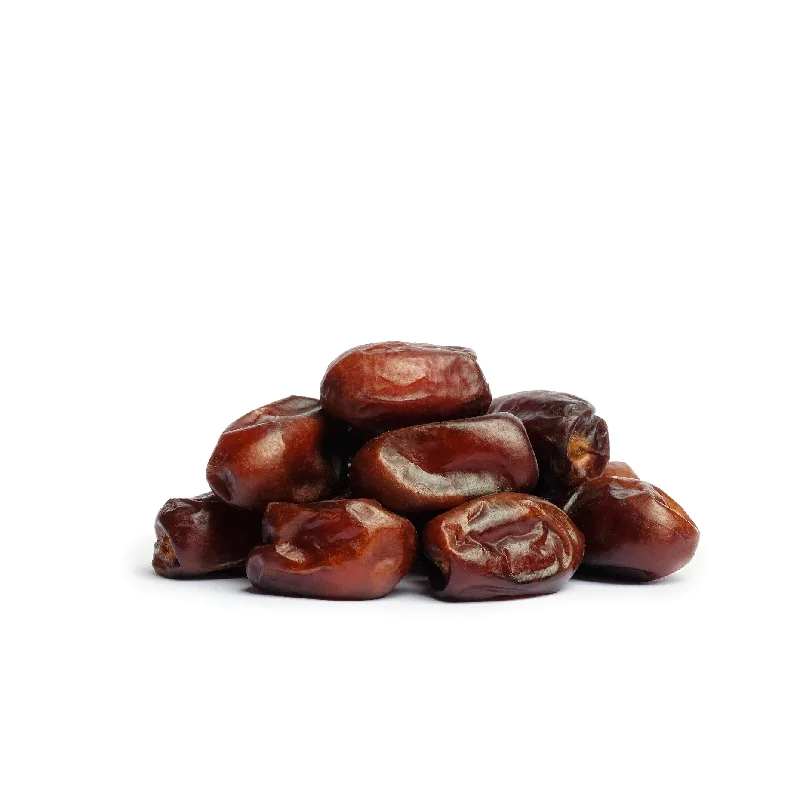
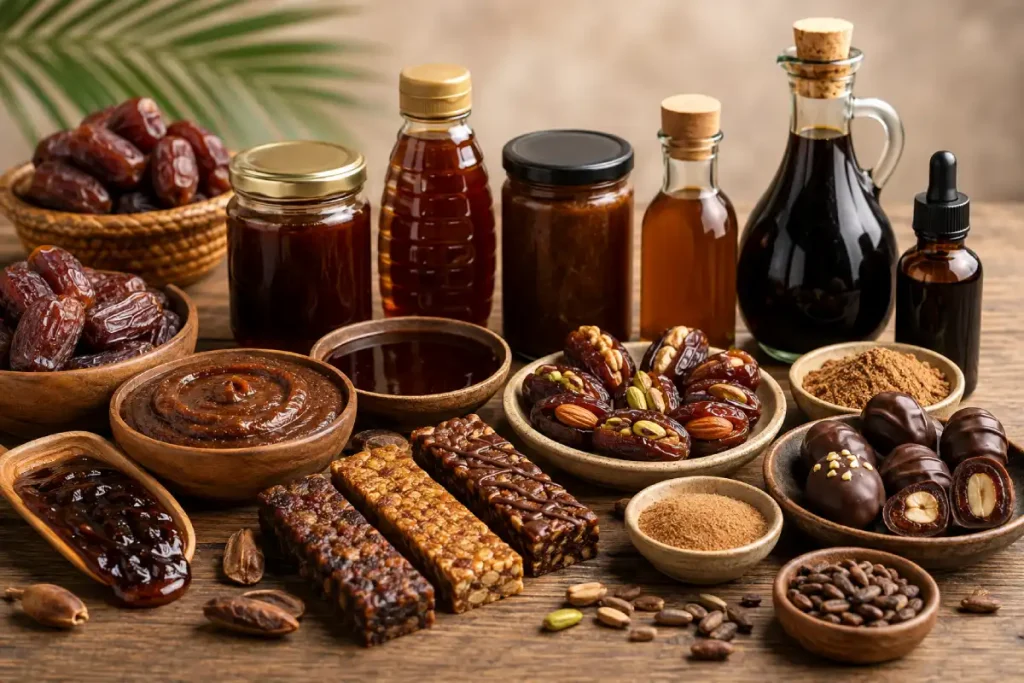
Rising global demand for natural sweeteners and clean-label industrial ingredients has expanded the commercial scope of date processing beyond whole fruit sales. This analysis evaluates market metrics, processing advantages, and global trade viability for the best Value-Added Date Products targeting high-margin export markets. By shifting from unprocessed raw fruit to high-purity derivatives, exporters can minimize harvest waste, extend product shelf stability, and reach growing international buyer segments.
Why Value-Added Date Products Are Gaining Global Demand
Value-added date processing transforms raw, low-grade, or surplus whole dates into shelf-stable, higher-value industrial ingredients and consumer products. The global date market continues to benefit from growing demand for natural ingredients and plant-based sweeteners.
Key commercial drivers include:
- Industrial Versatility: Wide usage across bakery, dairy, beverage, and confectionery processing.
- Extended Shelf Life: Properly processed and packaged products can offer improved stability during long-haul transportation.
- Higher B2B Value: Converting processing-grade dates into standardized products can maximize the commercial value of the harvest.
- Reduced Waste: Processing allows exporters to utilize dates that may not meet the visual standards required for premium whole-fruit exports.
- Product Diversification: Exporters can serve multiple markets instead of relying solely on whole-date sales.
Key takeaway: Value-added processing allows date exporters to move from commodity-based sales toward standardized ingredients and premium consumer products with broader commercial applications.
1. Date Paste and Purée
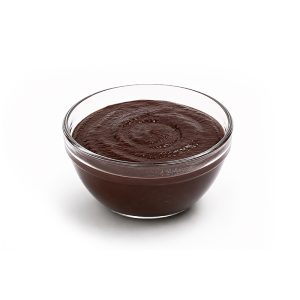
Date paste is a thick, homogeneous product produced by cleaning, steaming or softening, pitting, and finely grinding dates. Common varieties used for processing include Deglet Noor, Sayer, and Zahidi, although the most suitable variety depends on the desired specifications and application.
Date paste is widely used in:
- Bakery fillings
- Snack bars
- Cookies and biscuits
- Confectionery
- Cereals and granola
- Energy snacks
- Fruit fillings
Modern date processing technology can support continuous processing, controlled heating, and automated filling into industrial packaging such as bag-in-box containers and food-grade drums.
The combination of natural sweetness, binding properties, and moisture retention makes date paste one of the most commercially established Value-Added Date Products for B2B export.
2. Date Syrup
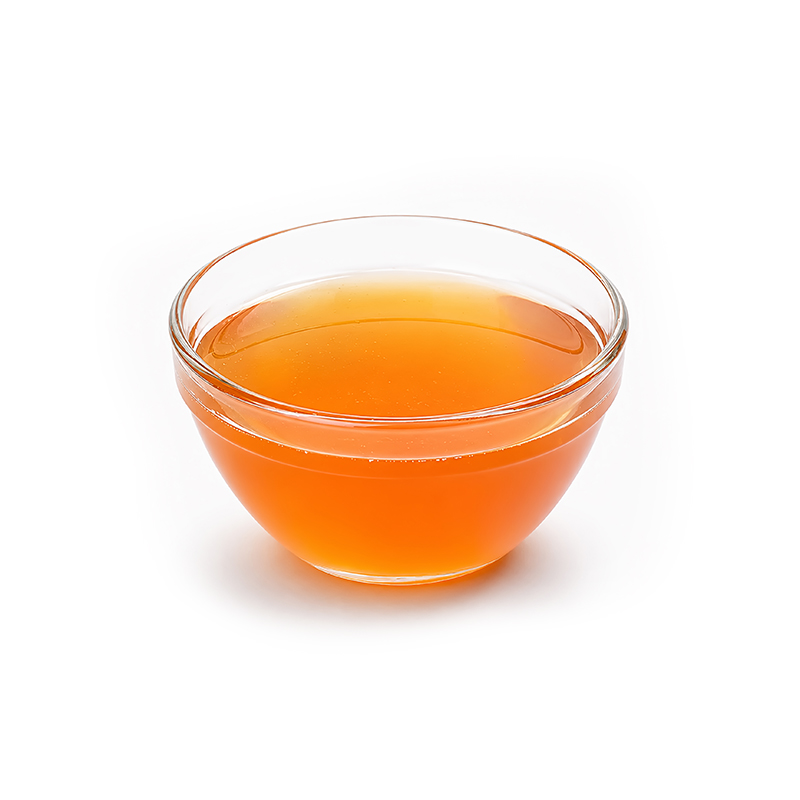
Date syrup, also known as date honey or dibs in some markets, is a concentrated liquid sweetener produced through extraction, filtration, and evaporation of dates.
Commercial specifications may include:
- Brix level
- Viscosity
- Color
- Acidity
- Flavor profile
- Microbiological requirements
Date syrup is used in:
- Bakery products
- Beverages
- Dairy products
- Desserts
- Sauces
- Breakfast products
- Natural sweetener formulations
Exporters can supply date syrup in retail bottles and jars or industrial packaging such as drums and IBC containers.
Its versatility and suitability for both B2B and retail applications make date syrup one of the strongest Value-Added Date Products for international markets.
3. Date Powder and Date Sugar
Date sugar is produced by drying dates and milling them into fine granules, while date powder can be manufactured through different drying and milling processes depending on the desired characteristics.
Potential applications include:
- Bakery mixes
- Breakfast cereals
- Granola
- Dry-mix products
- Confectionery
- Snack products
- Plant-based foods
- Natural sweetener blends
Unlike conventional refined sugar, some forms of date sugar retain components of the original fruit, including dietary fiber and naturally occurring minerals. However, the nutritional characteristics depend on the processing method and should be verified through product-specific laboratory analysis.
Proper control of moisture, water activity, particle size, and packaging is essential to maintain product quality and prevent caking during international transportation.
Growing interest in natural and fruit-based ingredients makes date powder and date sugar promising Value-Added Date Products for European, North American, and other international markets.
4. Pitted and Stuffed Dates
Pitted dates are whole dates from which the seed has been mechanically removed. Stuffed dates take this concept further by filling the fruit with ingredients such as:
- Almonds
- Pistachios
- Walnuts
- Hazelnuts
- Candied citrus
- Chocolate
- Other confectionery fillings
Premium stuffed dates can target gourmet retail, hospitality, specialty food stores, and gifting markets.
High-quality packaging is particularly important for this category. Individual packaging, premium gift boxes, protective trays, and suitable atmosphere-control systems can help preserve appearance and quality during transportation.
Seasonal demand can also create opportunities around Ramadan, Eid, Christmas, New Year, weddings, and corporate gifting.
5. Date Bars and Energy Snacks
Date-based energy bars typically use date paste as a binding and sweetening component combined with ingredients such as:
- Nuts
- Seeds
- Oats
- Plant proteins
- Cocoa
- Coconut
- Dried fruits
- Functional ingredients
The growing demand for convenient, plant-based, and clean-label snacks has created opportunities for date-based bars in retail and private-label markets.
Exporters can work with international brands and distributors to produce private-label snack products for:
- Supermarkets
- Health-food stores
- Sports nutrition retailers
- Online stores
- Specialty food brands
Date bars can provide greater value per kilogram than bulk raw dates, although formulation, packaging, labeling, shelf-life validation, and regulatory compliance require additional investment.
6. Date Vinegar
Date vinegar is produced through fermentation, generally involving an initial alcoholic fermentation followed by acetic fermentation.
The resulting product has a distinctive flavor and can be positioned as a specialty alternative to conventional vinegar products.
Potential applications include:
- Salad dressings
- Marinades
- Sauces
- Culinary products
- Specialty retail
- Food-service applications
For export markets, producers should control acidity, microbiological quality, fermentation parameters, packaging, and labeling.
The product’s acidic nature can support ambient storage when manufactured and packaged according to appropriate food-safety standards.
7. Date Molasses
Date molasses is a concentrated date product with a dark color, rich flavor, and high viscosity. Compared with lighter and more clarified date syrups, molasses can have a more intense flavor and greater concentration of date solids.
It can be used in:
- Industrial bakery
- Sauces
- Desserts
- Confectionery
- Marinades
- Beverage formulations
- Food manufacturing
Bulk date molasses can be attractive for B2B exporters targeting food manufacturers in the Middle East, Central Asia, Eastern Europe, and other markets where date-based sweeteners are commercially accepted.
Its relatively simple application across multiple food categories makes it another practical Value-Added Date Product.
8. Chocolate-Coated Dates
Chocolate-coated dates combine whole pitted or stuffed dates with a layer of chocolate. Common options include:
- Dark chocolate
- Milk chocolate
- White chocolate
- Ruby chocolate
- Nut-coated chocolate
- Filled chocolate dates
Production requires controlled chocolate tempering, coating or enrobing, and cooling.
Temperature and humidity control are important during storage and transportation because unsuitable conditions can cause chocolate quality defects such as fat or sugar bloom.
Chocolate-coated dates are particularly suitable for:
- Premium retail
- Gourmet stores
- Duty-free outlets
- Hotels
- Seasonal gifting
- Corporate gifts
- Private-label confectionery
Premium presentation can significantly increase the perceived value of the final product.
9. Date Kernel Coffee and Date Seed Powder
Date seeds, also called kernels, represent a potentially valuable by-product of date processing. Cleaned seeds can be dried, roasted, and ground for use in beverage products and food formulations.
Roasted date seed powder is commonly marketed as a caffeine-free coffee alternative, although its flavor and functional characteristics differ from conventional coffee.
Potential applications include:
- Roasted beverage powders
- Caffeine-free beverage blends
- Functional food products
- Bakery formulations
- Ingredient blends
Using date seeds in this way supports a circular-economy approach by creating commercial value from a by-product that would otherwise have limited economic value.
For export, manufacturers should establish consistent specifications for roasting level, particle size, moisture, microbiological quality, and packaging.
10. Organic and Clean-Label Date Extracts
Date extracts represent a more specialized opportunity for exporters targeting functional food, beverage, nutraceutical, and ingredient markets.
Depending on the production method, extracts may be supplied as concentrated liquids or dried powders.
International buyers may require detailed specifications covering:
- Source and date variety
- Extraction method
- Solubility
- Standardized compounds
- Microbiological quality
- Heavy metals
- Pesticide residues
- Traceability
- Organic certification
Organic certification can help exporters access premium markets, but the use of organic raw materials alone does not automatically make a finished product certified organic. Certification requirements must be met throughout the relevant supply chain.
Because extracts require greater technical control, laboratory testing, documentation, and regulatory compliance, they can offer attractive opportunities for specialized exporters.
How to Evaluate Which Date Product Fits Your Export Market
Selecting the right date derivative requires more than comparing selling prices. Exporters should consider the target market, buyer requirements, available raw materials, processing capabilities, logistics, certifications, and investment requirements.
Key factors to evaluate
- Target Market: Determine whether buyers are looking for bulk ingredients, retail products, organic foods, premium confectionery, or functional ingredients.
- Raw Material Availability: Assess which date varieties and grades are consistently available.
- Processing Investment: Compare equipment, energy, labor, maintenance, and production-capacity requirements.
- Shelf Life: Evaluate moisture, water activity, packaging, temperature sensitivity, and storage conditions.
- Logistics: Consider whether the product can be shipped under ambient conditions or requires temperature control.
- Certifications: Identify food-safety, organic, Halal, Kosher, or other certifications requested by target buyers.
- Buyer Specifications: Confirm requirements for Brix, moisture, particle size, color, viscosity, microbiological limits, and packaging.
Export Comparison of Value-Added Date Products
| Product Category | Primary Target Market | Logistics Profile | Commercial Potential | Key Considerations |
|---|---|---|---|---|
| Date Paste | B2B bakery, snack, confectionery | Generally ambient | High-volume | Moisture, texture, microbiological quality |
| Date Syrup | Beverage, bakery, dairy, retail | Generally ambient | High | Brix, viscosity, color, packaging |
| Date Powder & Sugar | Food manufacturers, dry-mix producers | Low-moisture ambient | High | Moisture, water activity, caking |
| Pitted & Stuffed Dates | Retail, hospitality, gifting | Ambient or controlled conditions | High | Appearance, filling, packaging |
| Date Bars | Retail and private-label brands | Product dependent | High | Formulation, labeling, shelf life |
| Date Vinegar | Specialty food and retail | Generally ambient | Medium to High | Acidity and fermentation control |
| Date Molasses | Bakeries and food manufacturers | Generally ambient | Medium to High | Brix, consistency, flavor |
| Chocolate-Coated Dates | Premium retail and gifting | Temperature sensitive | High | Chocolate stability and packaging |
| Date Seed Powder | Beverage and food manufacturers | Dry ambient | Niche / High potential | Roasting, particle size, safety |
| Date Extracts | Functional food and ingredient companies | Product dependent | Very High potential | Standardization, testing, certification |
Which Value-Added Date Products Have the Highest Export Potential?
The best product depends on the exporter’s raw materials, processing capabilities, target market, and available investment.
Best for high-volume B2B exports
Date paste and date syrup are among the most practical choices because they have applications across several food industries and can be supplied in bulk formats.
Best for premium retail
Stuffed dates and chocolate-coated dates can achieve higher selling prices when combined with premium ingredients, attractive packaging, and strong positioning.
Best for dry ingredients
Date powder and date sugar can provide access to bakery, cereal, dry-mix, and natural sweetener markets.
Best for circular-economy opportunities
Date seed powder and date seed coffee allow processors to create additional value from date-processing by-products.
Best for specialized markets
Organic and standardized date extracts can target premium functional food and ingredient markets but generally require greater technical expertise and regulatory investment.
FAQ: Value-Added Date Products for Export
What is the shelf life of processed date products for long-distance export?
Shelf life varies significantly by product, formulation, water activity, packaging, processing method, and storage conditions. Many commercially processed date products can achieve long shelf lives under appropriate conditions, but the exact shelf life should be established through product-specific stability and shelf-life testing.
Which certifications are required for exporting date derivatives to Western markets?
Requirements depend on the destination country, product category, and buyer. Common food-safety systems include HACCP, ISO 22000, FSSC 22000, and BRCGS. Depending on the market and product, buyers may also request Halal, Kosher, or organic certification.
Can low-grade or surplus dates be used to manufacture value-added products?
Yes. Dates that are unsuitable for premium whole-fruit export can often be processed into products such as date paste, syrup, molasses, vinegar, and certain other ingredients, provided the raw material meets applicable food-safety and quality requirements.
What is the main advantage of exporting date syrup instead of whole dates?
Date syrup can reduce the importance of visual fruit grading, create a standardized ingredient for food manufacturers, and offer different packaging and market opportunities. It can also help processors utilize fruit that may not qualify for premium whole-date sales.
Which value-added date product is best for a new exporter?
For many new exporters, date paste and date syrup are practical starting points because they have broad B2B applications. Businesses with stronger branding, packaging, and retail capabilities may also consider stuffed dates, chocolate-coated dates, and date-based snack products.
Conclusion
Transitioning from raw whole-fruit exports to Value-Added Date Products can help agricultural suppliers diversify their revenue streams, improve harvest utilization, and access new international markets.
Date paste, date syrup, date powder, stuffed dates, energy bars, vinegar, molasses, chocolate-coated dates, date seed products, and specialized extracts each serve different buyer segments and require different levels of investment.
The most suitable product depends on raw material availability, processing technology, production costs, shelf life, logistics, certifications, regulatory requirements, and target-market demand.
For exporters with reliable access to Iranian dates, investing in standardized value-added products can create a more diversified export portfolio and reduce dependence on seasonal whole-date sales.
Related Products