Malayer raisins are a core raw material for the international food industry, supplying commercial bakeries, cereal brands, and dried fruit importers worldwide. They come mainly from the vineyards of Hamedan Province in western Iran. As a result, buyers get high natural brix levels, a clean berry structure, and reliable baking performance. For commercial procurement managers, sourcing directly from this agricultural center provides access to calibrated sultana and golden varieties at competitive wholesale prices.
What Are Malayer Raisins?
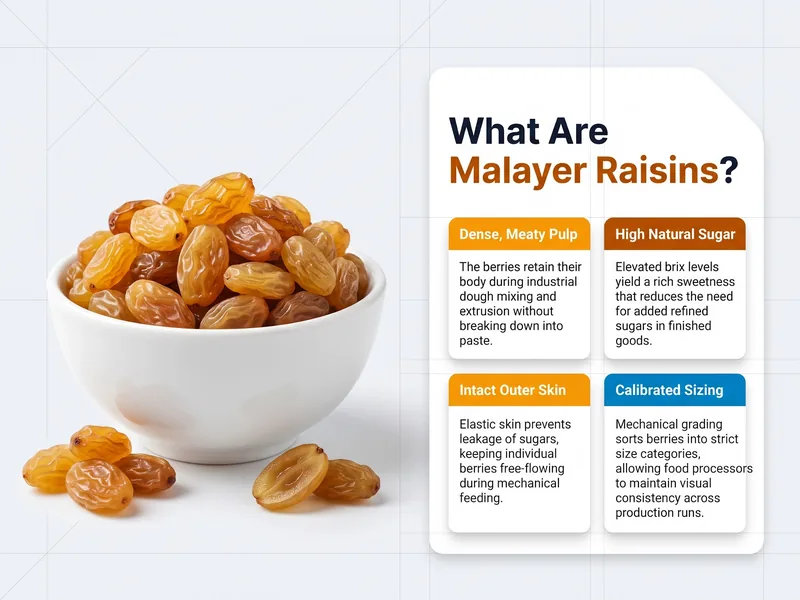
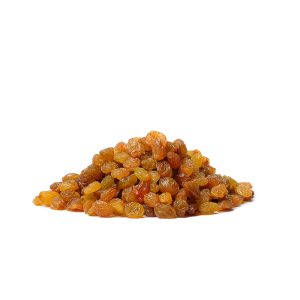
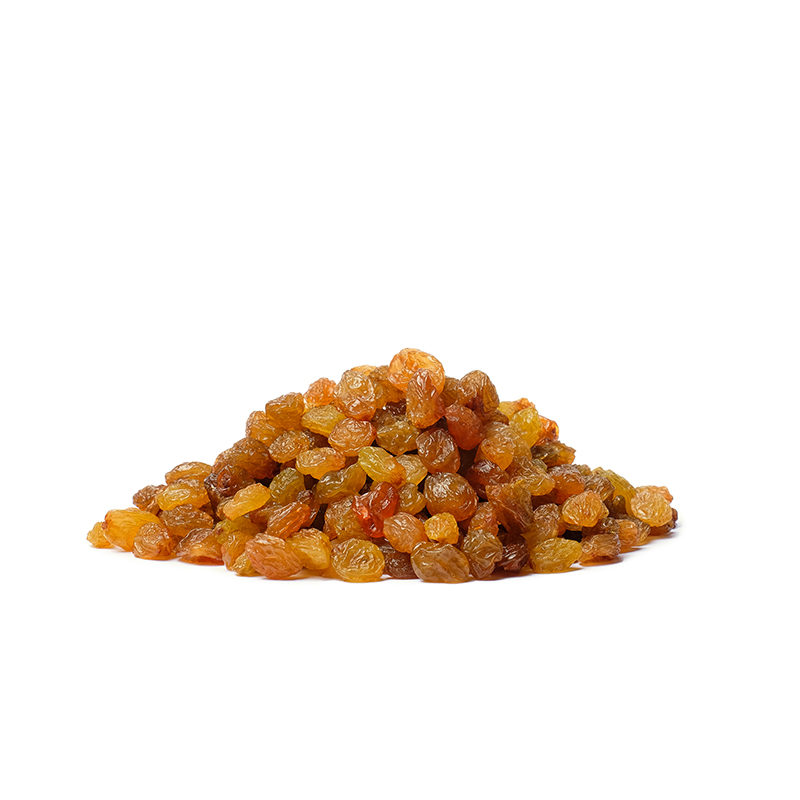
Malayer raisins are dried seedless grapes from the Vitis vinifera vine, grown in the Zagros mountain region of Iran. They have a fleshy texture, balanced caramel sweetness, and uniform berry size. Known commercially for their amber, light brown, and translucent gold shades, they represent a distinct category within the global dried vine fruit trade.
The standard commercial characteristics of Malayer raisins include:
- Dense, Meaty Pulp: The berries retain their body during industrial dough mixing and extrusion without breaking down into paste.
- High Natural Sugar: Elevated brix levels yield a rich sweetness that reduces the need for added refined sugars in finished goods.
- Intact Outer Skin: Elastic skin prevents leakage of sugars, keeping individual berries free-flowing during mechanical feeding.
- Calibrated Sizing: Mechanical grading sorts berries into strict size categories, allowing food processors to maintain visual consistency across production runs.
Why Malayer Leads Global Raisin Production and Exports
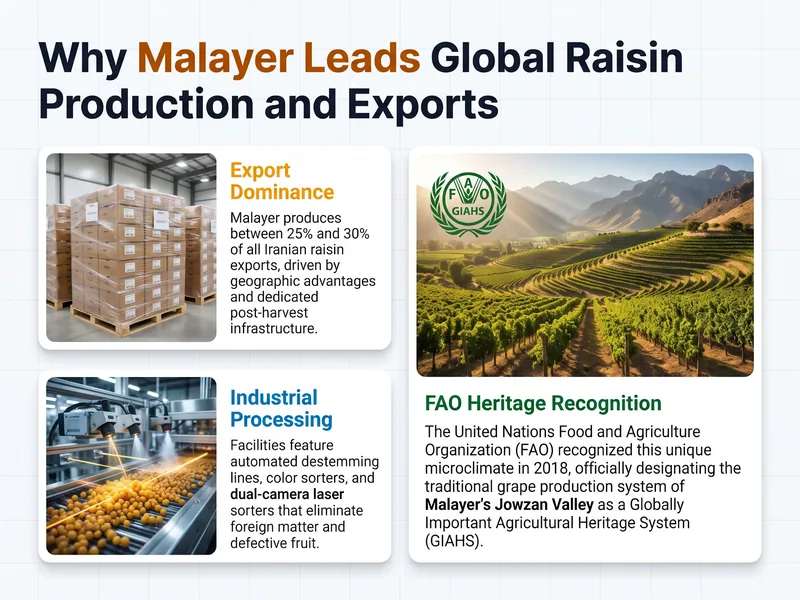
Malayer accounts for an estimated 25% to 30% of all Iranian raisin exports, driven by geographic advantages and dedicated post-harvest infrastructure. Thanks to its elevation, the region has hot, arid summer days and sharp nighttime temperature drops. This forces grapevines to concentrate sugars inside the fruit while it also limits fungal decay during harvest.
In 2018, the United Nations Food and Agriculture Organization (FAO) recognized this unique microclimate. It designated the traditional grape production system of Malayer’s Jowzan Valley as a Globally Important Agricultural Heritage System (GIAHS). According to the FAO, local growers have maintained a sustainable, high-yield viticulture network perfectly suited to the mountainous terrain for centuries.
Beyond raw agricultural yield, Malayer hosts the highest concentration of specialized fruit processing plants in Iran. These facilities feature automated destemming lines, color sorters, and dual-camera laser sorters that eliminate foreign matter and defective fruit. For this reason, importers looking for certified export-quality Malayer raisins often work with direct processors such as Amin Farms. This lets them secure lab-tested inventory, trace shipments to verified regional growers, and check compliance with international pesticide and microbiological limits.
How Malayer Raisins Are Produced and Processed
Producers combine traditional field drying with automated factory finishing to lower moisture and remove defects.
The primary drying methods used in the vineyards include:
- Alkaline Cold Dip (Tejab): Harvested grape clusters are dipped in a cold solution of food-grade potassium carbonate and vegetable oil. This treatment creates microscopic cracks in the grape skin, speeding up natural moisture loss and preserving a lighter, amber color under the sun.
- Sulfur Fumigation: For golden grades, workers expose dipped bunches to burning sulfur smoke within enclosed curing rooms before drying. This process stops oxidation and fixes a bright yellow-gold color throughout the berry pulp.
- Sun and Shade Drying: Workers then spread the dipped grapes on clean outdoor drying surfaces or hang them in ventilated sheds until moisture levels drop to roughly 15%.
Once dry, raw fruit moves to industrial processing plants for cleaning and calibration. High-speed cap-stemmers strip off stems and pedicels, after which the fruit passes through multi-stage wash flumes to remove orchard dust. Heated air tunnels stabilize internal moisture within the standard export window of 13.5% to 16%.
Before packaging, processors apply a light mist of food-grade mineral oil to keep the berries from sticking during maritime shipping. The raisins then run across vibratory screens, metal detectors, and optical laser sorters that identify and remove discolored fruit, stones, and foreign objects.
Types of Malayer Raisins Available for Export
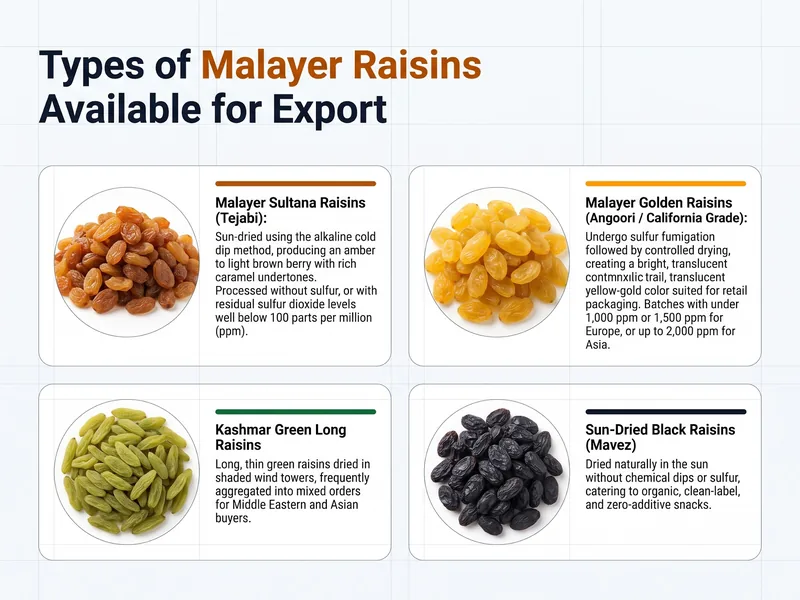
Suppliers in the region categorize their exports by processing method, color grade, and chemical profile to match the exact requirements of different regional markets.
Malayer Sultana Raisins (Tejabi)
Malayer sultana raisins are sun-dried using the alkaline cold dip method, producing an amber to light brown berry with rich caramel undertones. This is the volume driver of the region, accounting for the largest share of industrial orders.
- Chemical Profile: Processed without sulfur, or with residual sulfur dioxide levels well below 100 parts per million (ppm).
- Culinary Profile: Soft, chewy, and naturally sweet without sharp acidity.
- Commercial Applications: The preferred choice for commercial bakeries, biscuit manufacturers, and industrial confectionery plants that need an economical, natural sweetener that blends smoothly into baked products.
Malayer Golden Raisins (Angoori / California Grade)
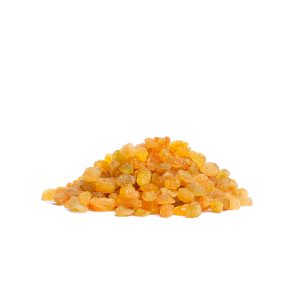
Malayer golden raisins undergo sulfur fumigation followed by controlled drying, creating a bright, translucent yellow-gold color suited for retail packaging.
- Sulfur Customization: Processing plants adjust sulfur levels during fumigation to match the buyer’s specification. For example, retailers with stricter internal limits often request batches under 1,000 ppm or 1,500 ppm. Other buyers accept up to 2,000 ppm, which is the EU legal maximum for dried grapes and a common level for Middle Eastern and Asian markets.
- Commercial Applications: Packed into consumer-facing snack pouches, luxury trail mixes, and decorative food services where appearance and color uniformity are key selling points.
Regional trading houses in Malayer also supply complementary varieties to fulfill consolidated container shipments:
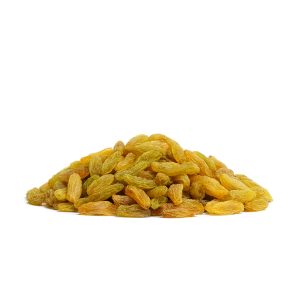
- Kashmar Green Long Raisins: Sourced from neighboring Khorasan, these long, thin green raisins are dried in shaded wind towers. Malayer exporters frequently aggregate them into mixed orders for Middle Eastern and Asian buyers.
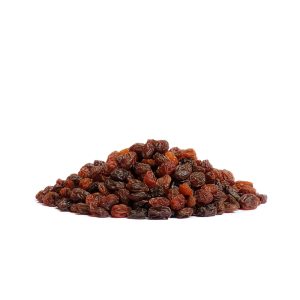
- Sun-Dried Black Raisins (Mavez): Dried naturally in the sun without chemical dips or sulfur, these dark, full-flavored raisins cater to brands formulating organic, clean-label, and zero-additive snacks.
Grading Criteria and International Quality Standards
International buyers evaluate Malayer raisins using defined laboratory standards covering moisture content, physical purity, and berry counts per unit of weight.
| Metric | Export Standard Specification | Testing Protocol / Note |
|---|---|---|
| Moisture Content | 13.5% to 16.0% maximum | Calibrated via digital moisture analyzer |
| Berry Count (Grade AAA) | 280 to 320 berries per 100g | Manual count after mechanical sizing |
| Berry Count (Grade AA) | 320 to 360 berries per 100g | Standard export caliber |
| Berry Count (Standard) | 380+ berries per 100g | Compact sizing, ideal for industrial grinding |
| Damaged / Immature Berries | Under 1.5% | Identified by optical sorting cameras |
| Attached Stems and Stalks | Maximum 1 piece per 10kg carton | Checked during pre-shipment sampling |
| Purity Rate | 99.9% clean fruit | Verified via laser scan and X-ray systems |
| Sulfur Dioxide (SO2) | Adjusted to order: <1,000 ppm or <2,000 ppm | Monitored by laboratory titration |
Shipments must include a government-issued Phytosanitary Certificate confirming the consignment is free from live pests. In addition, professional suppliers provide independent laboratory analyses for mycotoxins such as Aflatoxin and Ochratoxin A. These reports confirm that residues comply with the legal thresholds of the importing territory.
Read more: Sourcing Iranian Raisins: The Complete B2B Technical Guide
Nutritional Profile and Industrial Applications
Malayer raisins serve as a shelf-stable, functional whole-food ingredient for modern clean-label product formulation. They are rich in easily digestible fructose and glucose, providing immediate carbohydrates without fat, sodium, or cholesterol. They also deliver natural potassium, iron, dietary fiber, and polyphenolic antioxidants.
Industrial manufacturers apply these nutritional properties across several main sectors:
- Baking and Pastry: Sultanas retain water during baking, preventing bread, rolls, and panettone from drying out on retail shelves while acting as a natural sugar replacer.
- Cereals and Snack Bars: Raisins add chewy texture and structural binding to muesli blends, granola clusters, and pressed fruit bars.
- Syrups, Pastes, and Purees: Manufacturers also process standard-grade raisins into soluble pastes and fruit concentrates, serving as dark sweeteners in commercial sauces, savory glazes, and marinades.
Harvest Season, Shelf Life, and Supply Availability
Fresh grape harvest in Malayer begins in early September and runs through the end of the month. Field dehydration, collection, and initial stem stripping continue into early autumn.
New-crop raisins enter processing plants and international distribution channels by mid-October. Because Malayer processors keep semi-processed, dried raw material in climate-controlled storage, finished raisins are available for processing, packaging, and shipping throughout the entire calendar year.
The standard commercial shelf life for Malayer raisins is 12 to 18 months from the date of final packaging. However, shelf life depends on storage. To maintain color, prevent sugar crystallization, and avoid pest infestation, keep inventory below 15 degrees Celsius (59 degrees Fahrenheit) with a relative humidity under 60%.
Packaging and Export Logistics Specifications
Bulk export shipments use heavy-duty, five-ply corrugated cartons designed to withstand sea transit and high-stack container storage. The standard packaging options are 5kg and 10kg net-weight cartons. Each box contains an internal food-grade polyethylene liner that blocks ambient humidity, protecting the product against moisture absorption.
Standard sea-container capacities for Malayer raisins are:
- 20-Foot Dry Container (FCL): Holds roughly 20 to 21 metric tons of cargo, which translates to 2,000 to 2,100 loose-loaded 10kg cartons. If goods are palletized, the load decreases to approximately 18 metric tons.
- 40-Foot Dry Container (FCL): Accommodates between 24 and 25 metric tons, subject to maximum road weight limits at the port of arrival.
Container shipments require phosphine gas fumigation prior to vessel departure, backed by a certified fumigation report. Freight handlers also install calcium chloride desiccant bags throughout the container to eliminate condensation and protect the cardboard from weakening during sea crossings.
How to Buy Malayer Raisins in Bulk: A Step-by-Step Guide
Procuring commercial shipments of Iranian raisins requires methodical verification of specifications, contract terms, and cargo handling procedures.
- Define Detailed Specifications: Specify the required type (Sultana or Golden), target grade (AAA or AA), maximum allowable sulfur content in parts per million, and preferred packaging weight.
- Request Production Samples: Always evaluate physical pre-shipment samples from the actual factory lot to inspect berry size, skin tenderness, and color consistency before signing contracts.
- Confirm Incoterms and Payment Currency: Establish standard trade terms, typically FOB Bandar Abbas, CFR, or CIF to your destination port. Clarify payment currencies, bank channels, and release documentation early.
- Commission Third-Party Inspection: Hire an independent surveyor such as SGS or Bureau Veritas to inspect container loading, check net weights, verify seal numbers, and take representative samples for pesticide testing.
Finally, wholesale buyers who want direct contact with a primary Iranian raisin supplier can speak with the sales team at Amin Farms. The team can share technical specification sheets, send physical samples, and provide current FOB or CIF price quotes for your destination market.
Frequently Asked Questions
What makes Malayer raisins different from Turkish Sultanas?
Malayer raisins grow at higher altitudes, giving them a naturally higher sugar level and a noticeably fleshier texture than lower-elevation Turkish varieties.
Can the SO2 level in Malayer Golden raisins be adjusted for European regulations?
Yes. The EU legal maximum for sulfur dioxide in dried grapes is 2,000 mg/kg. Processing plants can calibrate the sulfur treatment to stay within it or to meet stricter buyer specifications, such as below 1,000 ppm.
What is the typical shelf life of bulk-packaged Malayer raisins?
Bulk-packaged Malayer raisins remain fresh for 12 to 18 months when stored in cool, dry warehouses below 15 degrees Celsius.
Building a Reliable Raisin Supply Chain
Malayer raisins provide global food manufacturers and dried fruit importers with a dependable supply of high-grade, naturally sweet, and accurately calibrated fruit. Successful sourcing comes down to three things. First, choose the right variety for your application. Then confirm clear chemical and sizing standards, and work with verified suppliers who use modern optical sorting and climate-controlled storage. By matching your technical specifications to the direct capabilities of Malayer’s processing plants, you can secure cost-effective bulk shipments that meet demanding food safety standards year-round.
Related Products