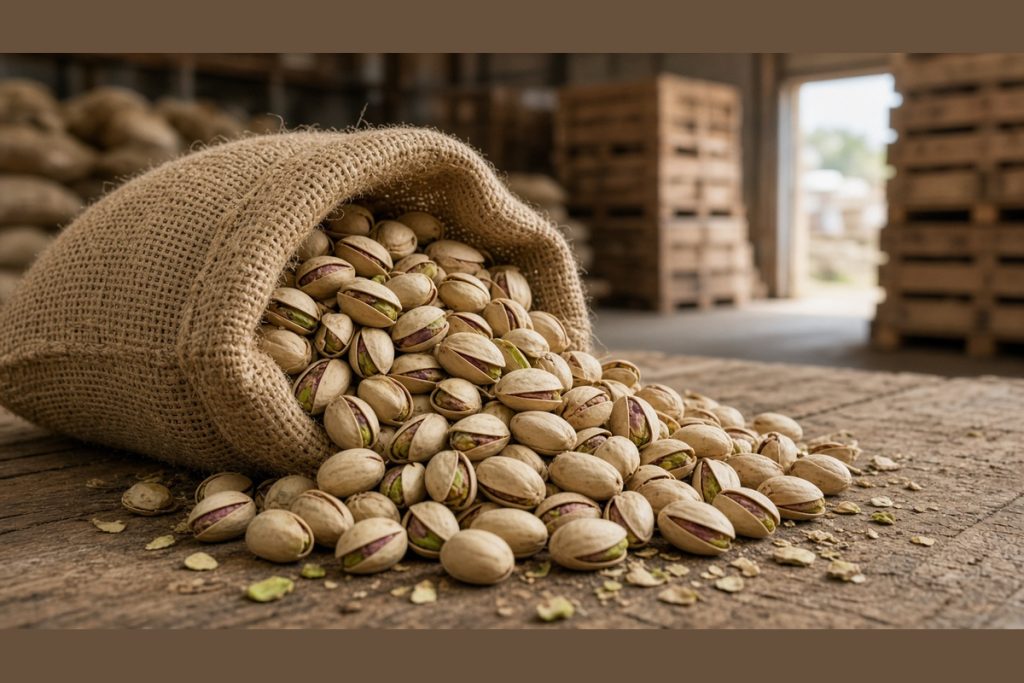
For Russian food distributors, snack brands, and confectionery plants, importing Iranian pistachios to Russia offers direct access to high-oil nuts, flexible pricing tiers, and short regional transit. Lower tariffs under the May 2025 Iran-EAEU trade pact make the math even stronger, and every regulatory hurdle has a straightforward fix when you prepare documents early. Below, you will find practical guidance on grading, TR CU 021/2011 testing, Caspian and overland freight, and ruble settlement.
Why Russian Importers Choose Iranian Pistachios
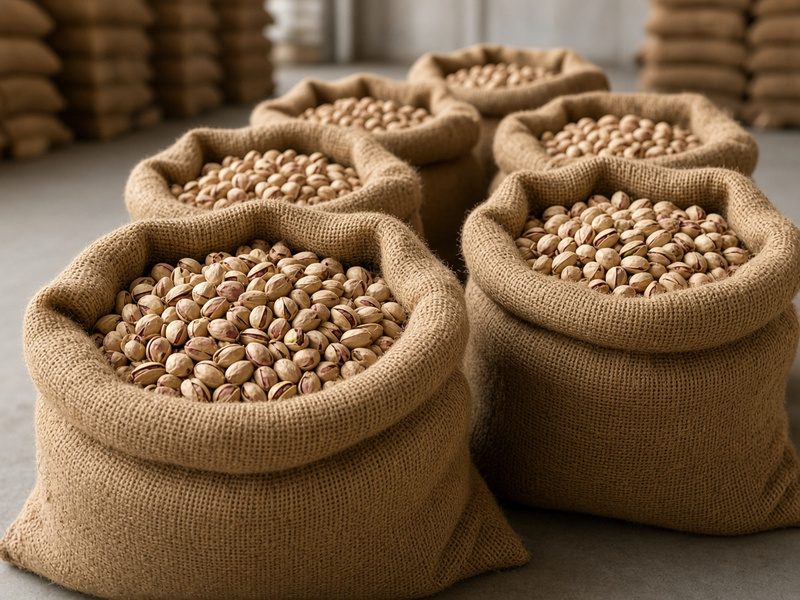
Russian snack packers and pastry manufacturers have relied on Iranian pistachios for decades, and recent trade agreements have made direct sourcing even more attractive. Buyers importing Iranian pistachios to Russia gain four clear commercial advantages.
First, Iranian pistachios have a higher natural oil content than most competing origins, which gives them a rich taste that holds up under the deep, high-heat roasting Russian consumers prefer. Second, Iran supplies every price tier in one market, from economical bulk Fandoghi for high-volume retail bags to oversized Akbari lots for luxury gifting.
Geography also works in your favor. Cargo moves across the Caspian Sea or overland through Azerbaijan along the International North-South Transport Corridor (INSTC), avoiding long ocean routes. Finally, according to the Eurasian Economic Commission, the full-fledged Iran-EAEU Free Trade Agreement entered into force on May 15, 2025, covering nearly 90% of tariff lines. Buyers simply confirm exact pistachio duty rates by 10-digit HS code with their customs broker before shipping.
Iranian vs. US and Turkish Pistachios
When evaluating wholesale Iranian pistachios in Russia, procurement teams typically compare Iran with the United States and Turkey.
| Criteria | Iranian | US | Turkish |
|---|---|---|---|
| Flavor and Roasting Profile | Higher natural fat; rich, earthy taste suited to deep roasting | Milder flavor; uniform crunch | Sweet, aromatic; smaller nut |
| Variety and Size Range | Wide range, from round Fandoghi to super-long Akbari | Mostly Kerman variety; consistent sizing | Primarily Antep; narrow size spread |
| Access to Russia | Direct INSTC corridors and EAEU FTA framework | Restricted; indirect via third-country re-exports | Regional access via Black Sea and Caucasus |
| Typical Use in Russia | Retail roasted snacks and green kernels for confectionery | Limited presence due to trade barriers | Specialty sweets and baklava production |
| Price Positioning | Broad flexibility from bulk economy to luxury | Mid-to-high landed cost after re-export markups | High price per kg, especially for green kernels |
Iranian supply gives Russian importers the most direct and scalable channel. You avoid third-country re-export markups while sourcing both retail snack nuts and industrial green kernels from a single origin.
Iranian Pistachio Varieties and Grades for the Russian Market
Vague terms like “export grade” are the main cause of pricing disputes and mixed-quality deliveries. Writing clear technical specifications solves this immediately. Always define the cultivar, opening method, and size using Count Per Ounce (CPO), which measures how many nuts fit in 1 ounce (28.35 grams). A lower CPO number means a larger, higher-priced pistachio.
Akbari, Ahmad Aghaei, Kalleh Ghoochi, and Fandoghi
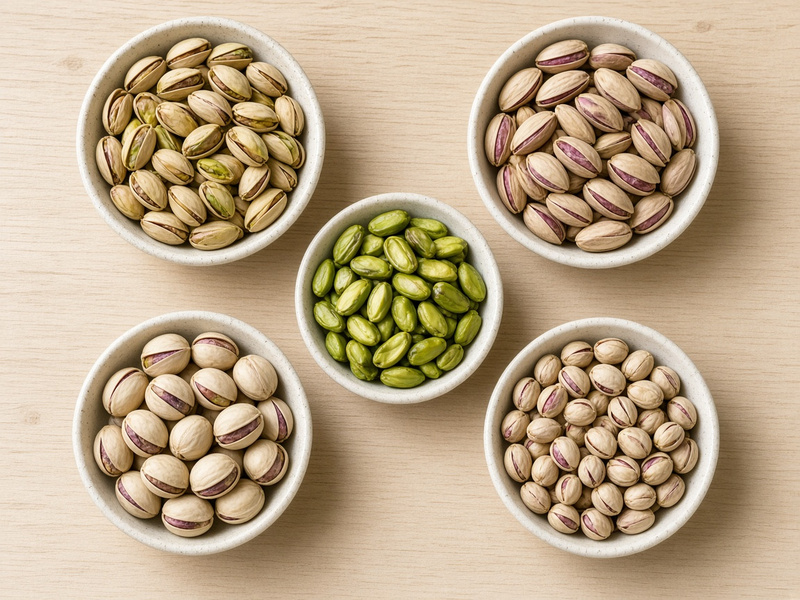
Four commercial Iranian pistachio varieties cover almost all Russian wholesale demand, and each matches a specific sales channel.
| Variety | Shape and Typical CPO | Key Trait | Best Russian Market Fit |
|---|---|---|---|
| Akbari (Super Long) | Elongated; 20/22 to 24/26 | Longest shell, top price tier | VIP gifting and premium retail in Moscow and St. Petersburg |
| Ahmad Aghaei (Long) | Elongated; 22/24 to 26/28 | Bright, whiter shell; balanced cost | Mainstream packaged retail and snack brands |
| Kalleh Ghoochi (Jumbo Round) | Broad, round; 20/22 to 24/26 | Heavy kernel and bold roasted flavor | Upscale bars and gourmet roasted mixes |
| Fandoghi (Round) | Small, round; 28/30 to 32/34 | Most economical, steady supply | High-volume retail, repacking, and industrial use |
In addition to cultivar and size, specify the opening type in your contract. Natural Open (Khandan) pistachios split on the tree, hold fuller kernels, and carry lower contamination risk. Mechanical Open (Abkhandan) lots are opened by machine after harvest, so set a firm maximum percentage for mechanically opened nuts before agreeing on price.
In-Shell vs. Pistachio Kernels
Product format determines your HS classification, target buyer, and shelf-life planning.
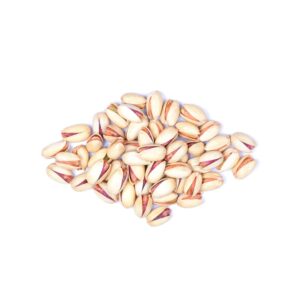
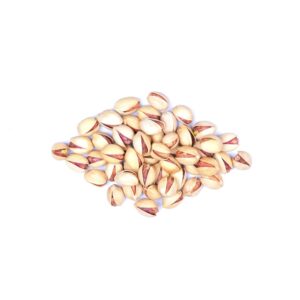
- In-shell pistachios (HS 0802.51) dominate the Russian snack market. Most large distributors buy raw in-shell lots for longer shelf life during transit, then roast and salt them locally.
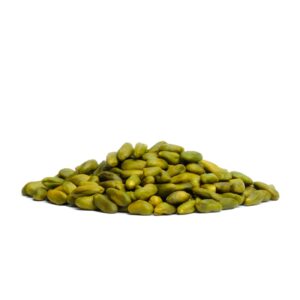
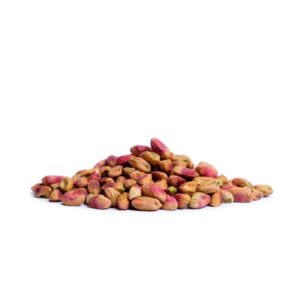
- Pistachio kernels (HS 0802.52) serve Russian chocolate makers, ice cream plants, and bakeries. Buyers choose among natural kernels, Green Peeled Pistachio Kernels (GPPK) valued for bright color, and early-harvest Kaal kernels.
- Moisture limits apply to both formats. Keep internal moisture below 5% in your purchase contract to preserve crunch and prevent mold during shipping.
Russian Import Requirements and Documents
Importing Iranian pistachios to Russia follows unified Eurasian Economic Union (EAEU) technical regulations enforced at the border. Clearance stays smooth when both sides know their exact responsibilities, since Iran issues origin and plant health papers while the Russian buyer handles local conformity registration.
Phytosanitary Certificate and Rosselkhoznadzor Control
Standard pistachio customs clearance in Russia requires four core document groups:
- Phytosanitary Certificate: Issued by Iran’s National Plant Protection Organization and verified at entry during Rosselkhoznadzor pistachio import inspections for pests and plant quarantine compliance.
- EAC Declaration of Conformity: Mandatory for nuts under TR CU 021/2011 (Food Safety). Under EAEU rules, only a legal entity registered in an EAEU member state can act as the applicant, so the Russian importer or broker registers it using the exporter’s lab reports and HACCP traceability records.
- Certificate of Origin (Form CT-3): Required to claim preferential tariffs under the May 2025 Iran-EAEU Free Trade Agreement, provided the cargo follows direct delivery rules.
- Commercial and Transport Set: Commercial Invoice, Packing List, Bill of Lading, CMR, or Rail Waybill, and a verified 10-digit EAEU ТН ВЭД code.
Aflatoxin Limits and Lab Testing
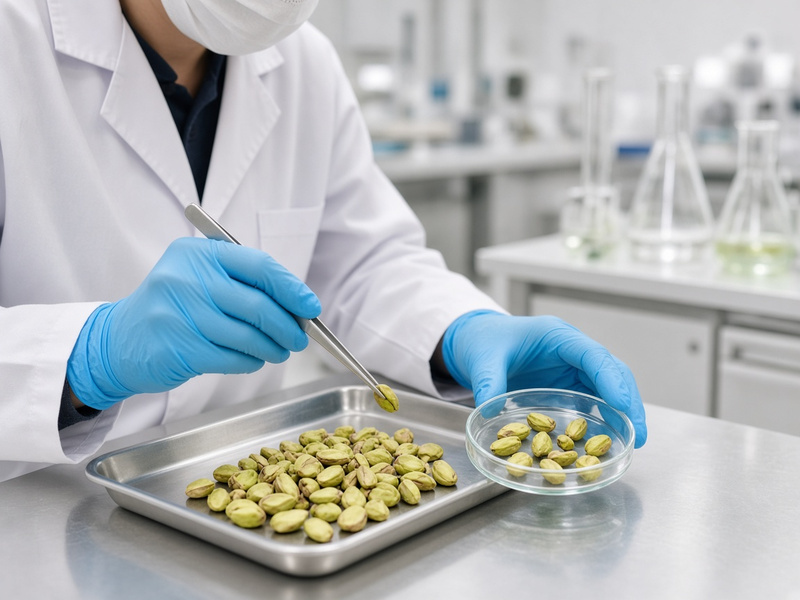
Aflatoxin is the main cause of border detentions for nut shipments, yet it is completely preventable with proper pre-shipment testing. Under EAEU technical regulation TR CU 021/2011, the EAEU TR CU 021/2011 aflatoxin limit for Aflatoxin B1 in nuts is strictly below 0.005 mg/kg (5 ppb). If you import flavored or processed pistachio items, ask your Russian broker to confirm whether any additional total aflatoxin sub-limits apply to that category.
Three contract safeguards keep your cargo compliant:
- Require a lot-matched Certificate of Analysis (COA) from an accredited lab tied to the exact batch number printed on the bags, using representative multi-point sampling because aflatoxin occurs unevenly across a lot.
- Include pre-loading checks for moisture (under 5%), pesticide residues, and microbiological safety.
- Set written tolerances for insects, rancid kernels, and foreign matter.
Labeling and Packaging Standards
Good packaging protects nut quality across humid sea routes while satisfying TR CU 022/2011 Russian food labeling rules.
- Prepacked goods must carry Russian-language labels showing the product name, ingredients, net weight, production and expiry dates, storage conditions, manufacturer and importer details, the EAC mark, and EAN barcodes where retail stores require them. Have your Russian compliance team approve label artwork before mass printing.
- Standard moisture-barrier packaging includes 10 kg cartons with internal vacuum-sealed bags for kernels and top-grade in-shell lots, and 25 kg or 50 kg laminated polypropylene (PP) bags for bulk trade.
- Maintain cool, dry conditions during transit and storage, ideally between 0°C and 5°C for long-term bulk warehousing.
Shipping Routes from Iran to Russia
Iran to Russia shipping routes run along the International North-South Transport Corridor (INSTC), allowing you to balance freight cost against delivery speed. For eastern Russian destinations, an eastern rail corridor through Turkmenistan and Kazakhstan is also available.
Caspian Sea Route
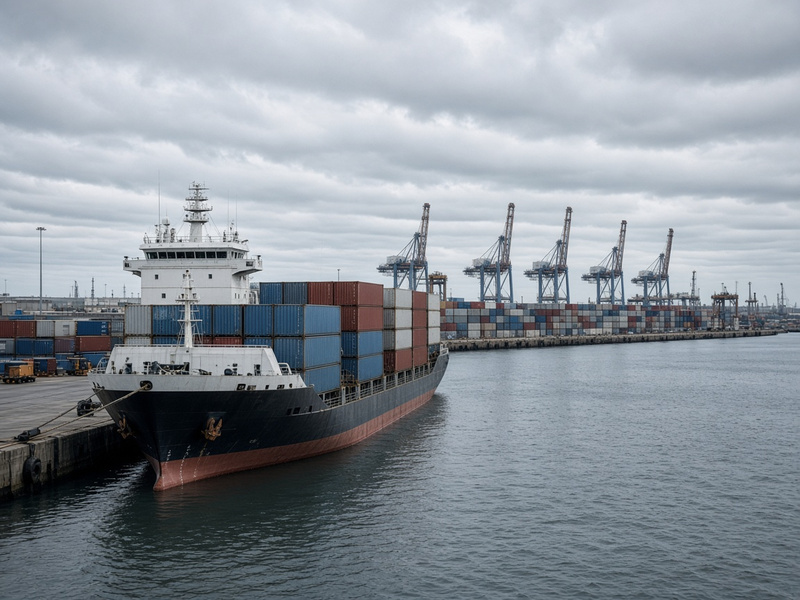
Bulk buyers frequently ship from northern Iranian ports such as Bandar Anzali or Astara across the Caspian Sea to Astrakhan, then move cargo onward by truck or rail to Moscow and regional hubs.
- Transit typically takes 20 to 30 days depending on vessel schedules and port clearance.
- This corridor fits cost-sensitive full-container loads (FCL) and large bulk contracts.
- Plan around seasonal vessel capacity shifts and winter port delays, and always use vacuum or laminated moisture-barrier bags to guard against sea humidity.
Rail and Road via Azerbaijan

The western INSTC route runs overland across the Astara border through Azerbaijan into southern Russia.
- TIR and reefer trucks reach Moscow in 4 to 7 business days, while multimodal rail-and-road shipments take 15 to 25 days.
- Rail runs along the Qazvin-Rasht line and through Azerbaijan, though the missing Rasht-Astara rail link remains under construction and requires road-to-rail transshipment at Astara.
- Overland trucking is the best choice for urgent restocking, pre-holiday retail orders, and temperature-controlled reefer loads of pistachio kernels.
Payment Methods and Landed Cost
Financial settlement and accurate cost forecasting are well established for businesses importing Iranian pistachios to Russia.
Because SWIFT transfers are unavailable, Iran-Russia ruble trade settlement operates through two reliable, legal channels. Importers either use authorized bilateral banking routes in Russian Rubles (RUB) or Iranian Rials supported by SPFS and Mir-Shetab integration, or settle through contracted licensed exchange houses in RUB, UAE Dirhams (AED), or USD depending on contract terms. Confirm your preferred settlement path before production begins so dispatch stays on schedule.
Your true landed cost per kilogram in Russia depends on five predictable components:
- Ex-works (EXW) or FOB nut price, shaped by cultivar, CPO size, opening rate, and Iran’s alternate-bearing harvest cycle.
- Export packaging and pre-shipment lab testing, including vacuum cartons and lot-matched aflatoxin COAs.
- International freight and insurance, with benchmark FCL rates running roughly $800 to $2,500 depending on route, mode, and season.
- Customs duties and VAT, where your Russian broker verifies the exact 10-digit HS preferential rate under the May 2025 Iran-EAEU FTA and confirms Form CT-3 eligibility rather than assuming 0% automatically.
- Destination clearance expenses, covering Russian customs brokerage, EAC declaration registration, and local warehousing.
Step-by-Step Import Process
Following a clear seven-step sequence turns your first order into a repeatable workflow:
- Lock technical specs in writing, including variety, CPO size, opening rate, moisture limit (under 5%), and packaging format.
- Confirm your 10-digit ТН ВЭД code, preferential FTA duty, and Form CT-3 eligibility with a Russian customs broker.
- Approve a physical lot sample and TR CU 022/2011 Russian label artwork before bulk packing starts.
- Finalize the contract, Incoterms (EXW, FOB, or CIF), and bilateral payment channel.
- Complete lot-matched aflatoxin lab testing and issue the COA, Phytosanitary Certificate, and Form CT-3 tied to the packed batch.
- Dispatch cargo via the Caspian Sea route or Azerbaijan TIR/rail with moisture-barrier protection.
- Present the complete document file and EAC Declaration for Rosselkhoznadzor inspection and customs release in Russia.
Why Import from Amin Farms
Working directly with an Iranian processor removes intermediary markups and gives you tighter control over grading, testing, and dispatch timelines. Amin Farms supplies Russian and CIS wholesale buyers from its own processing facilities, aligning each lot with EAEU import requirements.
- Direct processing backed by generations of Iranian agricultural trade keeps quality steady from one shipment to the next.
- The export range covers Akbari, Ahmad Aghaei, Kalleh Ghoochi, Fandoghi, and Badami in-shell, alongside natural green kernels, Kaal kernels, peeled kernels, pistachio butter, and paste.
- Quotes are built around your exact technical specs, including cultivar, CPO, opening rate, Incoterms, and packaging.
- Export support includes international food-safety documentation, humidity-safe packaging, and Russian-language access at aminfarms.com.
If you are planning an upcoming order, you can request a tailored specification sheet, current-season pricing, or lot samples directly from the Amin Farms export team.
Frequently Asked Questions
What is the minimum order quantity?
Minimum order quantities typically start at palletized LCL trial loads and scale up to 20-foot or 40-foot FCL containers, with exact tonnages confirmed directly by the Amin Farms sales team based on cultivar and packaging.
How long does shipping take?
Shipping takes 4 to 7 business days by TIR truck to Moscow via Azerbaijan, 15 to 25 days via multimodal INSTC rail and road, and 20 to 30 days on the Caspian Sea route from Bandar Anzali to Astrakhan.
Which documents does Russian customs require?
Russian customs requires a Commercial Invoice, Packing List, transport waybill (B/L, CMR, or Rail Waybill), Phytosanitary Certificate, lot-matched Aflatoxin COA, EAC Declaration of Conformity (TR CU 021/2011), and Form CT-3 Certificate of Origin for FTA tariff benefits.
Building a Reliable Iran to Russia Supply Chain
Importing Iranian pistachios to Russia works smoothly when you treat specifications and compliance as upfront habits rather than last-minute fixes. Confirm your 10-digit HS code and Form CT-3 eligibility early, enforce the 0.005 mg/kg Aflatoxin B1 limit with lot-matched lab reports, and choose moisture-safe packaging suited to your freight route. Partnering with a direct Iranian processor gives Russian buyers steady quality, clear landed costs, and dependable border clearance.
Related Products