Global B2B demand for sustainable, plant-based oils has shifted from a niche preference to a procurement standard, and Date Seed Oil import now sits firmly inside that trend. Buyers in cosmetics, food, and industrial manufacturing are searching for stable, traceable raw materials with a clear sustainability profile. In this article, we will explore the production process, profitability, and essential guidelines for sourcing this ingredient directly from top global suppliers.
What Is Date Seed Oil?
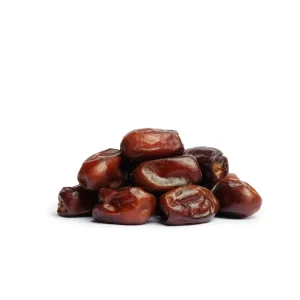
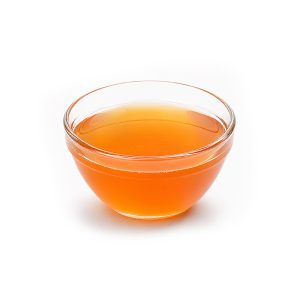
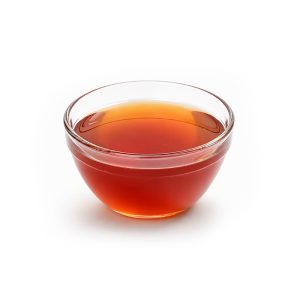
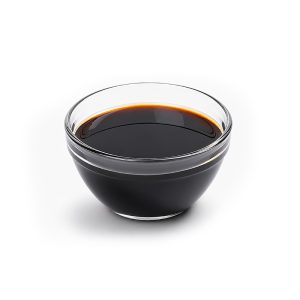
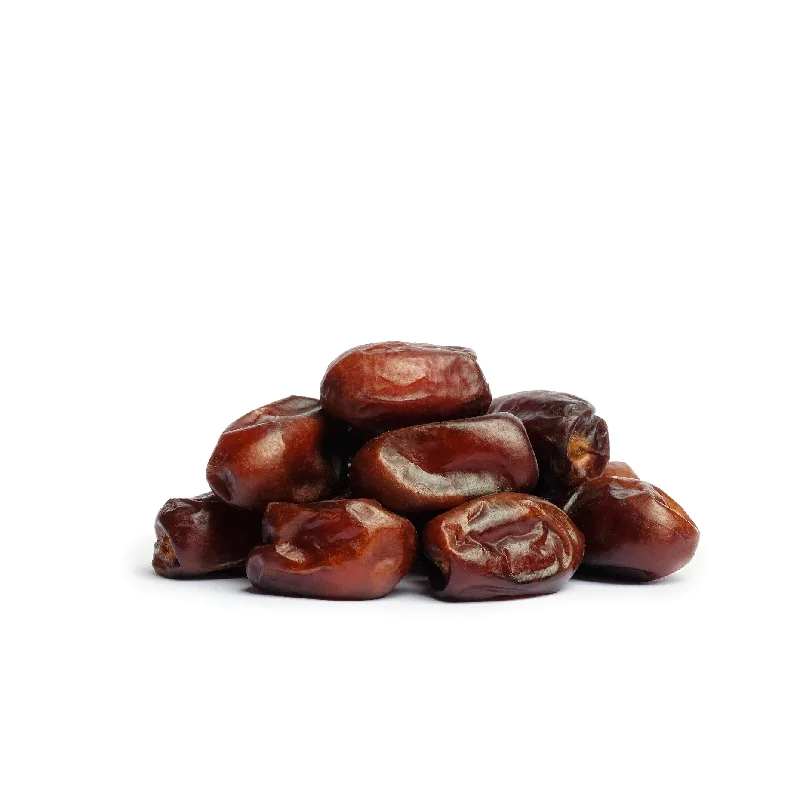
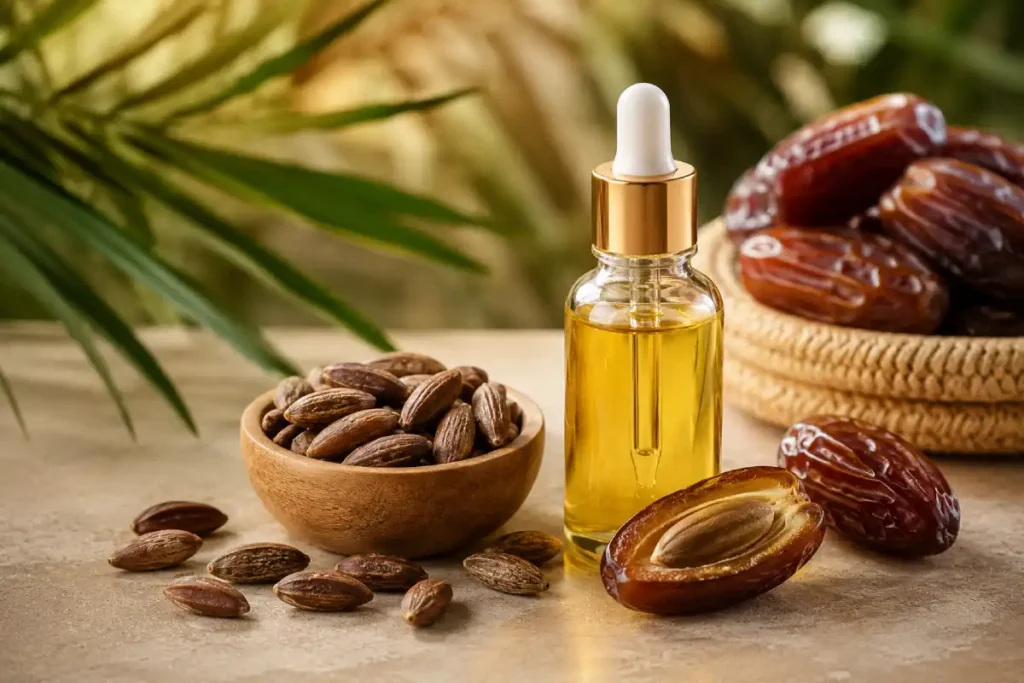
Date seed oil is a lipid extract derived from the kernels of the date palm (Phoenix dactylifera L.), constituting between 5% and 13% of the seed’s total weight. In practical terms, it is a high-value, zero-waste byproduct of the date fruit industry. The kernels are normally discarded during date processing, so the oil repurposes existing agricultural waste into a marketable input for cosmetics and food applications.
Production Process
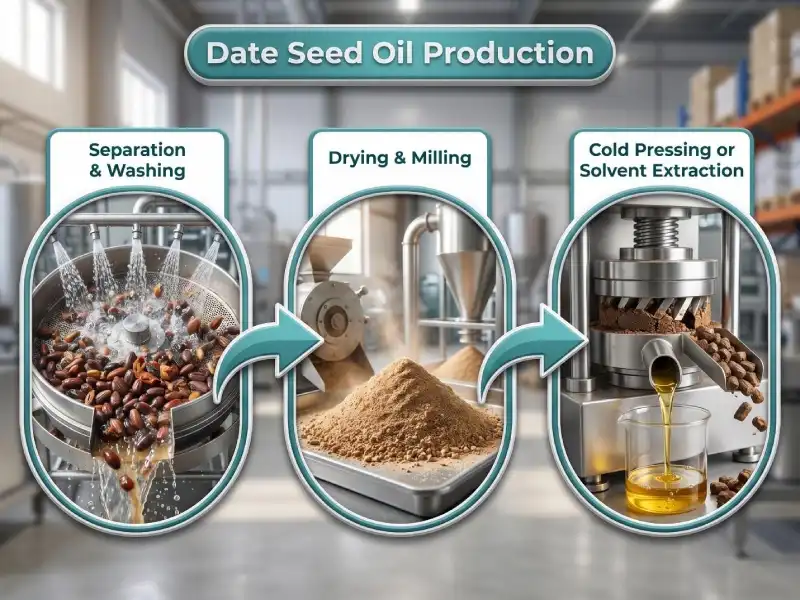
The seeds are first separated from the date pulp, washed to remove residue, and dried to lower moisture content and prevent rancidity. They are then milled into a fine meal before extraction. Consistent drying and particle size directly affect yield and oxidative stability, which is why reputable processors document each step.
Cold Pressing vs. Solvent Extraction
The extraction method determines both quality and target market.
- Cold pressing applies mechanical pressure without heat, preserving heat-sensitive bioactive compounds such as tocopherols and polyphenols. This grade is preferred for high-end cosmetics and skincare.
- Solvent extraction (typically Soxhlet using hexane) is used for bulk date seed oil extraction, prioritizing maximum yield for industrial volumes.
| Method | Yield | Bioactive Retention | Best Use |
| Cold Pressing | Lower | High | Premium cosmetics |
| Solvent Extraction | High | Reduced | Industrial / bulk supply |
For food-grade output via bulk date seed oil extraction, importers should confirm that residual solvent levels meet the destination market’s limits.
Key Nutritional and Functional Properties
The oil is rich in oleic and linoleic fatty acids (Omega-3, 6, and 9), tocopherols (Vitamin E), phytosterols, and polyphenols. These compounds act as natural antioxidants. In practical terms, this composition gives the oil strong resistance to oxidation and a longer functional shelf life than many comparable plant oils.
Uses of Date Seed Oil
The combination of fatty acids and antioxidants allows date seed oil to serve several commercial sectors with distinct grade requirements.
Cosmetics and Skincare
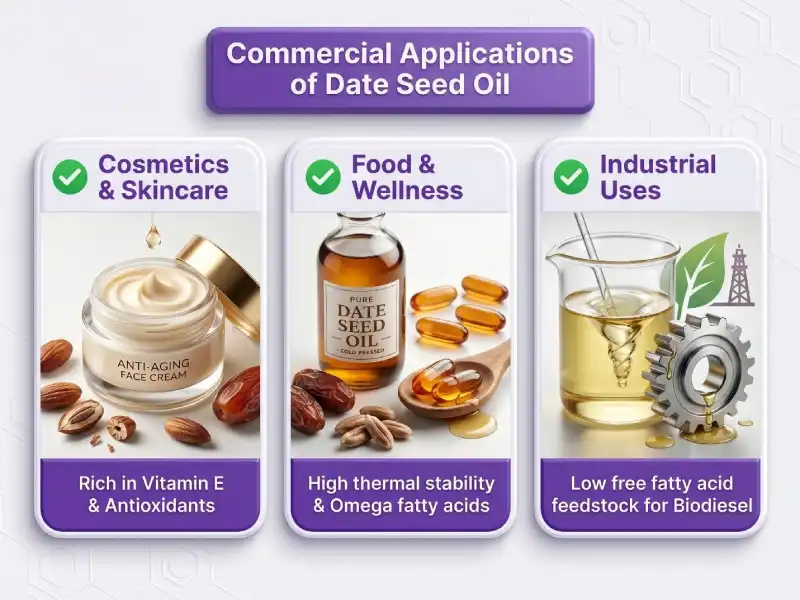
In cosmetics, the polyphenols and Vitamin E content help limit UV-induced oxidation, support skin barrier repair, and reduce inflammation. The oil is formulated into body creams, shampoos, and shaving soaps, and is increasingly positioned within the anti-aging segment where natural actives command higher margins.
Food and Wellness Applications
Its high thermal stability makes it suitable for cooking oil blends and margarine production, where resistance to heat degradation matters. In wellness, it is used in dietary supplements aimed at antioxidant intake and gastrointestinal support.
Industrial Uses
Lower-grade date seed oil carries a low free fatty acid content, which makes it a practical feedstock for biodiesel production. This appeals to industrial importers seeking renewable inputs that do not compete with food supply chains.
Why Demand for Date Seed Oil Is Growing?
The broader driver is the shift toward circular economy models. Using seeds that would otherwise be waste lets manufacturers report measurable improvements in resource efficiency and supply chain transparency.
Sustainable and Natural Product Trends
Zero-waste beauty and plant-based nutraceuticals are pushing formulators to substitute synthetic ingredients with natural alternatives. Date seed oil fits this requirement because it is both naturally derived and upcycled, satisfying two procurement criteria at once.
Growth of Organic and Clean-Label Markets
Retail and e-commerce growth has placed previously specialist oils within reach of mainstream consumers. As a result, B2B buyers are actively engaging in Date Seed Oil import to supply brands that depend on clean-label certifications and verifiable sourcing claims.
Benefits of Date Seed Oil for Importers
For importers, the value proposition is measured directly against margin and risk. A structured Date Seed Oil import plan lets distributors lock in supply before demand peaks.
Market Potential and Profitability
According to 2026 industrial reports, gross profit margins for date seed oil processing and distribution typically range between 45% and 55%. Sourcing wholesale date seed oil at volume improves unit economics and supports a strong return on investment for distributors who secure reliable supply.
Shelf Life and Export Advantages
The natural Vitamin E content gives the oil a long shelf life. This reduces transit spoilage risk and makes it suitable for long-distance shipping and extended warehousing—an operational advantage for importers managing intercontinental logistics.
Iran’s Role in Date Seed Oil Exports
Iran functions as a strategic sourcing hub for buyers seeking volume and price stability. For many distributors, an Iran-based Date Seed Oil import channel offers the most consistent balance of price and availability.
Raw Material Availability
Iran produces over 1 million tons of dates annually. Varieties such as Mazafati, Sayer, and Zahedi generate a substantial volume of seeds as a processing byproduct, giving date seed oil suppliers a continuous, predictable raw material stream.
Competitive Pricing and Production Capacity
Because the seeds are an abundant local byproduct of Iran’s date export industry, Iranian date seed oil suppliers can offer competitive pricing for bulk buyers without compromising purity. This cost structure is difficult to replicate in regions that must import raw kernels.
Key Considerations Before Importing
A disciplined sourcing process protects both quality and compliance, and it is the foundation of any successful Date Seed Oil import operation.
Quality Standards and Certifications
Importers should request a laboratory Certificate of Analysis (COA) and verify:
- Acid value and iodine value within specification
- Absence of heavy metals
- Residual solvent levels (critical for cold-pressed grades sold as solvent-free)
- Batch traceability and refining status
Requesting these documents before contracting is the most direct way to avoid disputes after shipment.
Packaging and Supplier Selection
For bulk transport, use dark, UV-protected drums or inert polymer barrels to preserve oil integrity during transit. When selecting date seed oil suppliers, vet export history, responsiveness, Incoterm clarity, and trade-compliance records. Pre-shipment inspection and sample testing remain standard practice before any bulk contract is finalized.
Future Outlook of the Date Seed Oil Market
The movement toward upcycled ingredients is structural rather than seasonal. Over the coming decade, date seed oil is likely to become a standard component in luxury cosmetics and functional foods, supported by clean-label demand and stable margins. Buyers who establish supplier relationships early will hold a procurement advantage as competition for verified, sustainable inputs increases.
Conclusion
A well-executed Date Seed Oil import strategy combines high profit margins, measurable sustainability gains, and access to a growing natural products market. The ingredient’s stability, broad application range, and competitive sourcing from regions like Iran make it a practical addition to a B2B portfolio. For buyers entering Date Seed Oil import, securing wholesale date seed oil from documented, compliant suppliers is the logical first step. Begin with sample testing before committing to volume.
FAQ
What is date seed oil used for?
Date seed oil is used in anti-aging cosmetics, functional cooking oils and margarine, and dietary supplements. Its low free fatty acid content also makes it a viable feedstock for biodiesel and other industrial applications.
Why is date seed oil becoming popular?
It benefits from the zero-waste beauty trend and its rich Omega fatty acid and antioxidant profile. As an upcycled agricultural byproduct with strong profit margins, it appeals to both formulators and distributors.
Is Iran a major supplier of date seed oil?
Yes. Producing over 1 million tons of dates annually gives Iran abundant raw material, allowing local manufacturers to export high-quality, competitively priced date seed oil to global markets.
Related Products