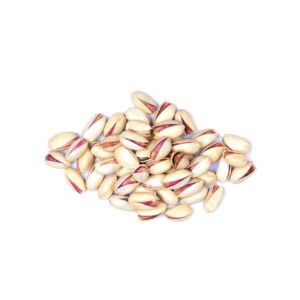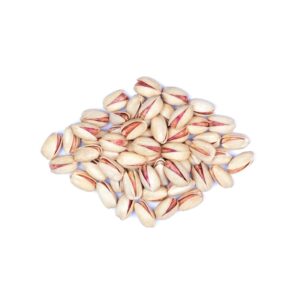
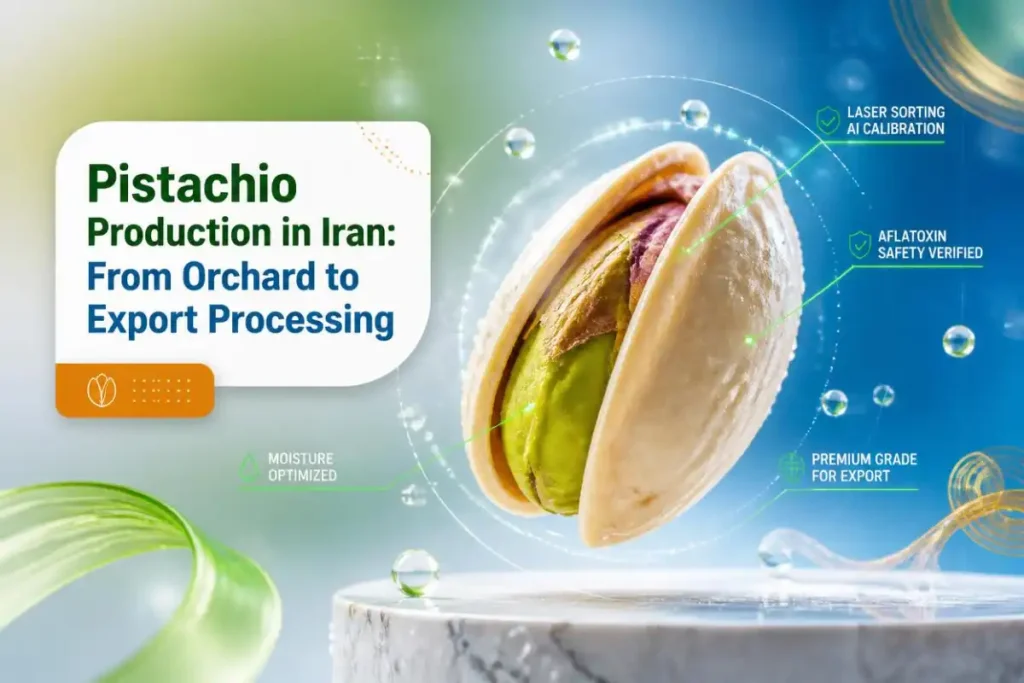
Pistachio Production in Iran involves a complete agricultural and commercial chain that begins in pistachio orchards and continues through harvesting, drying, sorting, quality control, and export preparation. Iranian producers combine traditional orchard knowledge with modern post-harvest processing practices to prepare products for international markets. This article explains how Iranian pistachios move from farms to export shipments, including processing methods, safety controls, and buyer requirements.
Overview of Pistachio Production in Iran
Pistachio Production in Iran has developed over centuries and remains an important part of the country’s agricultural economy. The Iranian pistachio industry includes three connected stages: cultivation, post-harvest processing, and international trade. Commercial pistachio production expanded significantly during the twentieth century as farmers improved orchard management and processing systems.
Iran grows Pistacia vera, a species adapted to dry climates and long summers. Production levels change from year to year because pistachio trees naturally experience alternate bearing cycles, while weather conditions, water availability, and orchard management also influence harvest volumes.
The main structure of the industry can be summarized as follows:
| Industry Stage | Main Activities |
|---|---|
| Farming | Orchard management, irrigation, cultivation, and harvesting |
| Processing | Hulling, drying, sorting, grading, and packaging |
| Export | Storage, shipment preparation, and international trade |
The Iranian pistachio industry depends not only on farming expertise but also on efficient post-harvest operations. Pistachio production methods must protect product quality from the orchard until the final export shipment.
Main Growing Regions and Pistachio Farms in Iran
Iranian pistachio farms are concentrated mainly in dry regions with suitable temperature conditions and limited humidity. Kerman Province is one of the most recognized pistachio growing regions, while the Rafsanjan region has a long history connected with commercial pistachio cultivation.
Kerman pistachios and Rafsanjan pistachios are widely associated with Iran’s traditional production areas. These regions provide conditions that support pistachio orchards, including hot summers, cold winters, and soils suitable for tree growth.
Successful pistachio cultivation depends on:
- Temperature patterns during growing seasons
- Water management and irrigation strategies
- Soil conditions
- Orchard maintenance practices
- Pest and disease management
Iranian pistachio farms vary in size and production methods. Some combine traditional agricultural practices with modern equipment to improve efficiency and consistency.
Step 1: Harvesting Pistachios at Optimal Maturity
Pistachio harvesting in Iran begins when nuts reach suitable maturity levels. Harvest timing affects shell opening, kernel development, appearance, and storage performance. Harvesting too early can reduce product quality, while delays may increase exposure to contamination risks.
Traditional harvesting methods have historically involved manual collection, although many commercial producers now use improved equipment and organized harvesting systems.
Factors affecting harvest quality include:
- Harvest timing: Mature nuts generally provide better kernel development and appearance.
- Handling after picking: Rapid movement from orchards reduces deterioration risks.
- Protection from moisture and contamination: Clean handling supports food safety.
After harvesting, fresh pistachios should be transferred quickly for processing. Delays can increase quality problems, especially when environmental conditions encourage microbial growth.
Step 2: Hulling and Washing
The first stage of pistachio processing in Iran after harvesting is removing the outer green hull. The hull removal process is essential because remaining hull material can cause staining and reduce product quality.
Modern facilities commonly use hulling machines to separate the outer layer from the shell. The basic workflow is:
Harvest → Hulling → Cleaning → Drying
During this stage, producers remove foreign materials and damaged nuts. Effective pistachio processing in Iran requires careful handling because early processing decisions influence later sorting, storage, and export quality.
Step 3: Drying to Safe Moisture Levels
The pistachio drying process is one of the most important stages in Pistachio Production in Iran. Drying reduces moisture and helps improve storage stability by limiting conditions that support mould development.
Processing facilities may use forced-air drying systems and other controlled drying approaches. The exact drying requirements depend on product specifications, storage conditions, and buyer regulations.
| Drying Factor | Impact |
|---|---|
| Moisture reduction | Improves storage stability |
| Drying speed | Helps reduce contamination risks |
| Storage environment | Maintains product quality |
Proper drying supports commercial pistachio production because poorly dried products may experience quality deterioration during storage and transport. After drying, nuts are stored under controlled conditions before further processing.
Step 4: Sorting and Grading (Open Mouth, Closed Shell, Size)
Pistachio sorting and grading is a critical stage before export. Buyers often require consistent appearance, size, and quality categories. Sorting can involve mechanical separation systems and manual inspection.
Important grading factors include:
| Grading Factor | Importance |
|---|---|
| Shell opening | Influences market preference |
| Size | Determines commercial category |
| Defects | Affects acceptance and quality |
Processors separate open-shell pistachios from closed-shell pistachios and remove damaged or unsuitable products. Size calibration equipment helps create consistent product groups.
For example, an international buyer purchasing premium pistachios may request a specific size range, appearance standard, and defect tolerance. Consistent pistachio sorting and grading helps exporters meet these expectations.
Step 5: Roasting and Salting (Optional)
Roasting and salting are optional steps depending on customer requirements. Some markets prefer raw Persian pistachios, while others request roasted or salted products.
Roasting can change flavour, texture, and colour characteristics. Salting levels also vary according to consumer preferences and destination market regulations.
Exporters usually determine processing choices based on agreements with international buyers. Raw, roasted, and salted products may require different packaging and storage approaches.
Step 6: Quality Control and Aflatoxin Testing
Pistachio quality control is one of the most important elements of export preparation. A major concern in pistachio production is aflatoxin contamination, which is caused by certain moulds, including Aspergillus flavus.
Aflatoxins are naturally occurring mycotoxins that can develop when agricultural products experience favourable conditions for mould growth. Risks may occur before harvest through orchard conditions or after harvest through poor handling and storage.
Pistachio aflatoxin testing helps exporters and buyers verify that products meet food safety requirements. International markets may apply different regulatory limits and testing procedures.
Important quality control stages include:
| Quality Control Stage | Purpose |
|---|---|
| Orchard management | Reduce contamination risks |
| Harvest handling | Prevent quality deterioration |
| Processing inspection | Remove unsuitable nuts |
| Laboratory testing | Verify safety requirements |
Modern approaches focus on improved sampling methods, laboratory analysis, moisture management, and storage control. Recent FAO cooperation activities in Iran have included efforts to improve integrated product management, sampling procedures, and laboratory capacity for pistachio exports.
As FAO Director-General José Graziano da Silva stated, “Zero hunger cannot be achieved without food safety.” This principle is relevant to pistachio exports because food safety systems are essential for maintaining confidence between producers, exporters, and international buyers.
Step 7: Packaging and Export Preparation
The final stage of Pistachio Production in Iran involves packaging and preparing products for international shipment. Pistachio packaging for export must protect products from moisture, contamination, and quality loss during transportation.
Common packaging options include:
- 50 kg bags for bulk shipments
- Large bulk bags for commercial transport
- Retail packaging based on buyer requirements
Before export, processors check storage conditions, shipment documentation, and container preparation. The Iranian pistachio export process depends on coordination between producers, processors, exporters, and international buyers.
Why Processing Quality Impacts Shelf Life and Buyer Trust
Processing quality directly affects product reliability in global markets. Proper drying, accurate grading, and effective pistachio quality control reduce risks during storage and transportation.
For buyers, consistent processing provides several benefits:
- More predictable product specifications
- Lower risk of shipment rejection
- Better storage performance
- Stronger supplier relationships
The Iranian pistachio export process requires more than agricultural production. International buyers increasingly evaluate food safety systems, testing procedures, and transparency throughout the supply chain.
FAQ
How important is pistachio production in Iran?
Pistachio Production in Iran has a long agricultural history and remains an important export-oriented activity. The sector includes farming, processing, and international trade operations.
Where are Iranian pistachios mainly produced?
Iranian pistachios are mainly produced in regions such as Kerman Province and the Rafsanjan region, where climate conditions support pistachio cultivation.
How are Iranian pistachios processed before export?
The process includes harvesting, hulling, washing, drying, sorting, grading, quality testing, and packaging. These stages prepare products for international buyers.
Why is aflatoxin testing important for Iranian pistachio exports?
Pistachio aflatoxin testing helps identify contamination risks and supports compliance with food safety requirements in export markets.
Are Iranian pistachios roasted before export?
Roasting depends on buyer specifications. Some markets request raw pistachios, while others prefer roasted or salted products.
Conclusion
Pistachio Production in Iran combines orchard management, careful harvesting, advanced processing, and strict quality control practices. From Kerman Province and Rafsanjan orchards to international export markets, each stage influences product quality and buyer confidence. Effective drying, grading, packaging, and aflatoxin monitoring help Iranian exporters meet the requirements of global pistachio trade.
Related Products