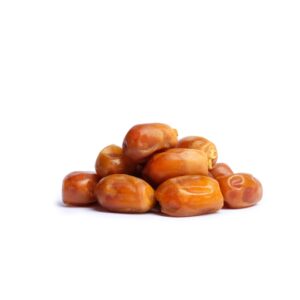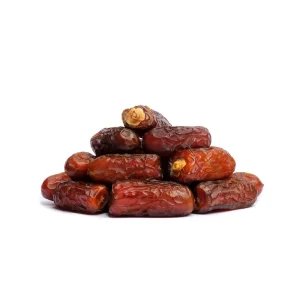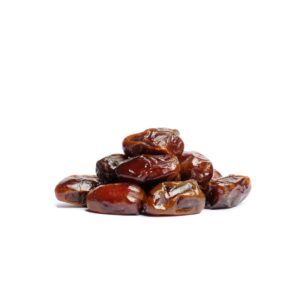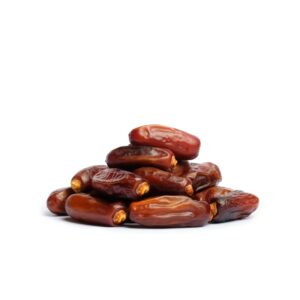
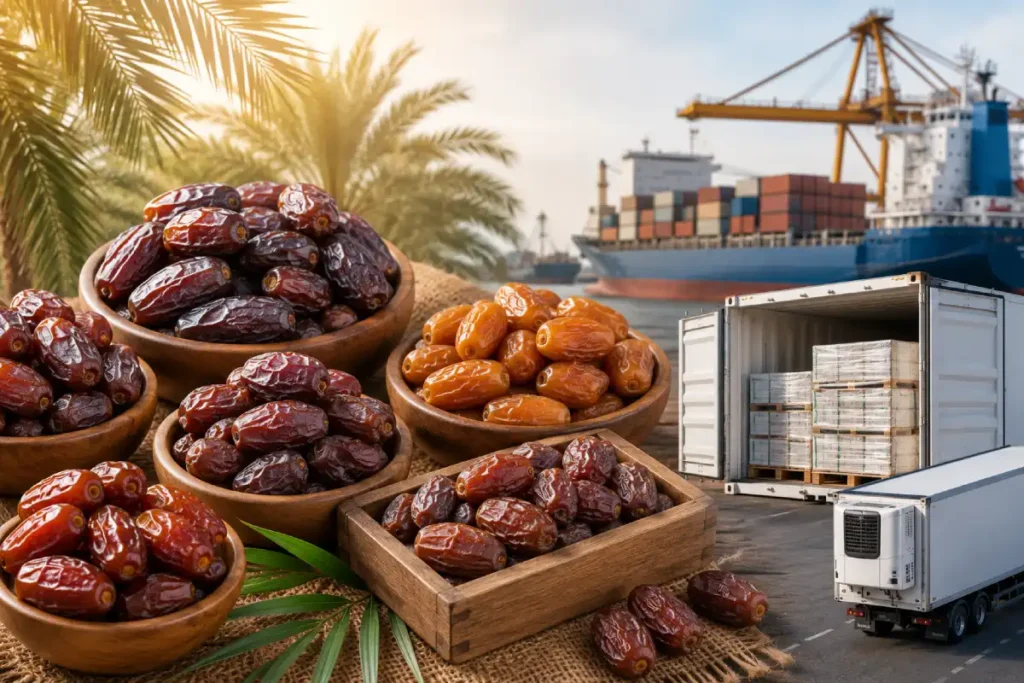
Date shelf life determines landed cost, complaint risk, and resale performance for importers moving dates across borders. Poor control of temperature, humidity, packaging, or transit time can convert a profitable shipment into downgraded stock, refunds, or rejection at destination. In this article, we will explore the precise shelf life of various date varieties, the scientific factors driving spoilage, and the critical export conditions required to guarantee optimal freshness upon delivery.
Factors Affecting Date Shelf Life
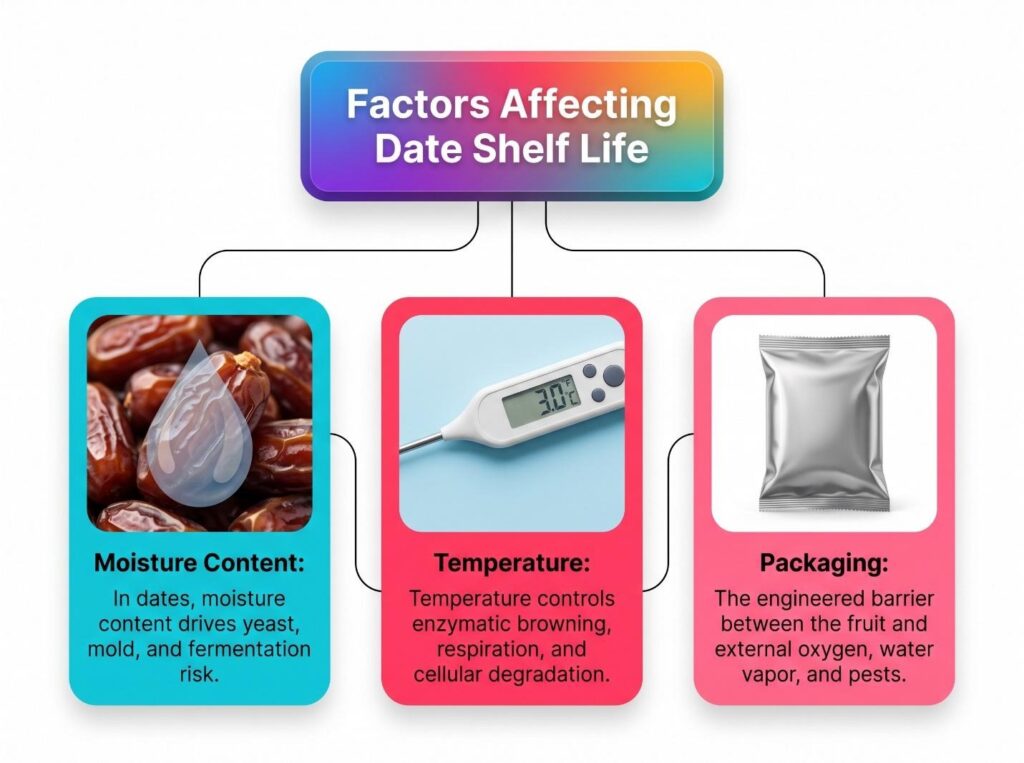
Date shelf life is governed by intrinsic fruit chemistry and external handling conditions. For B2B buyers, the practical question is whether the product’s moisture, sugar profile, packaging, temperature history, and sanitation level support stable resale after arrival.
Moisture Content
Water activity (aw) is the measure of unbound water in a product available for microbial growth. In dates, moisture content in dates is the main shelf-life variable because commercial fruit can range from about 10% to 35% moisture; moisture content in dates drives yeast, mold, and fermentation risk.
Temperature
Temperature controls enzymatic browning, respiration, and cellular degradation. Heat increases reaction rates, so the same lot that remains stable in cool date storage conditions may darken, soften, ferment, or lose grade during uncontrolled inland transport.
Packaging
Packaging is the engineered barrier between the fruit and external oxygen, water vapor, odor, and pests. High-barrier films, sealed cartons, and polyethylene liners reduce moisture migration, prevent oxygen exposure, and support preserving date quality during long distribution cycles.
Processing Method
Processing method is the set of pre-export operations used to prepare dates for stable storage and shipment. Automated sorting, cleaning, grading, mild drying, and hygienic packing remove defective units and stabilize the biological load before exporting dates.
Natural Sugar Levels (Brix)
Brix is the soluble solids concentration in fruit juice, expressed mainly as sugars. High natural sugar concentration creates osmotic pressure around microbial cells, limiting bacterial growth; this is why moisture content in dates must be interpreted together with sugar concentration.
Shelf Life of Different Date Varieties
Different varieties should not be purchased under one shelf-life assumption. The commercial gap between fresh vs dried dates is mainly moisture: soft dates need cold control, while semi-dry and dry dates tolerate longer ambient distribution.
| Variety group | Example | Typical moisture | Recommended storage | Commercial shelf life |
|---|---|---|---|---|
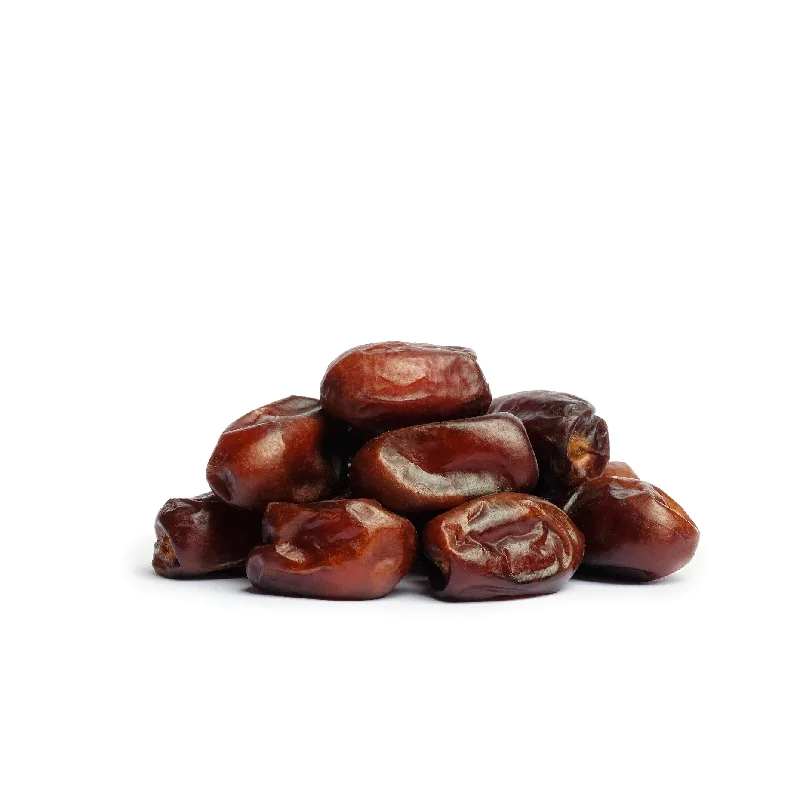
| Soft | Mazafati | 15–35% | 0–5°C for export | 8–12 months refrigerated |
| Semi-dry | Piarom | Around 15% | Cool, dry warehouse | 12–18 months |
| Dry | Zahedi | Below 14% | Cool, dry warehouse | 18–24 months |
Soft Dates (Mazafati)
Mazafati is a soft Iranian date with a relatively high moisture profile. At 15–35% moisture, it may last about one month at room temperature, but refrigerated storage at 0–5°C can extend date shelf life to 8–12 months; therefore, cold-chain discipline is not optional.
Semi-Dry Dates (Piarom)
Piarom is a semi-dry date with roughly 15% moisture and strong export stability. It commonly lasts 12–18 months under cool, dry date storage conditions without strict refrigeration, making it suitable for premium wholesale channels where appearance and texture must remain consistent.
read more: Bulk Date Import for Food Manufacturers Paste, Syrup, Chopped Dates & More
Dry Dates (Zahedi)
Zahedi is a dry or semi-dry date with moisture generally below 14%. Its dense texture and low water availability support 18–24 months of stability, which makes it highly resilient for long-distance exporting dates without refrigerated containers in suitable seasons.
Storage Conditions and Shelf Life
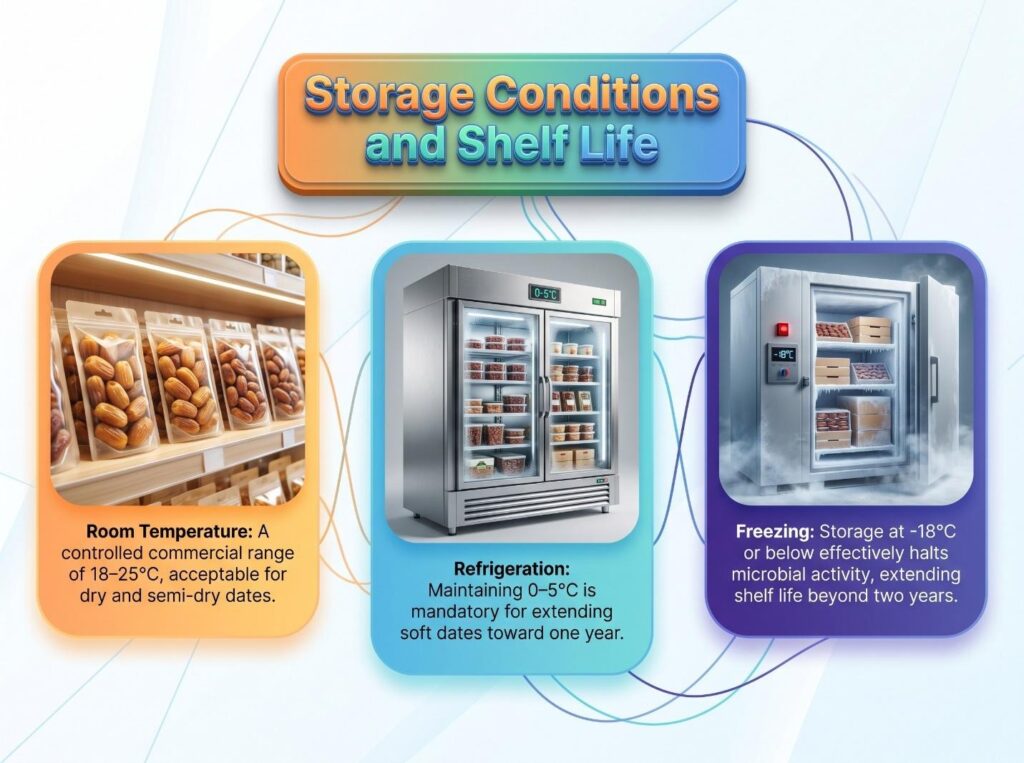
Correct date storage conditions convert laboratory shelf life into commercial shelf life. Buyers should specify temperature, humidity, carton type, pallet spacing, and maximum storage time in purchase contracts.
Room Temperature
Room temperature means a controlled commercial range of 18–25°C, not an exposed dock or hot container yard. It is acceptable for dry and semi-dry dates, but only for short-term retail shelving of soft dates.
Refrigeration
Commercial refrigeration for dates means maintaining 0–5°C across storage, loading, and receiving. It is mandatory for extending fresh vs dried dates in the soft category toward one year while slowing browning, fermentation, and texture loss.
Freezing
Freezing is storage at -18°C or below. At this temperature, enzymatic and microbial activity is effectively halted, extending date shelf life beyond two years; because dates have a low water-to-sugar ratio, freezing normally does not rupture the fruit structure.
Export Conditions Affecting Date Quality

Export success depends on controlling risk before the container leaves origin. Preserving date quality requires consistent procedures from packinghouse to port, vessel, destination clearance, and importer warehouse.
Temperature Control
Temperature control is the planned use of refrigeration, insulated handling, and verified set points during transport. Reefer containers are essential for soft dates because temperature fluctuation causes condensation inside packaging, which raises surface moisture and microbial risk.
Humidity Management
Humidity management is the control of relative humidity around the product and packaging. For most packed dates, RH should remain below 65–75%; high humidity causes re-absorption, sticky surfaces, mold, and carton weakening.
Shipping Time
Shipping time is the total period between loading at origin and receipt by the buyer. Sea freight often requires 20–40 days, so initial grading, moisture balance, and pre-cooling must be correct before exporting dates.
Cold Chain Logistics
Cold chain logistics is a temperature-controlled supply chain that maintains uninterrupted thermal parameters from origin to destination. Amin Farms applies this principle by aligning harvest handling, pre-cooling, reefer loading, and buyer documentation to prevent quality degradation during transit.
Packaging Impact on Shelf Life
Industrial packaging is a technical defense system, not only a branding surface. For date shelf life, the package must protect against oxygen, vapor transfer, insects, compression, and odor contamination.
Vacuum Packaging
Vacuum packaging is the complete removal of atmospheric air from a package prior to hermetic sealing. In practical terms, it removes oxygen, limits aerobic spoilage, slows oxidation, and helps preserving date quality in retail and food-service packs.
Modified Atmosphere Packaging
Modified atmosphere packaging is the process of altering the internal gas composition of a package, typically by flushing it with 20% to 60% carbon dioxide plus nitrogen. Modified atmosphere packaging for dates slows respiration, reduces darkening, suppresses insects, and can use CO2-enriched conditions where the product and film specification allow it.
Bulk vs. Retail Packaging
Bulk packaging is large-format export packing, commonly 5kg–10kg cartons, designed for wholesale handling rather than individual consumer protection. Retail packs usually add secondary barrier films; bulk cartons rely more heavily on warehouse microclimate, pallet hygiene, and modified atmosphere packaging for dates when specified.
Common Shelf Life Problems During Export
Export defects usually come from moisture imbalance, heat exposure, oxygen, or inadequate pest control. Early inspection should focus on odor, surface condition, carton staining, clumping, sugar spots, and evidence of insects.
Fermentation
Fermentation is the anaerobic breakdown of carbohydrates by yeasts into alcohol and carbon dioxide. In high-moisture dates exposed to heat, it produces a sour or alcoholic odor, gas formation, tissue softening, and immediate commercial downgrading.
Mold Growth
Mold growth is fungal proliferation occurring on surfaces with high water activity and oxygen exposure. In export shipments, it is usually triggered by condensation inside cartons or liners, especially when warm air contacts cold fruit.
Sugar Crystallization
Sugar crystallization is the physical migration and solidification of glucose and fructose molecules on the fruit’s epidermis. It is safe, but white spotting reduces visual grade, buyer confidence, and resale value, especially in premium fresh vs dried dates assortments.
Insect Infestation
Insect infestation is the colonization of agricultural products by post-harvest pests, such as moths or beetles. It is prevented through clean warehouses, approved fumigation where legally permitted, sealed liners, and modified atmosphere packaging for dates before export.
Best Practices to Extend Date Shelf Life
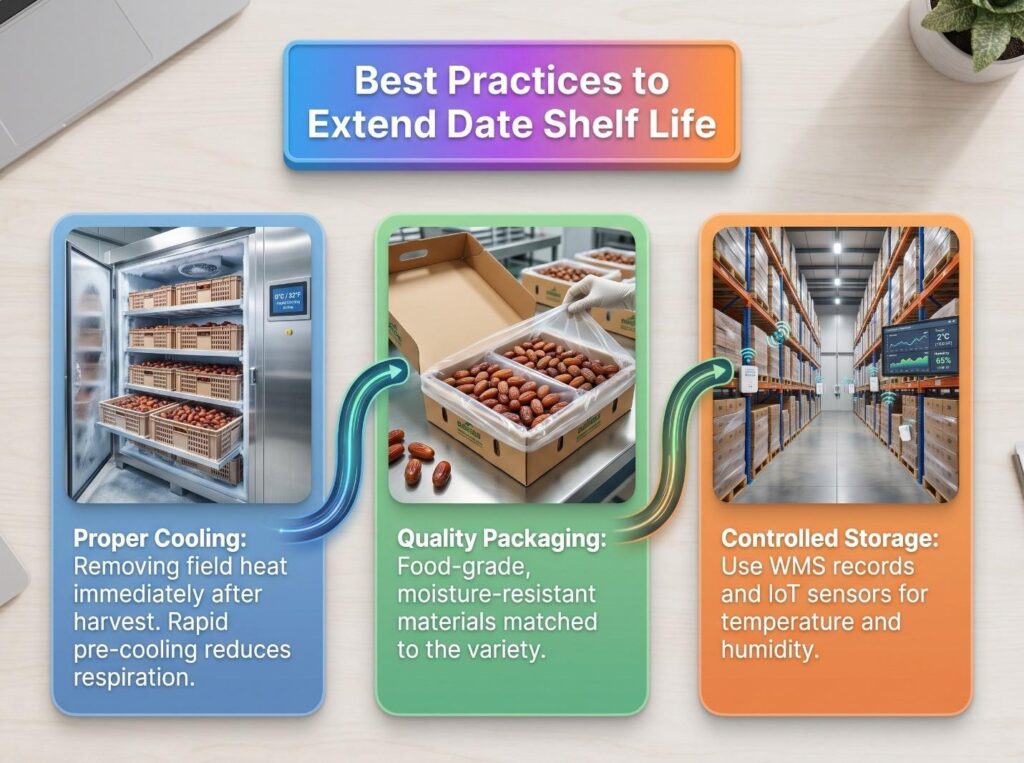
Buyers can reduce claims by treating specifications as operational controls, not paperwork. The most effective measures for preserving date quality are pre-cooling, moisture-resistant packaging, and monitored storage.
Proper Cooling
Proper cooling means removing field heat immediately after harvest or processing. Rapid pre-cooling reduces respiration, slows browning, and creates a safer starting point before loading reefer containers or controlled warehouses.
Quality Packaging
Quality packaging means food-grade, moisture-resistant materials matched to the variety and route. Polyethylene liners inside export cartons protect against moisture migration, odor absorption, and carton contamination, especially during mixed handling.
Controlled Storage
Controlled storage means verified warehouse management rather than passive stockholding. Importers should use WMS records and IoT sensors for temperature and humidity, then compare those data with supplier specifications for date storage conditions.
FAQ About Date Shelf Life
The following answers give importers fast commercial reference points. They should still be adjusted by variety, packing type, route, and receiving warehouse conditions.
How long do dates last?
Date shelf life ranges from 1–12 months for soft dates, depending on refrigeration. Semi-dry and dry dates commonly last 1–2 years under room temperature or cool, dry storage.
Which dates have the longest shelf life?
Dry varieties such as Zahedi have the longest date shelf life because their moisture is usually under 14%. Low moisture reduces microbial risk and improves export resilience.
Can dates be frozen?
Yes. Freezing at -18°C preserves dates for over two years without major texture loss because high sugar content limits destructive ice crystal expansion inside the fruit cells.
Conclusion: Improving Date Export Quality
Maximizing date shelf life requires matching the right variety with the right storage and packaging protocol. Mazafati needs cold-chain control; Piarom needs cool, dry discipline; Zahedi offers the strongest long-route stability. Amin Farms supports B2B buyers with premium Iranian dates, export-grade sorting, reliable packing formats, and logistics planning built for international trade, based on documented moisture and temperature requirements. For wholesale supply, private-label packing, or container inquiries, importers can contact the Amin Farms sales team for precise specifications and shipment planning.
Related Products