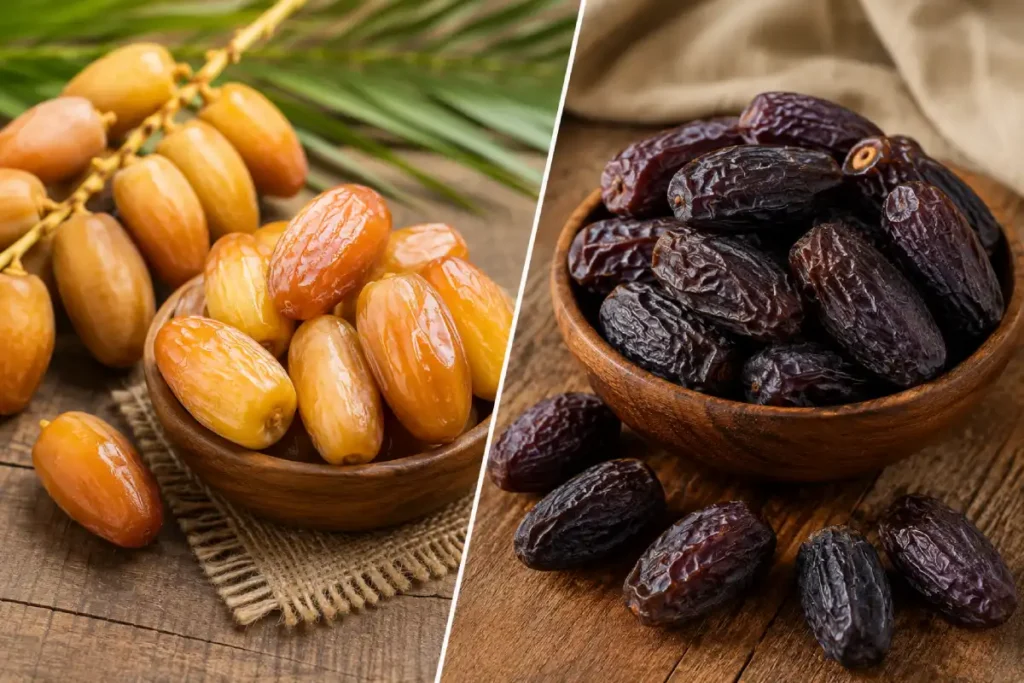
Global demand for dates is rising because retailers, food manufacturers, and health-focused consumers need stable, nutrient-dense fruit with clear sourcing options. For importers, Fresh vs Dried Dates is not a taste question; it is a margin, logistics, and risk decision. The wrong choice can raise freight costs or increase product loss. In this article, we will explore the core differences, logistical requirements, and market benefits to help you decide exactly what to import.
Key Differences Between Fresh and Dried Dates
Rutab is the high-moisture, soft ripening stage of the date fruit, while Tamar is the fully mature, lower-moisture stage in which sugars are more concentrated and the fruit is suitable for longer storage. In simple terms, Rutab is the commercial base for fresh dates, and Tamar is the commercial base for dried or semi-dried dates. This is why Fresh vs Dried Dates affects weight, packaging, transport, pricing, and sales channels from the first purchase order.
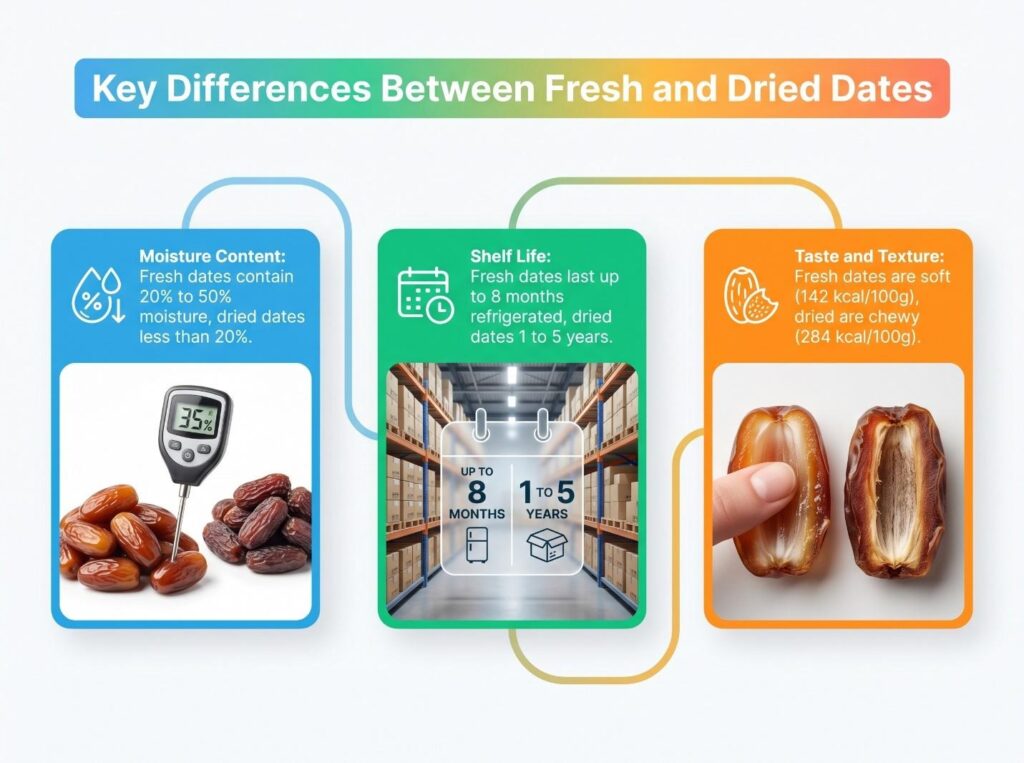
Moisture Content
Fresh dates contain about 20% to 50% moisture, which makes them plump, soft, and heavier per carton. Dried dates usually contain less than 20% moisture, so each pallet carries more sugar solids and less water. For bulk date imports, this difference matters directly: fresh inventory can look heavier but may deliver fewer saleable dry solids per metric ton, while dried inventory often improves freight efficiency.
Shelf Life
Fresh dates can last up to 8 months when refrigerated properly, but dried dates can easily last 1 to 5 years under correct dry storage. Date shelf life is a commercial risk factor, not a minor technical detail. In Fresh vs Dried Dates planning, a shorter date shelf life increases the pressure to sell quickly, rotate stock accurately, and avoid delays at port, customs, or regional warehouses.
Taste and Texture
Fresh dates are soft, melt-in-the-mouth, and less calorically dense, at roughly 142 kcal per 100g. Dried dates are chewy and have concentrated sweetness, often around 284 kcal per 100g. For wholesale dates buyers, this difference separates premium snacking products from high-energy retail packs, bakery ingredients, cereal inclusions, and industrial sweetener applications.
Popular Date Varieties for Wholesale Buyers
Choosing between Fresh vs Dried Dates also decides which varieties an importer should source. Fresh programs usually focus on soft, high-moisture cultivars, while dried programs favor firm, stable varieties that tolerate handling and long freight routes.
Top Fresh Date Varieties for Import
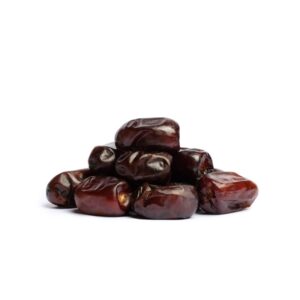
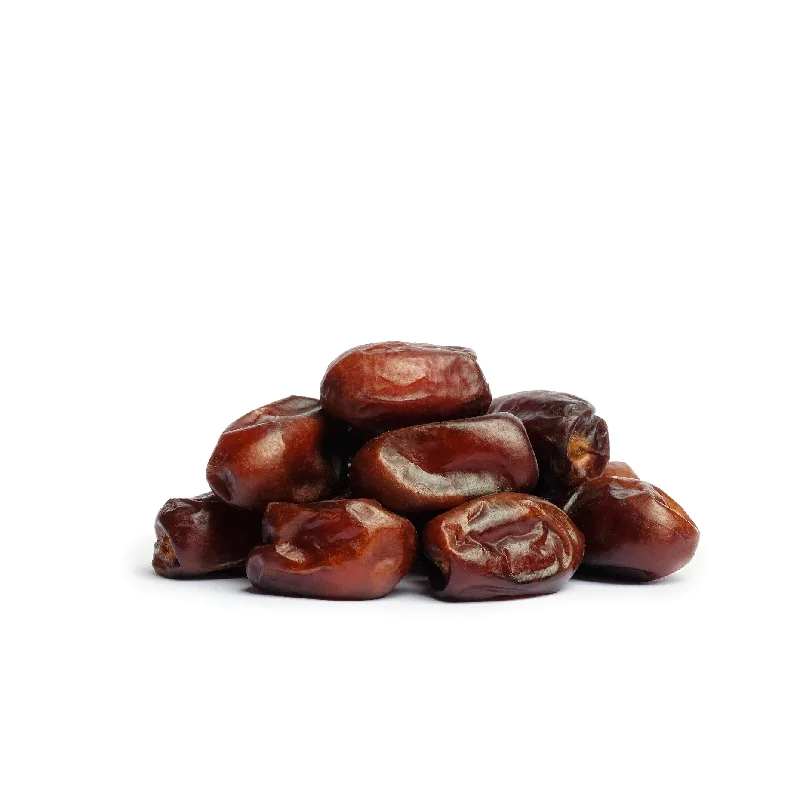
Mazafati dates are the prime fresh option for importers targeting premium retail, specialty groceries, and health-focused snack shelves. They are dark, soft, and naturally high in moisture, which supports their premium positioning but also requires refrigerated logistics. A reliable Iranian dates supplier is important here because Mazafati dates are strongly associated with Iran, especially southern production regions, and buyers need consistent grading, packaging, and cold-chain discipline.
Top Dried Date Varieties for Import
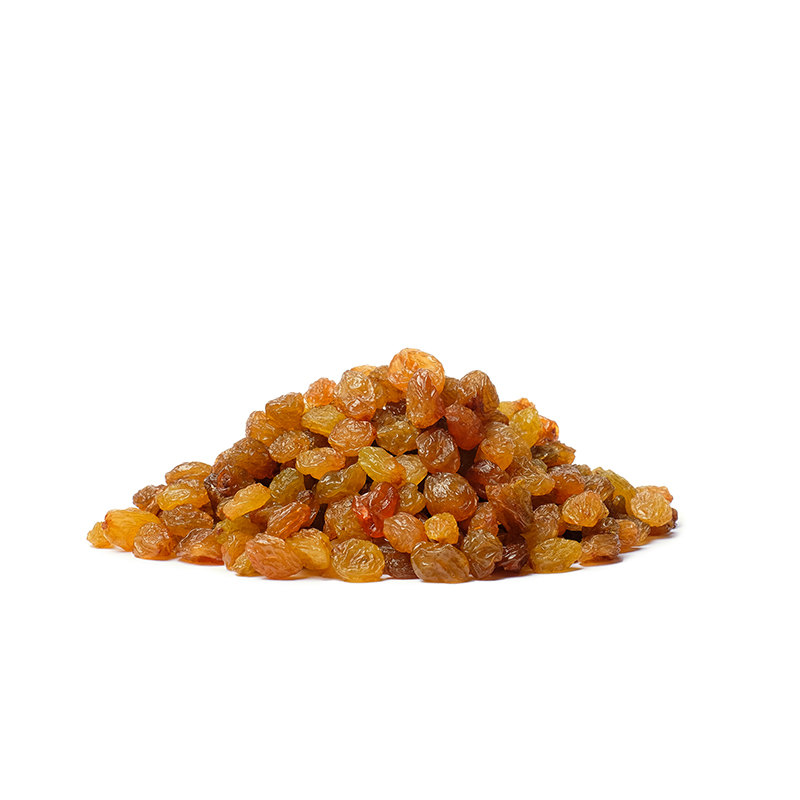
Zahedi dates and Piarom dates are strong choices for dried and semi-dried import programs. Zahedi dates are firm, golden to light brown, and practical for price-sensitive wholesale dates channels. Piarom is semi-dried, firmer, and positioned for premium retail. Both varieties are suitable for long-distance shipping because they handle pressure better than soft fresh dates, making them efficient for bulk date imports and regional distribution.
Benefits of Importing Fresh Dates
Fresh dates work best when importers have cold storage, fast retail turnover, and customers willing to pay for softer texture and premium presentation. In Fresh vs Dried Dates strategy, fresh inventory is the higher-risk, higher-positioning option.
Premium Market Appeal
Fresh dates can command higher retail prices because they are usually sold as premium, gourmet, or health-focused products in specialty grocery stores. This appeal is strongest when cartons are well graded, the skin is clean, and the cold chain protects texture. For an importer, the value is not only the fruit itself; it is the ability to sell a differentiated product instead of competing only on bulk commodity pricing.
also read : Exploring Iran Dates Suppliers
Consumer Preferences
Consumers increasingly use fresh dates in smoothies, raw desserts, energy snacks, and natural sweetening. They also appeal to buyers looking for a lower-calorie alternative to denser dried fruit by weight. This supports Mazafati dates in premium retail channels, especially when the pack format is convenient and the product story is clear. Fresh vs Dried Dates decisions should therefore reflect how local consumers actually use the product.
Benefits of Importing Dried Dates
Dried dates are the better option when the priority is supply chain stability, lower operational risk, and high-volume sales. In Fresh vs Dried Dates purchasing, dried inventory usually wins when distributors need predictable stock movement across supermarkets, factories, and food-service buyers.
Longer Storage Life
A long date shelf life reduces shrinkage, write-offs, and forced discounting. Dried dates can remain commercially useful for years when kept dry, sealed, ventilated, and protected from pests. For distributors managing wholesale dates across several cities, this flexibility makes inventory planning easier and reduces the financial impact of slow-moving stock.
Lower Transportation Costs
Dried dates do not require expensive refrigerated containers for standard international shipping. Because they carry less water, they also reduce freight cost per saleable unit. This gives dried products an advantage in bulk date imports, especially for importers building container-load programs where freight, insurance, port handling, and inland transport determine the final landed cost.
Storage and Handling for Bulk Importers
Storage and handling should be decided before the purchase contract is signed. Fresh vs Dried Dates sourcing fails when importers buy the right product but use the wrong warehouse, temperature range, or dispatch speed.
Cold Chain Logistics for Fresh Dates
Fresh dates must be transported and stored at 0°C to 5°C. Any break in the cold chain can trigger rapid fermentation, texture breakdown, and spoilage, especially in high-moisture lots. Importers should confirm reefer availability, pre-cooling, port plug-in capacity, and refrigerated last-mile delivery before ordering Mazafati dates or other fresh varieties.
Warehousing Standards for Dried Dates
Dried dates require dry, well-ventilated, pest-controlled warehousing. Ambient room temperature is usually sufficient when the product is sealed and protected from moisture and insects. This cuts operating costs sharply compared with chilled storage and makes Zahedi dates practical for importers serving multiple wholesale dates customers from one central warehouse.
Fresh vs Dried Dates Comparison
Fresh vs Dried Dates should be compared through cost, logistics, demand, and ROI, not only sensory preference. The table below gives importers a practical commercial view before committing to a supply program.
| Factor | Fresh Dates | Dried Dates |
|---|---|---|
| Moisture | 20% to 50%, heavier cartons | Below 20%, freight-efficient |
| Shelf life | Up to 8 months refrigerated | 1 to 5 years in dry storage |
| Logistics | Requires 0°C to 5°C cold chain | Standard dry freight and warehousing |
| Typical varieties | Mazafati dates | Zahedi dates, Piarom |
| Best channel | Premium retail, gourmet stores | Supermarkets, factories, distributors |
| Main risk | Spoilage and cold-chain failure | Pest control and moisture absorption |
Cost
Fresh dates may have a higher total cost because chilled storage, reefer freight, and faster distribution add operational expense. Dried dates often have lower landed costs in bulk date imports because standard containers, lower moisture, and longer storage reduce cost per saleable kilogram.
Logistics
Fresh dates require strict temperature control from packhouse to retail shelf. Dried dates can move through standard freight, dry warehouses, and slower distribution routes. For Fresh vs Dried Dates logistics, the importer’s infrastructure is often more important than the purchase price.
Market Demand
Fresh dates often see major demand spikes during Ramadan and seasonal gifting periods, when consumers look for premium table fruit. Dried dates have steadier year-round demand because they serve industrial users, supermarkets, bakeries, snack brands, and private-label retail packs.
Profit Margins and ROI
Fresh dates can deliver higher margins per box, but spoilage risk can erase those margins quickly. Dried dates usually produce lower margins per unit but support higher-volume, lower-risk sales. In Fresh vs Dried Dates ROI planning, fresh programs need speed and control, while dried programs need scale and reliable repeat orders.
Which Type Should Importers Choose?
Importers should choose fresh dates only if they have cold storage, fast-moving retail partners, and the ability to manage quality within strict temperature limits. Choose dried dates if the target market is supermarkets, industrial users, wholesalers, or distributors that require stable year-round supply. The strongest strategy may combine both: Mazafati dates for premium seasonal demand and Zahedi dates or Piarom for dependable bulk programs through an experienced Iranian dates supplier.
FAQ
Are Fresh Dates More Expensive to Import?
Yes. Fresh dates are more expensive to import primarily because mandatory refrigerated shipping, cold storage, and specialized cold-chain logistics are required to prevent spoilage.
Which Dates Have a Longer Shelf Life?
Dried dates have a significantly longer shelf life, lasting anywhere from 1 to 5 years under proper dry storage conditions.
Conclusion
Fresh vs Dried Dates is a commercial decision based on cold-chain capacity, target buyers, risk tolerance, and expected turnover. Fresh dates offer premium positioning and higher per-box margins, while dried dates deliver long date shelf life, cheaper logistics, and stable high-volume sales. For importers seeking both categories, Amin Farms can support sourcing of premium Mazafati dates and dependable Zahedi dates as a reliable Iranian dates supplier.
Related Products