
Navigating the Iranian Dates Export Process requires strict adherence to agricultural standards, international trade documentation, and specialized logistics. This document provides a highly technical, operational framework for B2B procurement, specifically designed for international importers, food distributors, and freight forwarders operating within the Russian Federation, the Commonwealth of Independent States (CIS), and the Eurasian Economic Union (EAEU).
Overview of the Iranian Dates Export Industry
The dates export industry is defined by an annual agricultural output exceeding 300,000 metric tons of primary commercial cultivars, including Mazafati, Zahedi, and Piarom, positioning it as a fundamental node in the global food supply chain.
The highest volume of these agricultural exports is destined for Northern neighboring countries, specifically Russia and CIS states. Consequently, the Iranian Dates Export Process is highly optimized for Eurasian trade routes, utilizing multimodal transit corridors to facilitate continuous, high-tonnage freight distribution.
Popular Date Varieties for International Trade
Date varieties are technically differentiated by their intrinsic moisture content, which dictates maximum shelf-life and specific transport protocols.
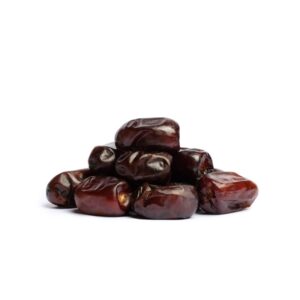
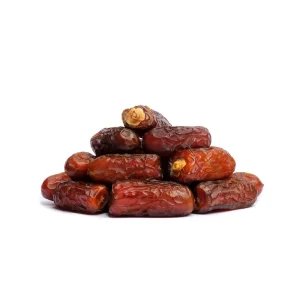
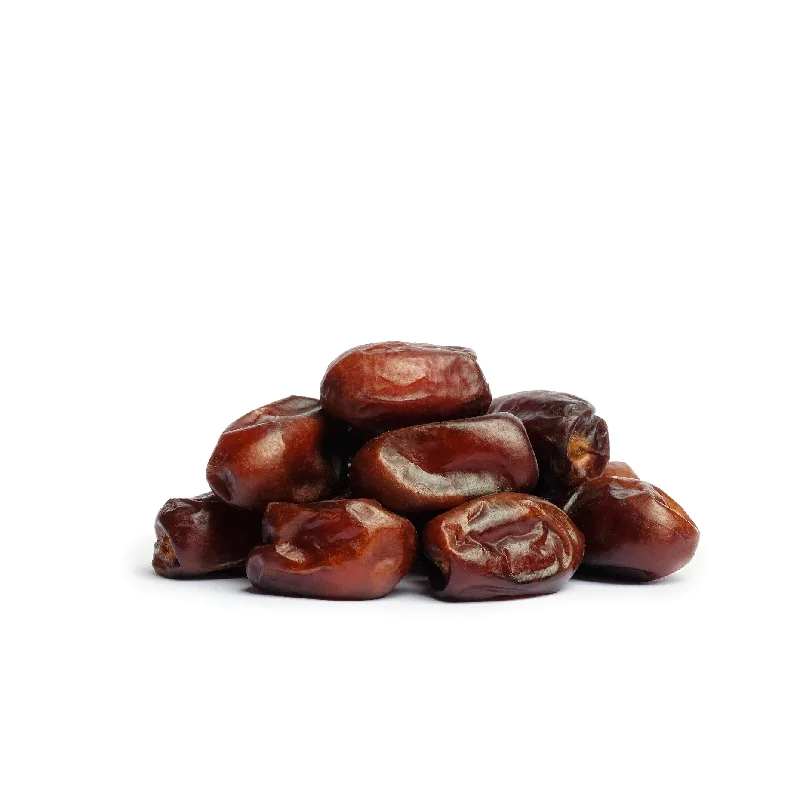
Mazafati dates possess a high moisture content, calibrated between 15% and 35%. This biological parameter requires an uninterrupted cold chain to prevent bacterial fermentation. Conversely, Zahedi dates are classified as dry, with a moisture content strictly below 14%. This dry composition simplifies logistics, allowing for standard ambient temperature transport without structural degradation.
Key Requirements for Exporting Dates from Iran
Export prerequisites encompass the statutory legal licenses enforced by state commercial authorities that authorize a corporate entity to dispatch domestic agricultural goods internationally.
The fundamental requirement for any exporting firm is possessing a valid commercial card issued by the Iran Chamber of Commerce, Industries, Mines and Agriculture. This document acts as the primary legal credential allowing a company to execute cross-border trade, process customs declarations, and manage foreign currency transactions.
Exporter Registration and Customs Licensing
Exporter registration is the mandatory technical integration of a trading entity into the national Electronic Window for Cross-Border Trade (EPL system) for continuous digital oversight.
Trading entities must input their corporate identification matrices, commercial card credentials, and tax identification numbers into the EPL architecture. Generating these standardized customs profiles is a prerequisite before initiating the Iranian Dates Export Process.
Essential Export Documents for Iranian Dates
The Iranian Dates Export Process relies on standardized international trade documents to clear both origin and destination customs checkpoints efficiently and without demurrage penalties.

Commercial Invoice
A commercial invoice is a legally binding document executed between the supplier and the buyer that explicitly details the sold commodities, unit metrics, and the total financial liability.
For date exports, this document must precisely denote the Harmonized System (HS) Code, recognized universally as 080410. Furthermore, it must outline the transaction currency, net weight, gross weight, and the agreed-upon B2B Incoterms.
Packing List
A packing list is a detailed logistical document specifying the exact contents, net weight, gross weight, and structural dimensions of each individual package within a consignment.
This document meticulously records the palletization matrix. Procurement officers and forwarders utilize this data to calculate container volume using the formula V = L × W × H to maximize pallet fitting within standard refrigerated containers without exceeding weight limits.
Certificate of Origin
The Certificate of Origin is a sovereign document formally declaring the specific country in which an agricultural commodity was cultivated and processed.
This document is critical for establishing the economic nationality of the cargo. Presentation is mandatory for applying preferential tariff rates and executing duty reductions in destination markets, particularly within the EAEU framework.
Phytosanitary Certificate
A Phytosanitary Certificate is an official statutory document issued by the plant protection organization of the exporting country to the equivalent authority of the importing country.
During the Iranian Dates Export Process, this proves the agricultural cargo has been systematically inspected, subjected to required treatments, and verified free from quarantine pests, notably Oryzaephilus surinamensis.
Bill of Lading or Air Waybill
A Bill of Lading (B/L) is a legal document issued by a maritime or air carrier to a shipper, detailing the specific type, exact quantity, and ultimate destination of the transported goods.
Operating as a definitive receipt of shipment and a legally binding title of ownership, the B/L is required to transfer liability and legally release cargo at destination terminals.
CMR Waybill (International Consignment Note)
The CMR Waybill is the standard legal document regulating the international transport of goods by road across multiple sovereign borders.
Because a massive portion of date consignments transits to the Russian Federation via heavy transit trucks, the CMR is a vital part of the Iranian Dates Export Process. It explicitly defines carrier liabilities and routing parameters.
Quality Standards and Compliance for Export
Export compliance refers to meeting baseline agricultural parameters, including precise moisture limits, verifiable pest control, and required fumigation thresholds necessary for international market entry.

Food Safety Certifications
Food safety certifications are internationally recognized operational frameworks, such as ISO 22000 and HACCP, designed to prevent biological, chemical, and physical hazards in processing environments.
In date processing facilities, these certificates guarantee that sorting lines and packaging environments maintain strict sanitization thresholds, mitigating cross-contamination risks prior to dispatch.
Quality Grading and Inspection
Quality grading is the systematic categorization of agricultural output based on standardized physical attributes, dimensions, individual piece weight, and visual defect margins.
Dates are evaluated mechanically and manually. Premium export grades require a specific weight per piece, typically between 8 and 12 grams, and tolerate a maximum defect percentage of less than 2%.
| Grade Category | Standard Moisture Content | Maximum Defect Tolerance | Estimated Shelf Life (Cold Storage) |
| Premium / Super | 15\% – 20\% | < 2\% | 18 Months |
| Grade A | 15\% – 25\% | < 5\% | 12 – 18 Months |
| Grade B | 15\% – 25\% | < 10\% | 12 Months |
Packaging and Labeling Requirements
Export packaging constitutes the physical containment formats designed for safe transnational transport, long-term storage, and regulatory compliance.
Standard export shipments utilize 5kg or 10kg telescopic corrugated cartons. For the Russian market, these boxes must feature high edge-crush test (ECT) ratings to withstand extended terrestrial transit, vibration, and multi-level pallet stacking.
EAC Labeling and Language Compliance
The Eurasian Conformity (EAC) mark is a mandatory certification mark indicating that a product conforms to all technical regulations of the Eurasian Customs Union.
For entry into the Eurasian market, labels must display the EAC mark and feature nutritional information printed in Russian. This is a non-negotiable step in the Iranian Dates Export Process.
Customs Procedures for Exporting Dates from Iran
Customs procedures encompass the physical cargo evaluation, stringent document verification, and official container sealing conducted by state authorities at designated origin terminals.
This phase ensures that outbound cargo precisely matches the declared export documentation and adheres to all national exit regulations.
Customs Clearance at Key Corridors (Astara and Anzali)
Customs corridors are the officially designated geographical land borders and maritime exit points authorized for cross-border cargo clearance.
The land border crossing at Astara and the Caspian seaport at Bandar Anzali function as the primary hubs for clearing agricultural goods heading north. Customs officers verify payload weights and affix high-security tamper-evident seals to the containers before physical exit.
Financial Transactions and Contract Terms
International B2B trade agreements mandate standardized financial frameworks and globally recognized commercial terms to govern risk transfer and logistics responsibilities.
Contracts predominantly utilize specific Incoterms such as FCA, CIP, or DAP. To determine accurate commercial pricing, exact cargo mass is calculated using the formula: Net Weight = Gross Weight – Tare Weight. Regional trade conventions structure capital transfers through standard B2B advance payment models (e.g., 30% advance, 70% against B/L copy) to mitigate default risks prior to physical dispatch.
Import Regulations in Major Markets
Analyzing and adhering to the sovereign destination laws of importing nations is the final phase of the Iranian Dates Export Process.
Eurasian Economic Union (EAEU) and Russian Import Rules
EAEU import rules define the unified customs regulations and quality standards governing food commodities entering Russia, Belarus, Kazakhstan, Armenia, and Kyrgyzstan.
Russian federal imports demand rigorous adherence to GOST standards for food safety and biological contaminants. Crucially, importers benefit from preferential tariff agreements established between Iran and the EAEU for agricultural commodities, substantially reducing applied import duties.
European Union Requirements
European Union requirements specify the regulatory parameters enforced by the European Food Safety Authority (EFSA) concerning agricultural contaminants and pesticide usage.
The EU mandates strict Maximum Residue Limits (MRLs) for utilized agrochemicals. Furthermore, EFSA enforces strict zero-tolerance thresholds for Aflatoxin contamination, requiring accredited laboratory analysis reports prior to port entry.
United States Import Rules
US import regulations comprise the federal guidelines strictly enforced by the Food and Drug Administration (FDA) and Customs and Border Protection (CBP).
Importers are legally obligated to execute FDA prior notice submissions before cargo arrival and must comply with the Foreign Supplier Verification Programs (FSVP) to ensure hazard analysis alignment with federal standards.
Asia and Middle East Import Standards
Regional import standards represent the specific regulatory requirements dictating food imports within Eastern and Middle Eastern sovereign territories.
While halal certifications are inherently fulfilled, specific markets like India or the UAE impose distinct procedural requirements regarding localized packaging formats, moisture index declarations, and stringent fumigation logs.
Shipping and Logistics Considerations
Shipping logistics involves the physical movement, thermal management, and tracking of freight across international borders. Logistics is the most physically demanding part of the Iranian Dates Export Process.

Cold Chain Logistics for Fresh Dates
Cold chain logistics is defined as a continuous, temperature-controlled supply chain designed to maintain optimal thermal parameters from origin to destination.
High-moisture varieties, notably Mazafati, must be transported utilizing active refrigerated containers (reefers). These units are calibrated to maintain a strict thermal parameter between minus five degrees Celsius and plus five degrees Celsius to prevent bacterial fermentation and moisture loss during transit to colder climates like Russia.
Primary Freight Routes (International North-South Transport Corridor)
The International North-South Transport Corridor (INSTC) is a multi-mode transit network of ship, rail, and road routes facilitating expedited freight movement across Eurasia.
Consignments initiate at southern Iranian groves in Kerman or Hormozgan. The cargo is trucked to northern ports, then shipped via Ro-Ro vessels across the Caspian Sea to Astrakhan, Russia. Alternatively, trucks utilize the direct terrestrial corridor, passing through Azerbaijan directly into the Russian Federation.
Frequently Asked Questions
This section provides direct technical resolutions to standard operational queries regarding transit timelines, transport parameters, and statutory clearance documentation.
How long does the Iranian Dates Export Process take from packaging to the destination port?
Terrestrial transit via standard trucking networks to major hubs like Moscow generally requires 10 to 15 days, dependent strictly on border clearance velocity at the Astara crossing and regional weather variables.
Does exporting fresh dates require refrigerated transport?
Yes, specifically for high-moisture cultivars. Mazafati dates mandate active reefers set to plus five degrees Celsius to prevent spoilage. Dry variants, such as Zahedi, safely permit standard ambient temperature routing.
What is the most critical document for clearing customs in destination countries?
The official Phytosanitary Certificate is universally required to finalize the Iranian Dates Export Process and clear health inspections before destination market distribution is authorized.
Related Products