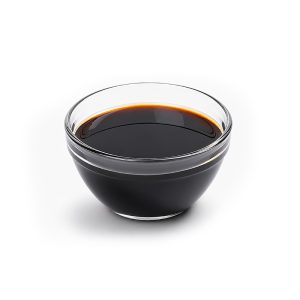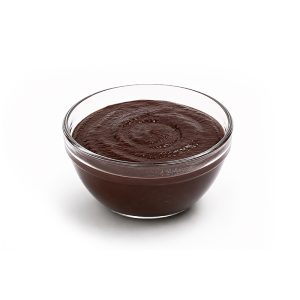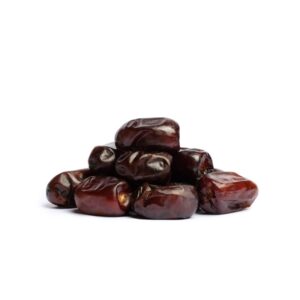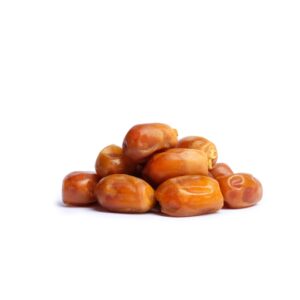
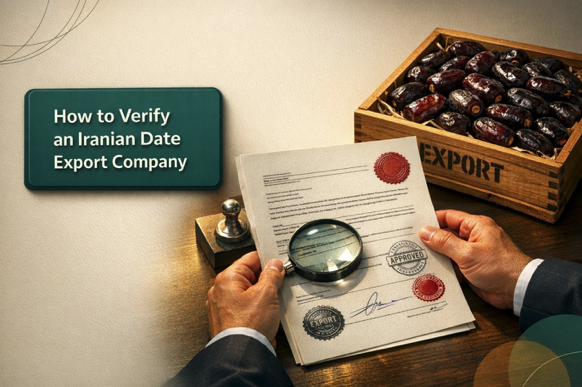
Iran is the world’s second-largest date producer after Egypt, with annual output of approximately 1.2–1.5 million tonnes. It exports to over 50 countries, with Russia and CIS markets among the top destinations. The volume of suppliers is large, and quality and reliability vary significantly. For Russian buyers working across long distances with limited direct oversight, verification before any payment is essential.
Check Company Registration and Legal Status
Legal verification is the first filter. It costs nothing and eliminates a large portion of unreliable operators immediately.
Verify Business Registration in Iran
All Iranian companies must be registered with the Companies Registration Office (Sazman Sabt Asnad va Amlak). Ask the supplier for their Shenase Melli Hoghoughi (legal entity national ID number) and verify it at irsherkat.ssaa.ir. The database shows company name, registration date, registered address, and directors. If the company cannot provide this number or the details do not match what they told you, do not proceed.
Export License and Trade Authorization
A registered company is not automatically authorized to export. The company must hold a valid Kart Bazargani (export card) issued by Iran’s Trade Promotion Organization (TPO). This card is renewed annually. Ask for a copy and verify the expiry date. Companies registered with Iran’s Chamber of Commerce, Industries, Mines and Agriculture (ICCIMA) have an additional layer of accountability. Ask for their ICCIMA membership number.
Verify Export Experience and Track Record
A company can produce dates for decades and still be inexperienced at export. These are different competencies.
Years of Export Experience
Ask specifically how many years they have been exporting internationally, not how long they have been in business. Request copies of previous Bill of Lading documents or customs export declarations as evidence. A credible Iranian date export company targeting the Russian market should have at least 3–5 years of documented export history.
Previous Export Markets
Ask which countries they have shipped to. Exporters with experience in Russia, Kazakhstan, Azerbaijan, Belarus, or other CIS countries already understand TR CU labeling requirements, Rosselkhoznadzor phytosanitary procedures, and the relevant routing options. This experience directly reduces your risk.
Request Export References
Ask for contact details of two or three previous buyers in Russia or CIS countries. Contact them directly. Ask about delivery accuracy, product quality on arrival, and how disputes were handled. A serious Iranian date export company will provide references without hesitation.
Check Product Quality and Date Varieties
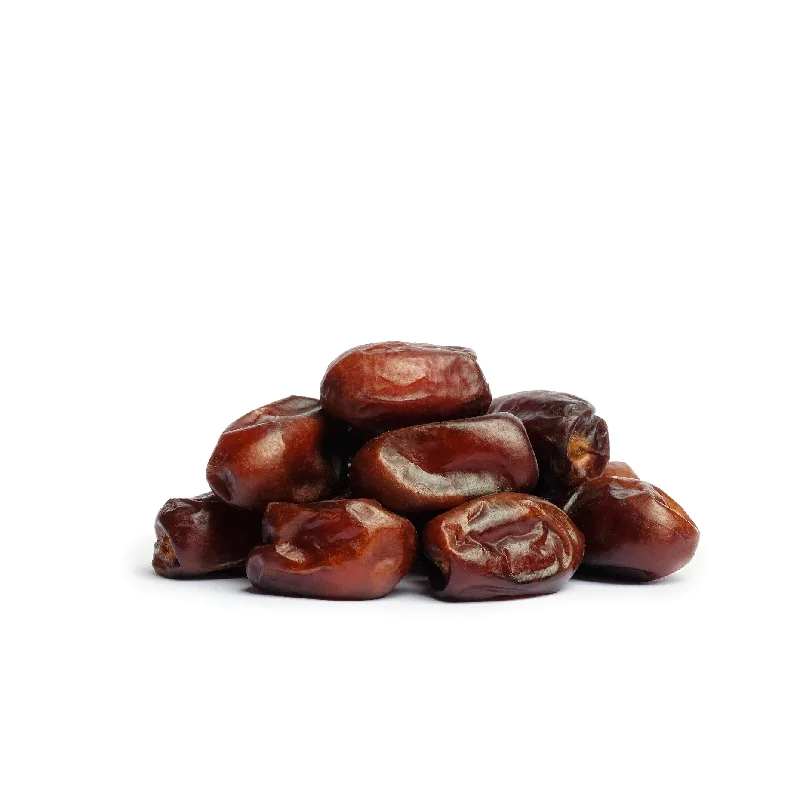
Iran produces over 400 local date varieties, but a small number dominate export markets. Know the key specifications before you order.
Confirm Available Date Varieties
|
Variety |
Type |
Main Growing Region |
Moisture Content |
Storage Temp |
Shelf Life |
Notes |
|
Mazafati (Rotab) |
Soft |
Bam, Jiroft – Kerman province |
15–35% |
−5°C to 0°C (long-term); 0–4°C (short-term) |
Up to 18 months frozen; 3–6 months refrigerated |
Most exported Iranian date. Requires unbroken cold chain. |
|
Semi-dry |
Hajiabad – Hormozgan province |
~15% |
Cool, dry; 15–18°C acceptable |
Up to 18 months at room temperature |
Premium variety. Thin skin, elongated shape. High market value. |
|
|
Zahedi |
Dry |
Fars, Khuzestan, Bushehr provinces |
~14% or less |
Room temperature acceptable |
Up to 24 months |
Firm texture. Suitable for bulk industrial use. Tolerates poor cold chain. |
|
Kabkab |
Semi-dry |
Bushehr, Fars provinces |
~18–22% |
Cool storage preferred; below 15°C |
12–18 months with proper storage |
Amber color. Widely used in processing and retail. |
|
Sayer (Stamaran) |
Semi-dry |
Khuzestan province |
~15–18% |
Cool, dry |
Up to 18 months |
Major export variety. Dark brown, slightly wrinkled skin. |
|
Rabbi |
Semi-dry |
Sistan-Baluchestan province |
~15% |
Cool, dry |
Up to 18 months |
Long shape, dark color. Growing export demand. |
Request Samples Before Ordering
Request samples from the current or most recent harvest season. Evaluate color uniformity, texture, moisture level, absence of sugar crystallization (for soft varieties), and packaging integrity. For Mazafati specifically, check that the cold chain was maintained during sample shipment, if the sample arrived warm and degraded, the bulk shipment will have the same problem.
Quality Grading Standards
Iranian date exports follow ISIRI (Institute of Standards and Industrial Research of Iran) standards. For Mazafati, the relevant standard is ISIRI 1402. Grades are typically defined by size, moisture content, absence of defects, and visual appearance. Ask the company to specify the grade they are quoting and provide the corresponding product specification sheet with measurable parameters, not just descriptive terms like “premium” or “export quality.”
Review Certifications and Compliance
For Russian market entry, specific certifications are required, not optional. Confirm these before discussing price.
Food Safety Certifications
|
Certification |
What It Confirms |
Required For |
|
HACCP |
Hazard control procedures at processing facility |
Most international markets; baseline requirement |
|
ISO 22000 |
Full food safety management system, third-party audited |
EU, Russia, serious retail buyers |
|
Halal |
Compliance with Islamic food preparation standards |
Middle East, Muslim-majority regions of Russia |
|
GlobalG.A.P. |
Good agricultural practices at farm level |
EU retail chains; increasingly requested by Russian importers |
Ask for the actual certificate documents, not logos on a website. Check the issuing body name, certificate number, scope, and expiry date. Verify the issuing body is accredited.
Phytosanitary and Health Certificates
Every shipment entering Russia requires:
- A phytosanitary certificate issued by Iran’s Plant Protection Organization (PPO), confirming the product is free from regulated pests and diseases. This is checked by Rosselkhoznadzor at the Russian border.
- A quality and safety certificate (or declaration of conformity) aligned with TR CU 021/2011 (Technical Regulation on Food Safety) for Customs Union market entry.
A company with genuine export experience to Russia will know these documents by name and have templates ready. If they are unfamiliar with Rosselkhoznadzor requirements, they have not exported to Russia before.
Verify Packaging and Labeling Capabilities
Packaging failures and labeling non-compliance are among the most common reasons for shipment rejection at Russian customs.
Export Packaging Standards
Standard export packaging for Iranian dates:
- Inner packaging: vacuum-sealed polyethylene bags or modified atmosphere packaging (MAP) for soft varieties
- Retail units: 500g, 1 kg, or 2 kg consumer packs
- Carton boxes: 5 kg or 10 kg net weight
- Master cartons: 10–12 kg, double-walled corrugated cardboard
- Palletization: standard EUR pallet (120×80 cm) or industrial pallet (120×100 cm)
Ask for photos of actual packaging from previous shipments. Confirm that packaging materials are food-grade and that the company uses moisture-barrier materials for soft varieties.
Private Label and Custom Packaging
Confirm whether the company handles private label in-house or outsources it. In-house is preferable. Ask for samples of previous private label work and confirm minimum order quantities for custom packaging runs.
Russian Labeling Requirements
Under TR CU 022/2011, all food products sold in Russia must carry labels in Russian language including: product name, net weight, ingredients list, nutritional information per 100g, storage conditions, shelf life, country of origin, manufacturer name and address, and importer name and address. Confirm the company has produced TR CU-compliant labels before and request an example label for review.
Evaluate Pricing and Payment Terms
Pricing structure and payment terms reveal how professional a supplier is and where the financial risks lie.
Wholesale Pricing Transparency
A reliable Iranian date export company will provide a price breakdown covering: product cost per kg by variety and grade, packaging cost, inland transport to port of loading, port handling fees, and the final FOB or CIF price. Request this in writing. Verbal price quotes with no documentation are not acceptable for contract preparation.
Payment Methods Used in Iran
Due to SWIFT restrictions on Iranian banks, standard international payment methods are not directly available. Actual methods used:
- TT (Telegraphic Transfer) through intermediary banks in UAE (Dubai), Turkey (Istanbul), or Iraq (Erbil)
- LC (Letter of Credit) through third-country correspondent banks, slower but more secure
- Cryptocurrency transfers, increasingly used, higher risk, less traceable
Understand the full payment chain before agreeing. Use partial payment structures: 30–50% upfront, balance against copy of Bill of Lading and other shipping documents.
Red Flags in Pricing
- Price significantly below current market rate for the stated variety and grade
- Price changes after initial written quotation without explanation
- Request to change payment destination or beneficiary name after agreement
- Demand for 100% advance payment from a new buyer
Assess Logistics and Shipping Routes
Iran shares a border with Azerbaijan and has Caspian Sea access, which creates direct routing options to Russia. Know the realistic routes before discussing terms.
Main Shipping Routes from Iran to Russia
|
Route |
Method |
Key Points |
Transit Time |
Suitable For |
|
Bandar Anzali / Amirabad → Astrakhan / Makhachkala |
Caspian Sea (Ro-Ro or container ferry) |
Direct Iran–Russia route. Part of North–South Transport Corridor (INSTC). Reefer containers available on some services. |
3–7 days sea transit; total 10–20 days |
All varieties including Mazafati (if reefer available) |
|
Tabriz → Astara (Iran/Azerbaijan border) → Baku → Yalama → Derbent → Russian cities |
Road freight (truck) |
Most direct land route. Crosses Azerbaijan. Well-established corridor. Reefer trucks available. |
4–7 days depending on border wait times |
All varieties; reefer trucks for Mazafati |
|
Tabriz / Tehran → Turkey (Gürbulak border) → Georgia → Russia (Upper Lars crossing) |
Road freight (truck) |
Longer route. Upper Lars (Georgia–Russia border) has frequent congestion and seasonal closures. Less preferred. |
7–14 days |
Dry and semi-dry varieties; less suitable for Mazafati |
For most Russian buyers, the Caspian Sea route (Anzali/Amirabad → Astrakhan/Makhachkala) or the road route through Azerbaijan are the most practical and cost-effective options. Confirm which route the exporter uses regularly and whether they have established relationships with freight forwarders on that corridor.
Refrigerated Shipping Experience
Mazafati dates must be maintained at −5°C to 0°C for long-term storage and 0–4°C during active transit. Ask the company specifically:
- Do you use reefer containers or reefer trucks on this route?
- Who is your freight forwarder on the Caspian or Azerbaijan corridor?
- Can you provide temperature logs from a previous Mazafati shipment to Russia?
A company that cannot answer these questions specifically has not shipped Mazafati to Russia before.
Incoterms Used
FOB (Free on Board) and CIF (Cost, Insurance, Freight) are most common. For Russian buyers new to a supplier, CIF gives you more control over what you are paying for. Confirm both parties are using Incoterms 2020 and that the named port or delivery point is clearly specified in the contract.
Conclusion
Iran’s date export industry includes well-established companies with the certifications, cold chain infrastructure, and routing experience to serve the Russian market reliably. The verification process in this guide identifies those companies and filters out the rest. Every step here has a direct cost consequence if skipped, substandard product, customs rejection, or non-delivery. Follow this checklist before the first order, and you build a supply relationship on a factual foundation rather than assumptions.
Related Products