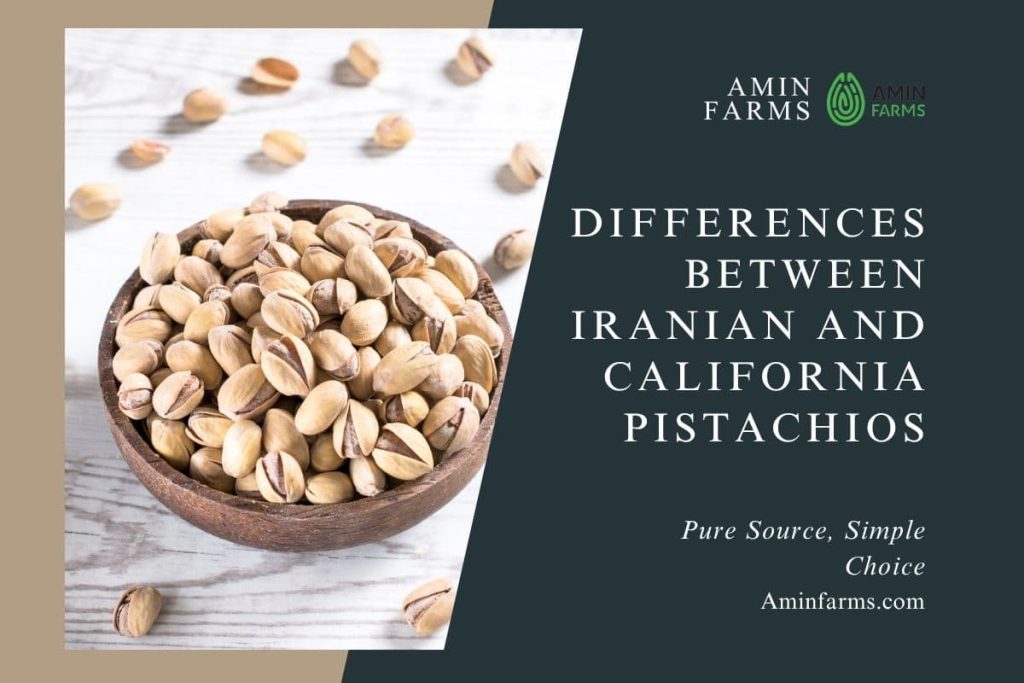
Iranian vs. California Pistachios: Key Differences for Buyers and Importers
Iranian and California pistachios are two of the most important origins in the global pistachio market. Both are used in retail, food manufacturing, confectionery, and international trade, but they differ in terms of available varieties, growing conditions, processing systems, product specifications, and market positioning.
For buyers and importers, choosing between Iranian and California pistachios should not be based solely on general claims about which origin is “better.” The most suitable option depends on the intended application, target market, required variety, size and appearance specifications, food-safety requirements, available supply, pricing, and logistics.
This guide compares Iranian and California pistachios across several practical factors, including flavour characteristics, varieties, size and shape, nutritional considerations, pricing, farming systems, export logistics, and commercial suitability. Where product characteristics can vary by cultivar, harvest conditions, or processing method, buyers should evaluate the specifications of the actual product rather than relying only on its country of origin.
Whether you are sourcing pistachios for wholesale distribution, premium retail, food manufacturing, or private-label products, understanding these differences can help you make a more informed purchasing decision.
Flavour Face-Off: Iranian vs. California Pistachios
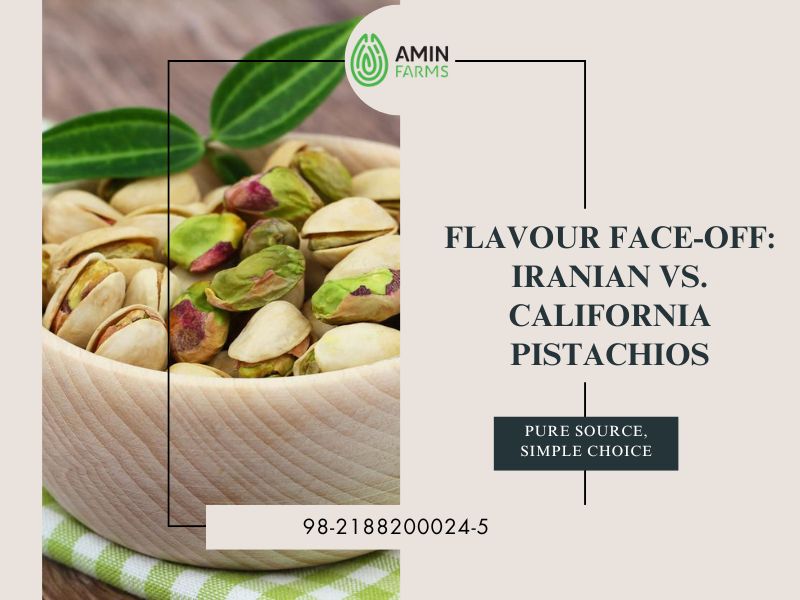
Flavour Differences: Iranian vs. California Pistachios
Flavour is one of the most frequently discussed differences between Iranian and California pistachios. However, taste is influenced by several factors, including cultivar, growing conditions, harvest maturity, storage, and roasting method. For this reason, flavour characteristics can vary even among pistachios produced within the same country.
Iran produces several commercially important pistachio varieties, including Akbari, Ahmad Aghaei, Fandoghi, and Kalleh Ghouchi. These varieties can differ in kernel characteristics, shape, size, and sensory profile. Many buyers and consumers associate certain Iranian varieties with a rich and distinctive flavour profile, particularly when the product is freshly processed and roasted.
California’s pistachio industry is known for large-scale production and standardized processing. The Kerman cultivar has historically played an important role in California production, although commercial production systems and available cultivars can change over time. California pistachios are often valued by buyers who prioritize consistency in size, processing, and large-scale supply.
Rather than assuming that one origin universally offers better flavour, buyers should compare representative samples from specific suppliers and varieties. The preferred flavour profile will depend on the target market and product application.
Buyer Insight: When sourcing pistachios for a premium retail product, request samples of the exact variety and processing method you intend to purchase. For food manufacturing, consistency between batches may be more important than subjective flavour preferences.
Taste Profiles and Cultivation Impacts
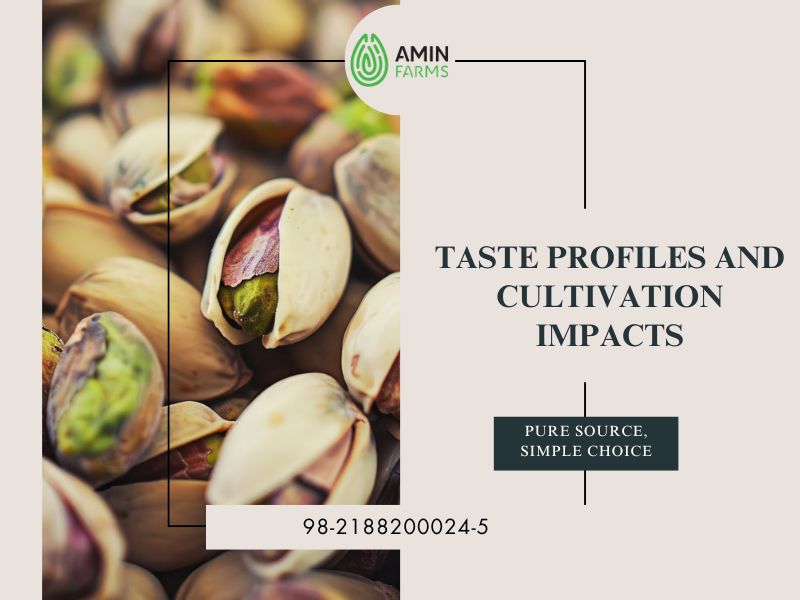
How Variety and Growing Conditions Can Affect Flavour
Pistachio flavour is shaped by a combination of genetics, environmental conditions, harvest timing, and post-harvest processing. Iran’s diverse range of commercial pistachio cultivars gives buyers access to products with different physical and sensory characteristics. Akbari, Ahmad Aghaei, Fandoghi, and Kalleh Ghouchi, for example, are commonly marketed as distinct varieties with different shapes and commercial applications.
California production is generally characterized by highly organized orchard management and large-scale processing systems. These production methods can help suppliers deliver standardized products, particularly for buyers who require consistent specifications across large orders.
It is important not to attribute every flavour difference solely to the country of origin. Roasting temperature, storage conditions, kernel moisture, freshness, and the age of the product can all influence the final taste experienced by consumers.
For commercial buyers, the most reliable approach is to evaluate flavour together with measurable specifications such as variety, grade, kernel size, moisture requirements, defect tolerance, and processing method.
Discover more: Raw Vs Roasted Pistachios
Size and Shape Showdown Between Varieties
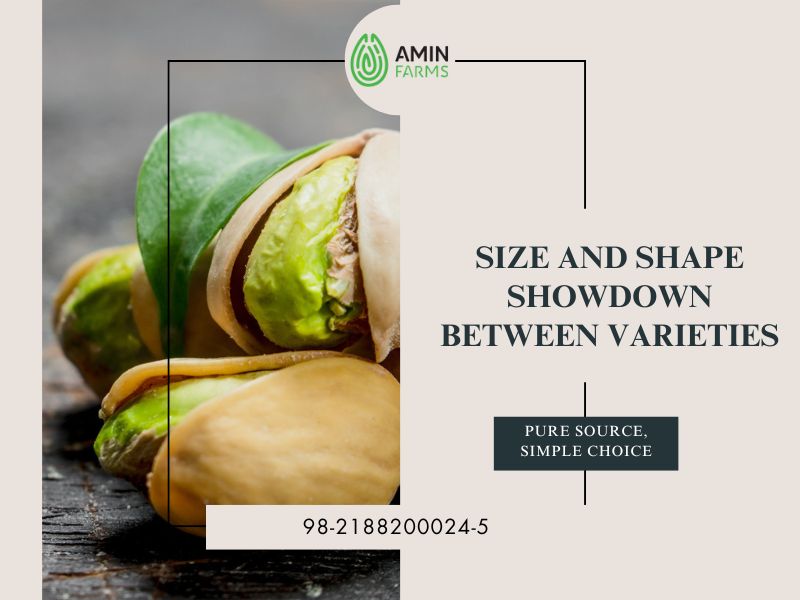
Beyond taste, the difference between Iranian and California pistachios is clearly visible in their size, shape, and shell appearance. These physical traits not only affect how pistachios look and open, but also determine how they’re used, whether for snacking, confectionery, or large-scale processing.
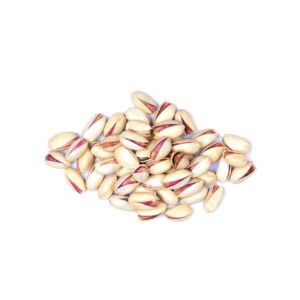
Iranian pistachios come in many shapes and sizes: Akbari (long), Ahmad Aghaei (almond-shaped), and Fandoghi (round). This natural diversity gives them a wide range of visual options. They’re also known for a higher percentage of naturally open shells, the famous smiling pistachios prized in global markets.
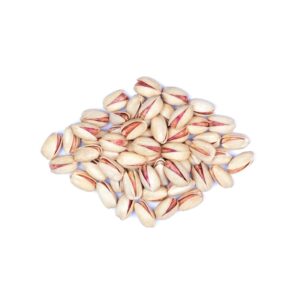
In contrast, California pistachios, almost entirely from the Kerman variety, are larger, rounder, and more uniform. Their shells are smooth and pale tan, rarely needing bleaching. So, when it comes to Iran vs. California pistachios, the choice is between character and consistency, between tradition’s beauty and modern precision.
Why Iranian Pistachios Often Win on Openness?
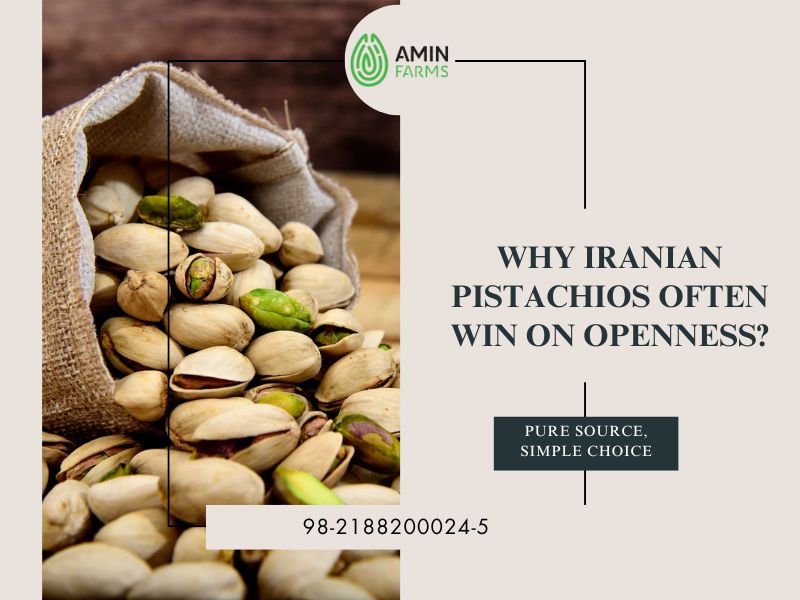
Among all the qualities that set pistachios apart, few are as visually and commercially important as how naturally their shells open. This single trait defines texture, quality, and even the joy of cracking them open.
Iranian pistachios are globally prized for their high percentage of naturally open shells, known as smiling pistachios. At the same time, California varieties often rely on mechanical processes to achieve the same look. Here’s what truly shapes this difference between Iranian and California pistachios:
- Ripening Time: Iranian farmers, guided by centuries of experience, harvest precisely when the pistachio reaches full maturity and the shell splits naturally.
- Climate Conditions: Long, hot days and cool desert nights in Iran encourage full kernel development and natural shell opening.
- Genetic Variety: Cultivars like Fandoghi and Akbari are genetically inclined to open wider, giving them their signature “smile.”
- Irrigation Methods: Traditional, less-intensive watering creates natural stress that promotes healthy splitting, unlike California’s controlled, steady irrigation.
- Processing Style: In large-scale U.S. farms, closed-shell pistachios are mechanically opened or heat-treated. Iranian exports, in contrast, focus on naturally open nuts, a mark of authenticity and premium quality.
In short, when comparing Iran vs California pistachios, Iran’s secret lies in nature itself, not machinery.
Discover more: Shelled vs Unshelled Pistachio
Nutritional Breakdown: Iranian or California?
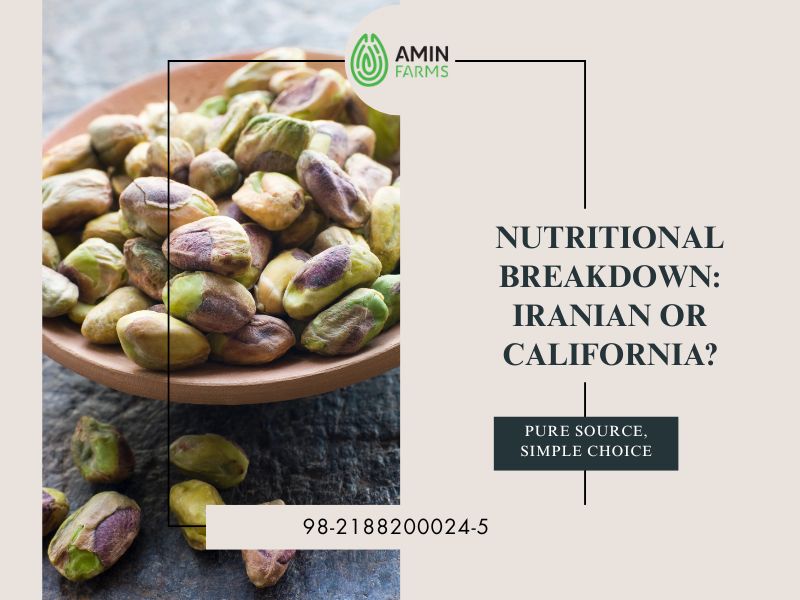
Forget the simplistic labels; pistachios, irrespective of their sun-drenched origins, are truly nature’s miniature health vaults—brimming with protein, fibre, beneficial fats, and essential antioxidants. Yet a careful examination of their chemical composition reveals a subtle yet significant difference between Iranian and California pistachios.
The ancient terroir of Iran coaxes a unique richness from its kernels. Consequently, Iranian pistachios naturally possess a slightly elevated oil content. This lipid boost isn’t merely about caloric density; it’s the secret behind their intensely buttery flavour, fueled predominantly by heart-loving monounsaturated fats.
Across the Pacific, the standardized California pistachios often present a profile neatly tailored for modern nutritional metrics, sometimes delivering a fractional edge in protein and fibre per serving.
Ultimately, whether your palate prefers the earthy heritage driving the Iran vs California pistachios debate or the precision of industrial agriculture, both global players deliver spectacular, satisfying nutrition in every single crunch.
Price and Availability in Global Markets
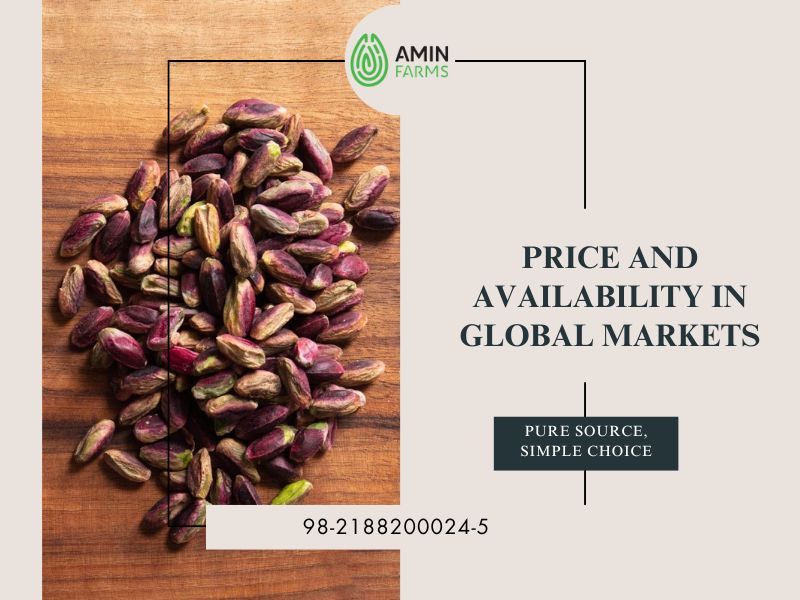
The pistachio rivalry goes far beyond taste and texture; it’s also about price stability and global reach. The difference between Iranian and California pistachios becomes especially clear in international trade.
California pistachios, supported by large-scale production and advanced logistics, offer consistency and dependable pricing across U.S. and European markets. Their prices, though influenced by weather, remain relatively stable and less exposed to currency swings.
Iranian pistachios, prized for their premium flavour and craftsmanship, often command higher prices but face challenges from sanctions, exchange-rate fluctuations, and logistics. Still, in Asia and the Middle East, they maintain a loyal market built on trust and tradition.
In short, the Iran vs California pistachios story is one of trade-offs; California delivers a steady supply, while Iran offers unmatched character at a more dynamic price point.
Environmental and Farming Differences
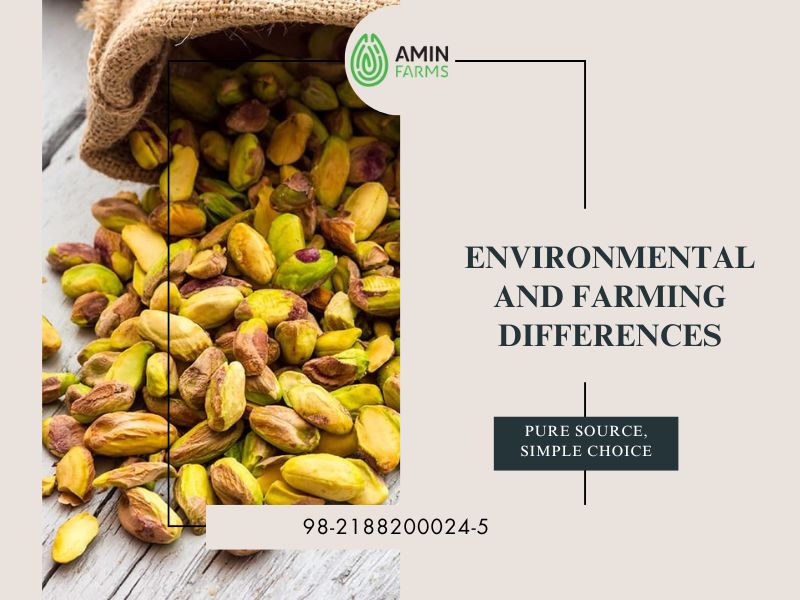
Agricultural management in Iran and California follows two fundamentally different paths, each indelibly shaping the land and the pistachio kernel itself. This dichotomy highlights the profound difference between Iranian and California pistachios.
California’s system is a marvel of industrial precision, highly mechanized and engineered for maximum efficiency. Its approach is defined by precision irrigation, sophisticated pest control, and rigid quality standards. While this guarantees consistent, uniform output, the sheer scale still means heavy water use.
In contrast, Iran’s pistachios are deeply rooted in centuries of tradition. Iranian trees exhibit remarkable genetic resilience to saline water and the punishing aridity of the climate. Yet, reliance on older irrigation methods presents immediate environmental challenges.
Ultimately, the genuine Iran vs California pistachios story is one of philosophy: California champions science and industrial consistency, whereas Iran relies on time-tested sustainability and climatic wisdom.
Export Logistics, Packaging, and Food Safety
In the agricultural export/import industry, the journey from orchard to port is just as important as the harvest. The logistical approaches between the US and Iran directly impact shelf life, moisture control, and international customs clearance.
Harvesting and Processing Timelines
California utilizes highly mechanized harvesting, shaking nuts from trees and typically hulling and drying them within 12 to 24 hours. This rapid, automated processing minimizes the risk of shell staining and contamination. Modern Iranian export suppliers have adapted by integrating advanced European optical sorting machinery (Sortex) with their traditional harvesting methods, ensuring high-volume loads meet stringent international standards while retaining their heritage flavor.
Combating Aflatoxin with Export-Ready Packaging
Aflatoxin compliance is the most significant hurdle when importing nuts into strict markets like the European Union. While California relies on its rapid drying process to control fungal growth, top-tier Iranian suppliers utilize advanced, export-specific packaging to guarantee safety and freshness during long-haul sea freight:
- Vacuum-Sealed Cartons (10kg – 12.5kg): By removing oxygen, lipid oxidation is halted, preserving the buttery flavor of Iranian pistachios and preventing mold development.
- Nitrogen-Flushed Packaging: Displacing oxygen with inert nitrogen gas extends the shelf life of bulk shipments without the use of chemical preservatives.
- Polypropylene (PP) Woven Sacks (25kg – 50kg): Used for standard in-shell wholesale shipments, offering breathability and cost-effective freight utilization.
Which Pistachio Fits Your Needs in 2026?
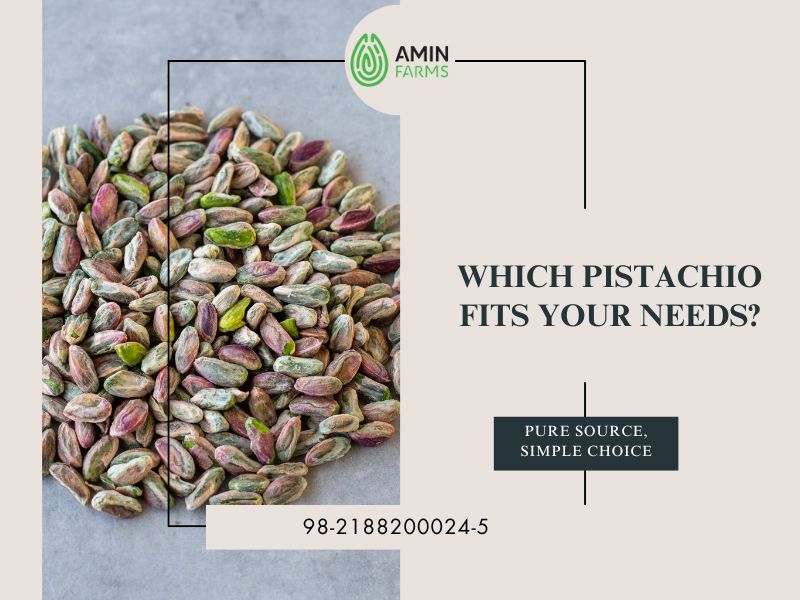
Which Pistachio Is Better for Different Industries?
There is no single winner when comparing Iranian and California pistachios because the ideal choice depends on your business needs. California pistachios are widely preferred for large-scale food manufacturing thanks to their consistent size, uniform appearance, and stable year-round supply. Iranian pistachios, however, are highly valued in premium retail markets due to their rich flavor, naturally open shells, and greater variety of cultivars such as Akbari, Ahmad Aghaei, Fandoghi, and Kalleh Ghouchi. For importers, selecting the right origin should be based on target market preferences, product application, and customer expectations rather than price alone.
Importer Tip: If your customers prioritize premium taste and traditional quality, Iranian pistachios are often the preferred choice. If consistency and industrial processing efficiency are the priority, California pistachios may offer a better fit.
Key Factors Importers Should Compare Before Buying
Before placing a bulk pistachio order, evaluate more than just the purchase price. A comprehensive comparison helps reduce supply risks and improves long-term profitability.
- Flavor profile and consumer preference in the destination market
- Kernel size, shell opening rate, and visual appearance
- Available varieties and product specifications
- Food safety certifications and quality control procedures
- Packaging options for bulk export and shelf-life requirements
- Shipping logistics, lead times, and supplier reliability
- Price stability and long-term sourcing strategy
Considering these factors allows importers to choose the pistachio origin that best matches their commercial goals while maintaining consistent product quality across international markets.
Choosing between these two pistachio powerhouses depends on what you value most in the difference between Iranian and California pistachios.
Suppose you seek reliability, consistent size, and a stable year-round supply. In that case, California pistachios are your best choice, engineered for industrial-scale and commercial use. But if you desire deep, complex flavour and naturally distinctive shapes born from heritage farming, Iranian pistachios remain unmatched. Their taste tells a story of climate, culture, and care.
For those looking for premium quality, Amin Farms stands among Iran’s leading suppliers, known for delivering top-grade pistachios that embody the authentic excellence of Iranian agriculture.
Each nut reflects generations of craftsmanship, sustainable cultivation, and an enduring passion for quality that continues to set Iranian pistachios apart worldwide.
Related Products