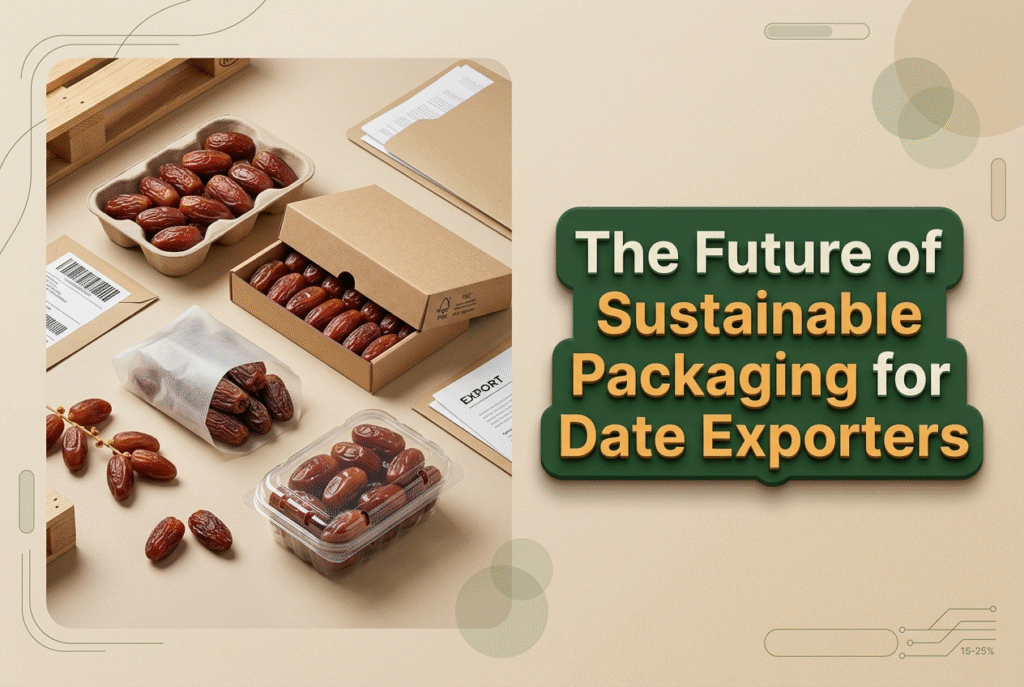
In the highly competitive global date market, packaging has evolved from a simple container to a critical statement of brand value, quality assurance, and environmental responsibility. Amid shifting global trade dynamics and heightened consumer awareness, sustainability is no longer an optional consideration but a core requirement for market access and brand differentiation. This article explores the challenges, materials, and innovative technologies defining the future of sustainable packaging for date exporters, providing a roadmap for gaining a competitive edge.
Why Sustainable Packaging Matters in the Date Export Industry
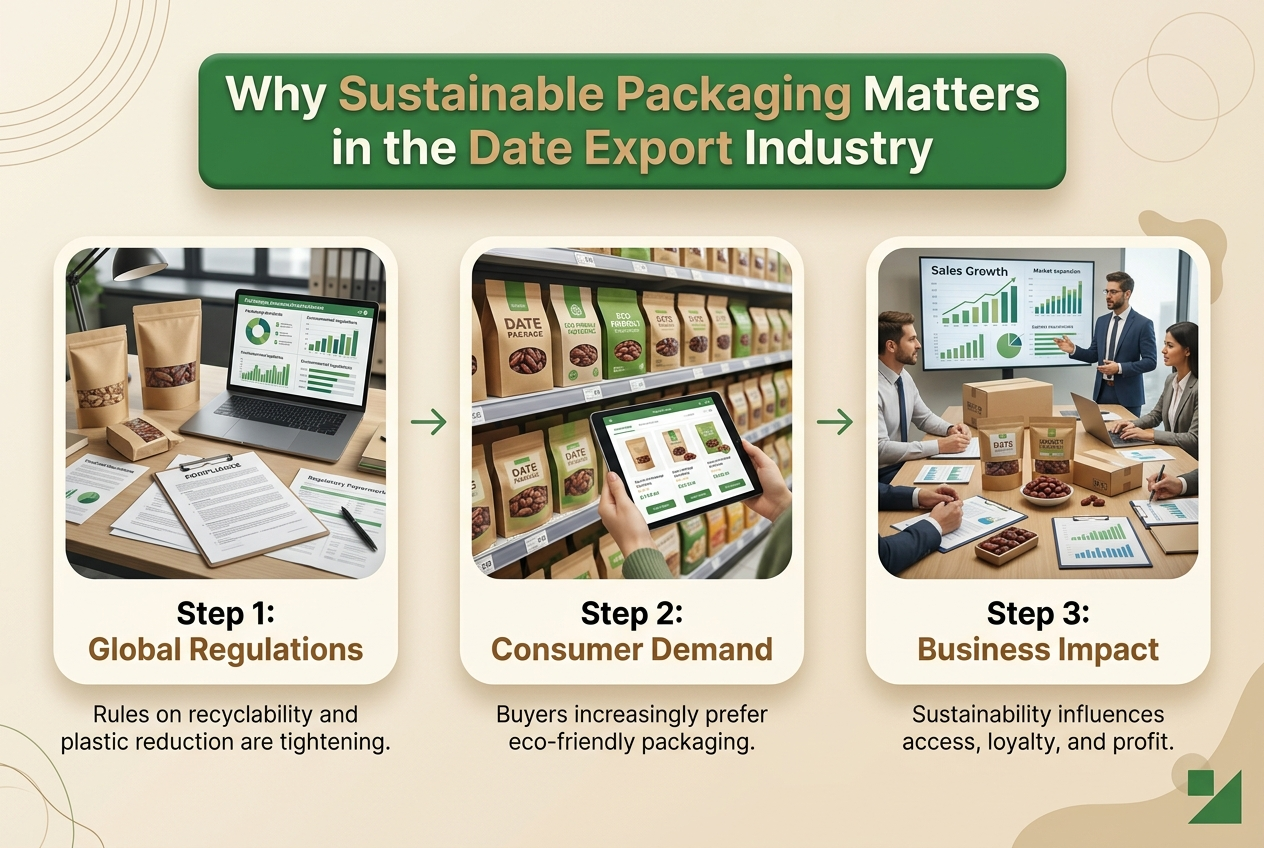
The imperative for sustainable packaging is driven by the powerful combination of tightening international regulations and evolving consumer expectations, both of which directly impact an exporter’s bottom line.
Environmental Concerns and Global Regulations
The global challenge of plastic waste, with packaging contributing nearly 40% of the total according to the OECD, has prompted significant legislative action. Regulations like the EU’s Packaging and Packaging Waste Regulation (PPWR) are setting stringent, mandatory targets for recyclability, recycled content, and the reduction of single-use plastics. For companies shipping to these key markets, compliance is non-negotiable, making regulatory foresight a primary driver for innovation in sustainable packaging for date exporters.
Consumer Demand for Eco-Friendly Packaging
Modern consumers, particularly in North American and European markets, are increasingly making purchasing decisions based on a brand’s environmental credentials. A recent NielsenIQ global study revealed that 73% of consumers feel that sustainability is more important to them now than it was two years ago. This demand for transparency and eco-friendly practices means that packaging is now a direct interface with the consumer, capable of building brand loyalty or driving customers away.
Before exploring solutions, it is crucial to understand the specific technical demands of packaging dates.
Challenges in Packaging Fresh and Processed Dates
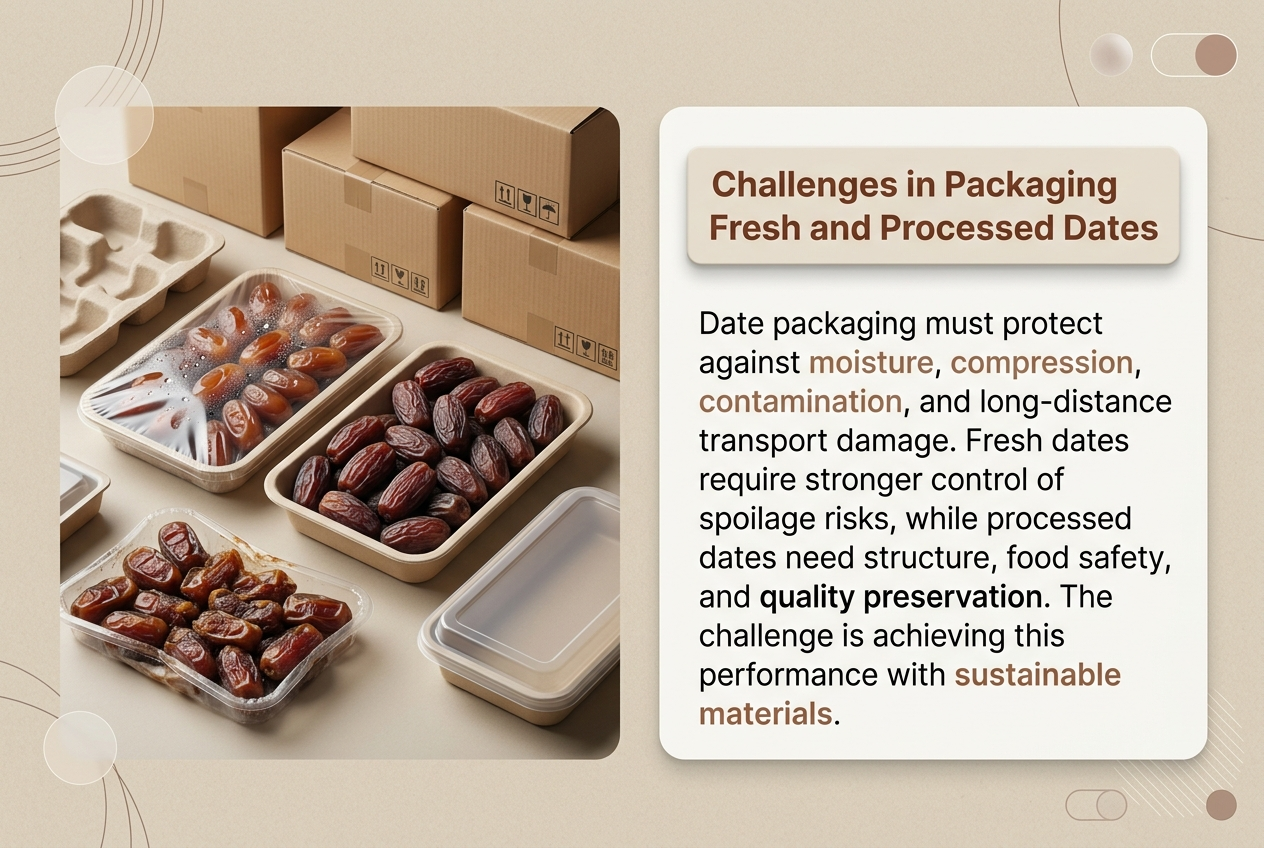
Packaging dates effectively requires a sophisticated balance between protecting a delicate product and meeting sustainability goals. The material chosen must perform several critical functions to ensure the product arrives in optimal condition after a long journey.
Moisture Control and Shelf Life
Dates exhibit a wide range of water activity levels, from high-moisture fresh varieties to low-moisture dry dates. Those with higher moisture are particularly susceptible to spoilage from mold and yeast. Therefore, a principal technical challenge for sustainable packaging for date exporters is sourcing materials that provide a sufficient moisture barrier to prevent microbial growth and extend shelf life without relying on non-recyclable multi-layer plastics.
Water Activity (a_w) and Microbial Growth
Water activity (a_w) is the partial vapor pressure of water in a substance divided by the standard state partial vapor pressure of water. It is a thermodynamic measure of the “available” water in a food system for microbial growth, with most spoilage bacteria requiring an a_w above 0.91 and molds requiring a value above 0.7.
In practical terms, water activity isn’t about the total amount of water in a date, but how much of that water is free and unbound for microbes to use. A date can be moist but have low water activity if the water is bound by sugars. Effective packaging must help manage this internal environment to prevent spoilage.
Protection During Long-Distance Transport
The journey from orchard to international retail shelf subjects packaging to numerous physical hazards. These include compression from stacking in shipping containers, constant vibrations during transit by sea or air, and potential impacts during handling. The packaging must possess the structural integrity to shield the soft fruit from being bruised, crushed, or otherwise damaged.
Maintaining Product Quality and Safety
Beyond physical protection, the packaging must serve as a barrier against external contaminants, including dust, moisture, and pests like the Indian meal moth. The material itself must be food-grade certified and chemically inert, ensuring it imparts no undesirable tastes, odors, or chemicals onto the dates, thereby preserving their natural flavor profile and ensuring consumer safety.
A new generation of materials is emerging to meet these complex challenges.
Emerging Sustainable Packaging Materials
Innovation in material science is providing a growing portfolio of options that balance performance with environmental responsibility.
Biodegradable and Compostable Materials
It is essential to distinguish between these two terms. A biodegradable material breaks down into natural elements over an unspecified period. A compostable material, conversely, biodegrades into humus within a specific timeframe under controlled industrial or home composting conditions, leaving no toxic residue.
Plant-Based Plastics (PLA, PHA)
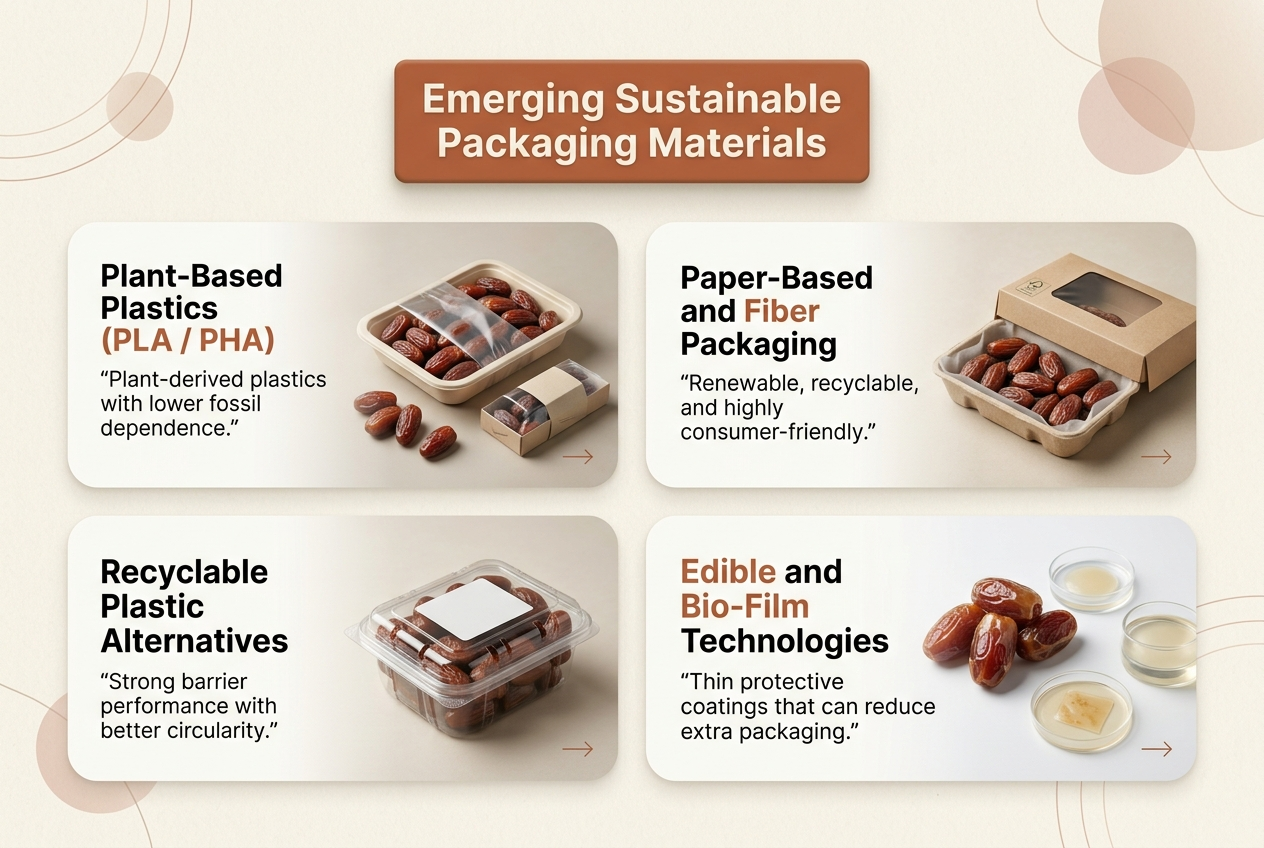
Polylactic Acid (PLA) and Polyhydroxyalkanoates (PHA) are biopolymers, or bioplastics, derived from the fermentation of renewable resources like corn starch, sugarcane, or microbial activity.
These are plastics made from plant-based sources instead of petroleum. They offer a lower carbon footprint in production. However, their primary limitation is end-of-life management; most forms of PLA require industrial composting facilities to break down effectively and are not suitable for backyard composting or standard recycling streams.
Paper-Based and Fiber Packaging
Options such as Forest Stewardship Council (FSC) certified paperboard boxes, glassine paper liners, and molded pulp trays are gaining significant traction. These materials are derived from renewable resources, are widely recyclable in most markets, and have strong consumer appeal due to a widespread aversion to plastic. This makes them a highly popular form of sustainable packaging for date exporters.
Recyclable Plastic Alternatives
For applications where a plastic’s barrier properties are indispensable, the focus has shifted to improving its circularity. The move is toward mono-materials—such as clamshells made entirely from PET (polyethylene terephthalate)—which are easily sorted and recycled. Furthermore, the availability and quality of food-grade recycled PET (rPET) are increasing, allowing exporters to incorporate post-consumer content into their packaging.
Edible and Bio-Film Packaging Technologies
This cutting-edge field involves applying ultra-thin, edible coatings directly onto the fruit. These films, often made from natural substances like alginate (from seaweed) or chitosan (from crustacean shells), can regulate moisture exchange and inhibit microbial growth. This technology has the potential to dramatically reduce the need for secondary plastic packaging by making the product itself more resilient.
Table: Comparison of Sustainable Packaging Materials for Dates
| Material | Moisture Barrier | Recyclability | Cost | Consumer Perception |
| PLA Bioplastic | Moderate to Good | Industrial Composting Only | Medium to High | Positive (Plant-Based) |
| Molded Pulp / Paperboard | Poor (Requires Liner) | Widely Recyclable | Low to Medium | Very Positive (Plastic-Free) |
| rPET Clamshell | Excellent | Widely Recyclable | Medium | Neutral to Negative (Plastic) |
| Glassine Paper | Good (Grease/Moisture) | Widely Recyclable | Medium | Very Positive (Plastic-Free) |
Advanced technologies are amplifying the effectiveness of these new materials.
Innovative Packaging Technologies for Dates
Beyond the material itself, innovative technologies are being employed to extend shelf life and enhance product quality.
Modified Atmosphere Packaging (MAP)
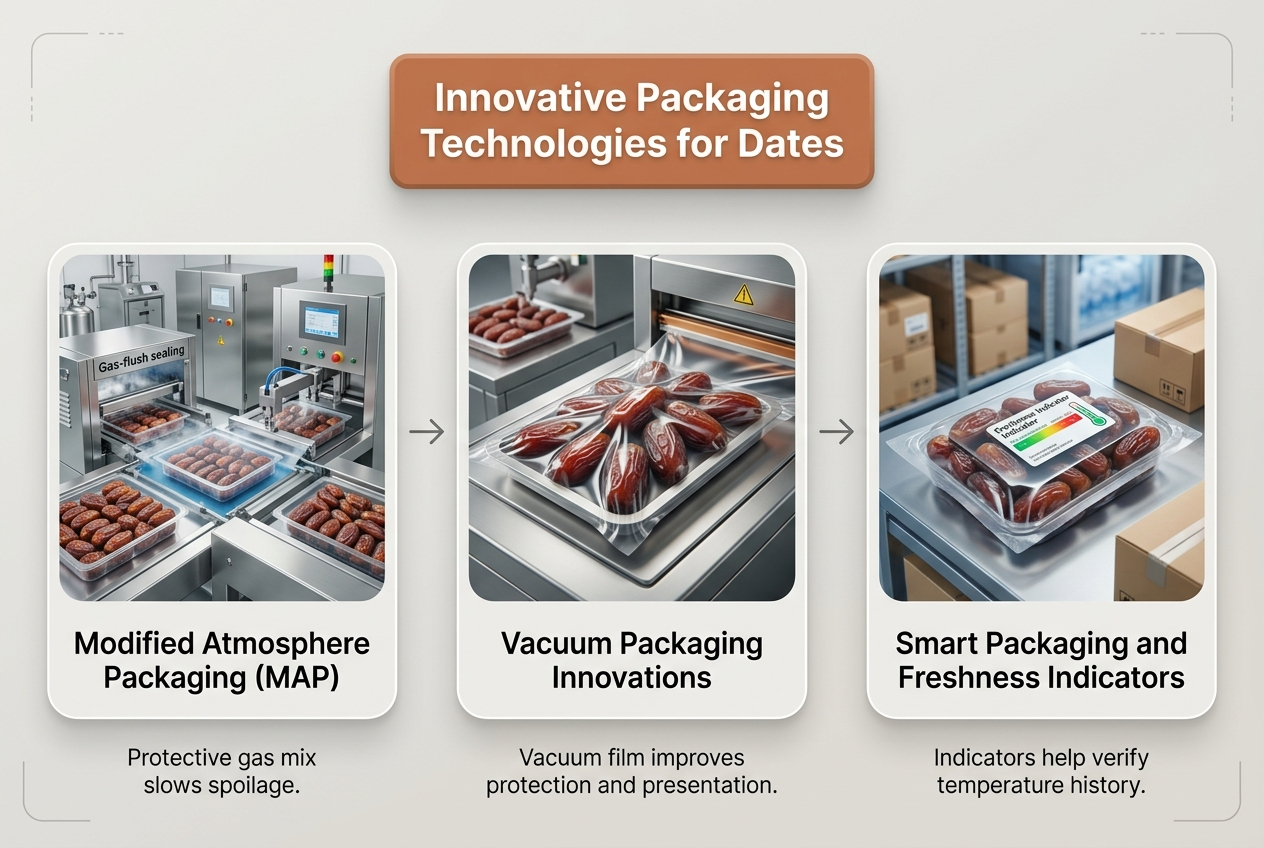
Modified Atmosphere Packaging is a technology that alters the gaseous atmosphere surrounding a food product inside a pack. This process typically involves reducing oxygen levels while increasing carbon dioxide and/or nitrogen to slow down respiration and inhibit the growth of aerobic microorganisms.
This technique essentially “puts the dates to sleep” by replacing the air inside the package with a protective gas mix. This dramatically slows down ripening and mold growth, making it an invaluable tool for shipping high-quality, semi-fresh date varieties to distant markets while maintaining their peak condition.
Vacuum Packaging Innovations
Modern vacuum technologies go beyond simply removing air. Vacuum Skin Packaging (VSP) involves draping a heated, soft polymer film over dates placed on a tray. The vacuum then suctions the film down, creating a tight, transparent “second skin.” This method offers superior protection against bruising, prevents moisture loss, and provides a premium, high-visibility presentation for high-value date products.
Smart Packaging and Freshness Indicators
Smart packaging incorporates features that provide information about the product’s journey. Time-Temperature Indicators (TTIs) are labels that undergo an irreversible color change if the package is exposed to temperatures outside of the safe range for a prolonged period. This technology helps ensure cold chain integrity, reduces food waste by preventing the disposal of perfectly good products, and builds significant consumer trust.
Smarter design principles can often yield the greatest sustainability gains.
Sustainable Design and Packaging Optimization
Improving sustainable packaging for date exporters is not only about substituting materials but also about fundamentally rethinking package design to use less material more effectively.
Lightweight Packaging Solutions
Reducing the overall weight of a package, for instance by using thinner yet stronger materials or more efficient structural designs, has a direct and compounding benefit. Lighter packages lower fuel consumption during transportation, which in turn reduces freight costs and carbon emissions. A 10% weight reduction per pallet can result in substantial fuel and cost savings when multiplied over thousands of international shipments.
Minimalist and Zero-Waste Packaging Design
A strong market trend is the elimination of unnecessary packaging layers. This can mean removing the external plastic shrink-wrap from a paperboard box or using clever structural folds in cardboard to create protective cells without needing plastic inserts. The goal is to provide requisite protection with the absolute minimum amount of material.
Reusable and Returnable Packaging Systems
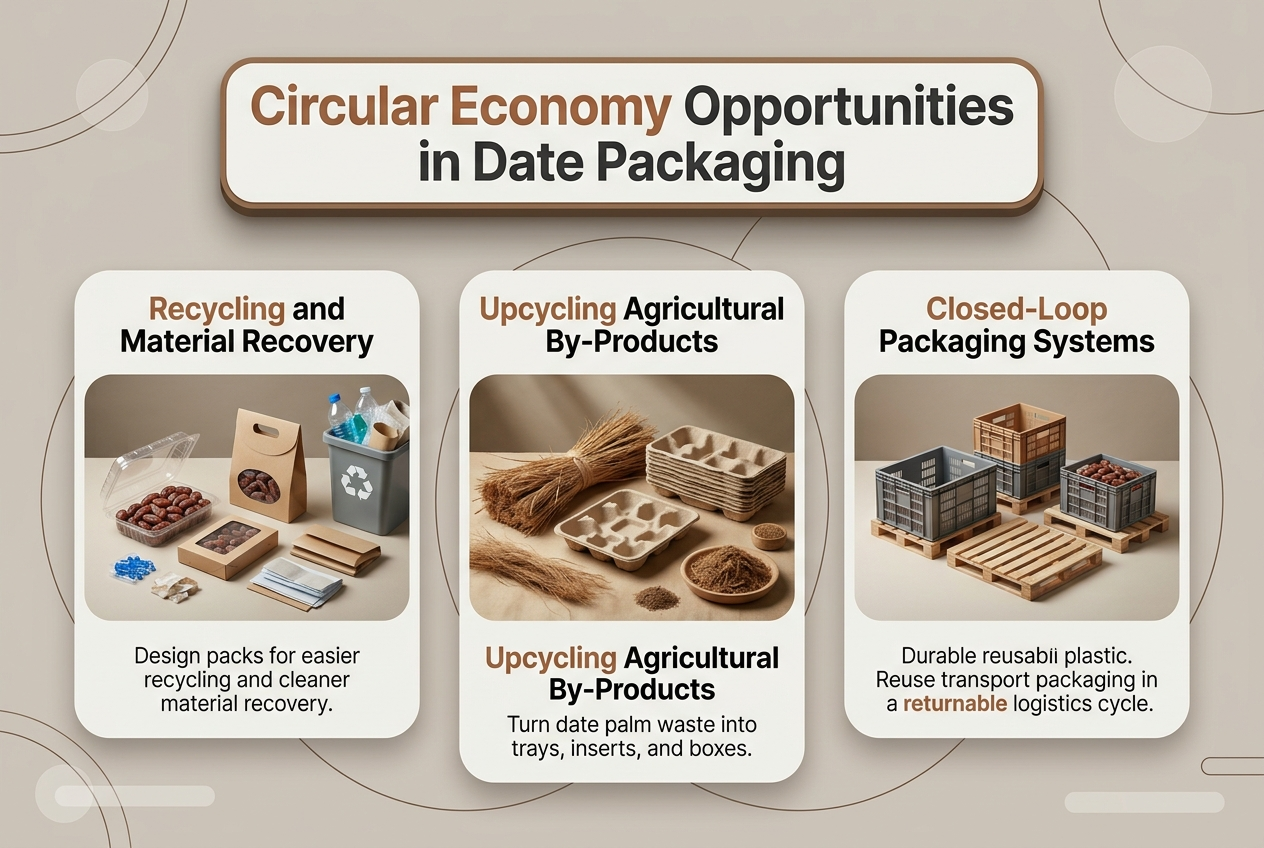
While challenging for consumer-facing products, this model is highly effective in business-to-business (B2B) supply chains. Exporters can utilize durable, standardized, and returnable crates or pallets to ship bulk dates to overseas processors or distributors. This creates a closed-loop system that eliminates single-use transport packaging entirely.
This approach is a cornerstone of the circular economy model.
Role of Circular Economy in Date Packaging
The ultimate goal is to move from a linear “take-make-dispose” model to a circular one where resources are kept in use for as long as possible.
Recycling and Material Recovery
Designing for recyclability is the foundational step. This involves using widely recycled mono-materials, avoiding problematic materials like PVC, and using inks and adhesives that do not contaminate the recycling stream. Clear on-pack labeling, such as the Resin Identification Code for plastics, is critical to guide both consumers and sorting facilities.
Upcycling Agricultural By-Products
A truly innovative circular solution involves using waste from the date cultivation process itself. Fibers from pruned date palm leaves and other agricultural by-products can be processed into a pulp used to manufacture biodegradable trays, inserts, and boxes. This visionary approach turns a low-value waste stream into a high-value packaging resource, representing the pinnacle of sustainable packaging for date exporters.
Closed-Loop Packaging Systems
A closed-loop system is a collaborative arrangement, typically between an exporter and a large-scale importer or retailer, to systematically collect, clean, and either reuse or recycle packaging materials. This ensures that materials do not end up in landfills and maximizes their economic value.
Market and Regulatory Trends Affecting Exporters
Navigating the international marketplace requires a firm grasp of the evolving landscape of standards and regulations that govern packaging.
International Packaging Standards
Compliance with food contact material regulations is mandatory for market access. Exporters must ensure their packaging materials meet the standards set by authorities in their target markets, such as the Food and Drug Administration (FDA) in the United States and the European Food Safety Authority (EFSA) in the EU.
Sustainability Certifications and Eco-Labels
Third-party certifications serve as trusted signals of a company’s commitment to sustainability. Key eco-labels include the Forest Stewardship Council (FSC) for responsibly sourced paper and wood, B Corp certification for holistic social and environmental performance, and compostability logos (e.g., DIN CERTCO, BPI) that verify a material’s end-of-life claims.
Import Regulations in Major Markets
Major markets are increasingly using policy to promote sustainability. Under the European Green Deal, for example, several countries have implemented or are planning plastic taxes that levy a fee on non-recycled plastic packaging, directly increasing the cost of unsustainable choices. A deep understanding of these import rules is a critical competency for all involved with sustainable packaging for date exporters. Success hinges on proactive adaptation to the financial and legal realities of sustainable packaging for date exporters.
These challenges also represent significant business opportunities.
Future Opportunities for Date Exporters
Viewing sustainability not as a cost center but as a strategic investment can unlock new avenues for growth and market leadership.
Branding Through Sustainability
Eco-friendly packaging is a powerful marketing tool. It allows exporters to craft a compelling brand narrative about their commitment to quality, tradition, and environmental stewardship. This story can be told directly on the pack, appealing to ethically-minded consumers and creating a distinct identity on a crowded retail shelf.
Cost Efficiency Through Eco-Innovation
While some sustainable materials may have a higher upfront cost, a holistic approach can lead to significant savings. Lightweighting reduces shipping expenses, minimalist design cuts material costs, and using upcycled local agricultural waste can, in the long run, be more cost-effective than importing virgin materials.
Competitive Advantage in Global Markets
As major retailers and entire nations codify stricter sustainability requirements into their procurement policies, exporters who have already embraced these practices will possess a decisive advantage. They will have guaranteed market access, stronger relationships with buyers, and a resilient business model. Proactive adoption of sustainable packaging for date exporters is no longer just an option; it is a core strategy for long-term relevance and success, making proficient sustainable packaging for date exporters a key differentiator.
Conclusion
The global shift towards sustainable packaging is an irreversible trend, propelled by a convergence of consumer demand, regulatory pressure, and market logic. For date exporters, embracing this transformation is not merely an act of environmental stewardship but a strategic business imperative essential for survival and growth. The future of the industry belongs to those who can successfully merge the rich tradition of date cultivation with forward-thinking innovation. The definitive path forward will be paved by intelligent and sustainable packaging for date exporters.
Related Products