sk five suppliers to define a “Jumbo” date and you may get five different answers. Iranian date grading is not governed by a single global law. It blends an internationally recognized quality standard with trade terms that shift from exporter to exporter. For buyers sourcing from international markets, that gap is where costly misunderstandings happen: a container arrives, and the “Grade A” on the invoice doesn’t match the fruit on the pallet.
This guide breaks down how Iranian dates are actually graded — the international reference standard behind it, the commercial terms used in day-to-day trade, and what buyers should put in writing before placing an order.
What Does Date Grading Mean?
Before comparing suppliers, it helps to separate four terms that are often used interchangeably but describe different things:
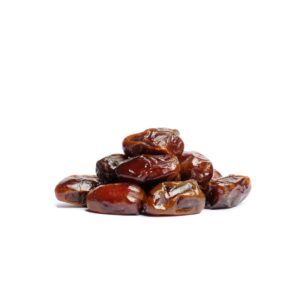
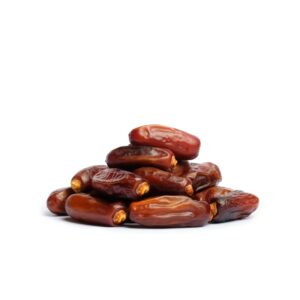
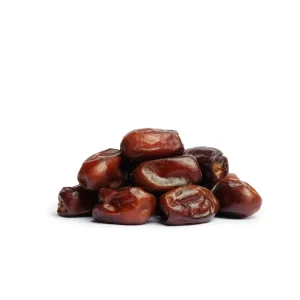
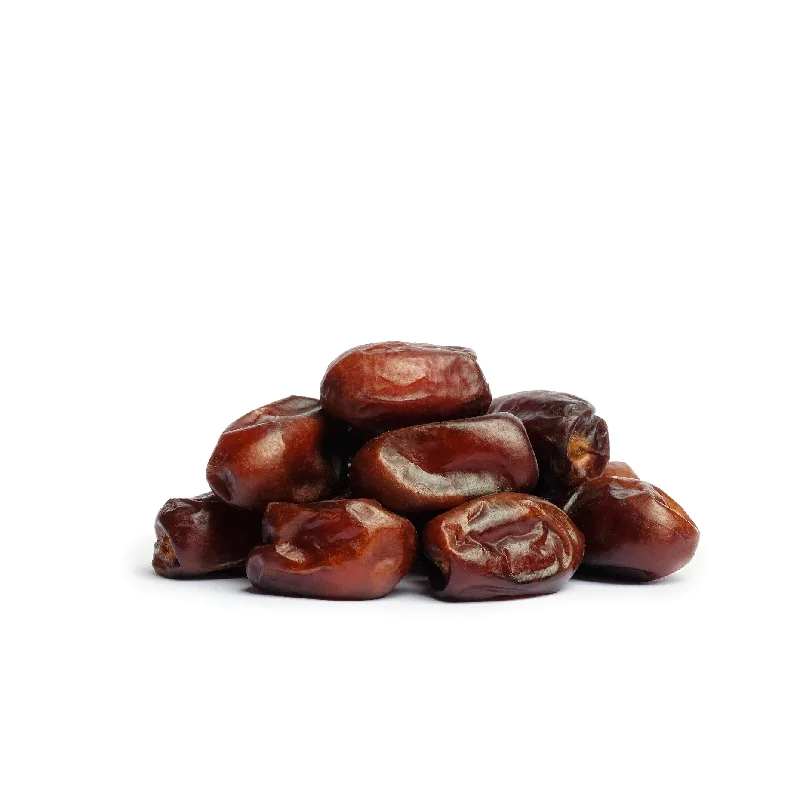
Variety is the cultivar itself — Mazafati, Piarom, Zahedi, Sayer, and others — each with its own natural color, moisture range, and texture.
Grade is a quality tier applied within a variety, based on measurable criteria such as size, appearance, and defect rate.
Size refers to fruit dimensions or count per kilogram, which affects presentation and price but is not, on its own, a measure of quality.
Quality is the combined picture — moisture, cleanliness, maturity, and defect levels — that determines whether a lot is fit for a given market or use case.
A date can be large but poorly graded, or small but exceptionally clean and well within specification. Buyers who understand this distinction are far less likely to be misled by a single label on a spec sheet.
International Standards for Dates
The closest thing the date trade has to a universal benchmark is the Codex Alimentarius Standard for Dates (CODEX STAN 143-1985), issued jointly by the FAO and WHO. It doesn’t create tiers like “Grade A” or “Grade B.” Instead, it sets baseline requirements that any lot sold internationally is expected to meet — minimum weight per fruit, moisture ceilings by sugar type, tolerances for defects and foreign matter, and optional size brackets by count.
Because Codex is a reference standard rather than an enforced grading scale, exporters and importers still negotiate commercial grades on top of it — which is why contracts should cite Codex provisions directly rather than relying on a supplier’s internal grade name alone. It remains the common language that lets buyers in different countries compare specifications on equal terms.
Key Factors Used to Grade Dates
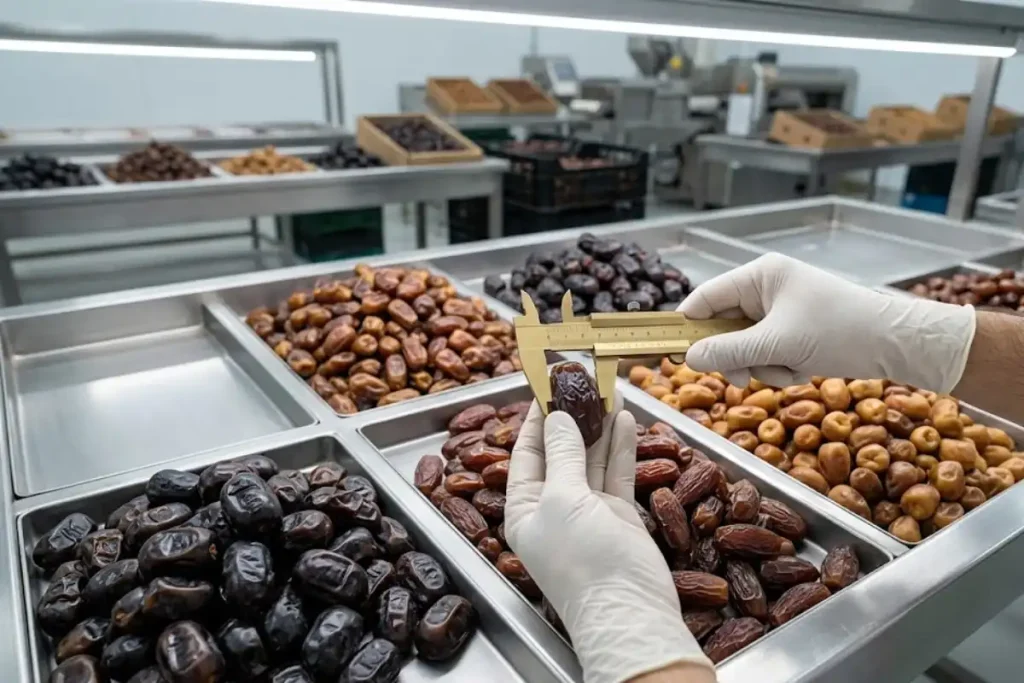
Size and Fruit Count
Size is usually expressed as a count per 500 g or per kilogram, and Codex offers optional brackets for reference: unpitted dates are classed small at more than 100 per 500 g, medium at 80–100, and large at under 80; pitted dates follow a similar scale of more than 110, 90–110, and under 90. Codex also sets minimum individual weights of 4.75 g for unpitted and 4.0 g for pitted fruit. Size targets vary by variety — a large Piarom and a large Mazafati are not comparable — so count-per-kg should always be specified alongside the variety.
Moisture
Moisture drives texture, shelf life, and how a date is used downstream, and it varies widely by variety: Mazafati is soft, typically 25–35%; Piarom is semi-dry; Zahedi is firmer and drier. Codex sets moisture ceilings by sugar type rather than by variety — 26% for cane-sugar (invert-sugar-dominant) types and 30% for varieties like Daglat Nuur — giving buyers a numeric limit to write into a contract rather than a subjective description.
Color and Appearance
Color consistency and skin condition are especially important for retail-ready product, since visual defects are the first thing an end consumer notices. Each variety has its own expected color range — Mazafati is dark brown to black, Piarom a deep brown, Zahedi golden-brown — and a graded lot should stay consistent within that range, free of unnatural discoloration or surface damage.
Texture and Maturity
Maturity at harvest affects firmness, sugar development, and how well the fruit holds up through processing and transit. Underripe or overripe fruit mixed into a lot signals inconsistent sorting and can shorten shelf life even when moisture and size look acceptable on paper.
Defects and Cleanliness
Codex sets explicit tolerances that double as a practical checklist: blemishes up to 7% by count, damaged, unripe, or unpollinated fruit combined up to 6%, dirt and insect or mite damage combined up to 6%, and scouring, mould, or decay capped at just 1%. Mineral impurities are limited to 1 g per kg, and pitted dates are allowed no more than two whole pits or four pit fragments per 100 fruit. These figures give buyers concrete numbers to request in a certificate of analysis, rather than a general assurance that a lot is “clean.”
Grades Used in Date Trading
Alongside the Codex baseline, the trade uses its own shorthand — Jumbo, Special, Choice, and Standard are the terms most commonly seen on spec sheets and invoices. These are commercial classifications, not a codified international scale, and their exact meaning shifts by supplier and destination:
| Grade | Typical Use |
|---|---|
| Jumbo | Premium retail — largest, most uniform fruit |
| Special | Higher-value wholesale with strong overall quality |
| Choice | General distribution; standard commercial quality |
| Standard | Value-tier markets; smaller size or lower uniformity |
Because these labels aren’t standardized across exporters, they work best as shorthand for a conversation, not as a substitute for a written specification. A “Special” grade from one exporter can sit anywhere near a “Choice” grade from another.
How Grading Affects Export Pricing
Grade drives price mainly through the labor and loss it represents. Larger, more uniform fruit costs more to sort and yields less usable weight per harvested tonnage, which shows up directly in the quote. Lower moisture and tighter defect tolerances usually mean additional sorting passes and sometimes controlled storage, both of which add cost before the product ever reaches a port. Buyers targeting international trade at scale often find that paying for a documented grade — rather than a supplier’s informal quality claim — reduces downstream costs from rejected shipments, re-sorting, or lost shelf life far more than it adds to the unit price.
What Buyers Should Specify in a Date Contract
A grade name alone is not a specification. Before confirming an order, buyers should put the following in writing:
- Variety — the specific cultivar (Mazafati, Piarom, Zahedi, etc.), not just “Iranian dates”
- Grade — the commercial grade, referenced against agreed criteria rather than the supplier’s label alone
- Size / count per kg — a numeric range, not a size name
- Moisture — a maximum percentage, ideally tied to the Codex limit for that sugar type
- Crop year — to confirm freshness and avoid carryover stock
- Defect tolerance — acceptable percentages for blemishes, damage, and foreign matter
- Packaging — carton or bulk format, net weight, and materials suited to the destination climate
- Inspection requirements — whether pre-shipment inspection is included and who conducts it
Exporters serving export markets regularly are typically comfortable committing to each of these in writing; hesitation on any point is worth treating as a signal to dig deeper before payment.
How to Verify Date Quality Before Purchase
Verification works best as a sequence, not a single check at the end:
- Request a specification covering every item listed above, in writing.
- Review samples against that specification before committing to volume.
- Confirm moisture and defect levels independently — ideally through a third-party inspection service for larger purchases.
- Inspect the actual shipment, not just a reference sample, since quality can shift between sampling and loading.
Buyers who follow this sequence — rather than relying on a grade name alone — are far better positioned when sourcing from international buyers and sellers across a market where terminology isn’t yet standardized.
For international buyers, the safest approach is not to purchase by grade name alone. A reliable date specification should identify the variety, size, moisture, defect tolerance, packaging, and inspection requirements.
Related Products