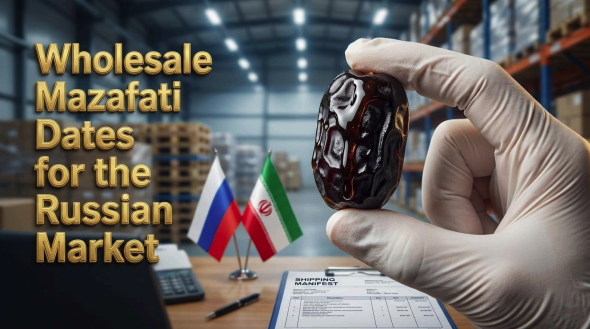
Russian importers looking for a reliable date supply need three things: consistent quality, competitive pricing, and dependable logistics. Iranian Mazafati dates can meet these requirements when the product, cold chain, packaging, and documentation are properly managed.
Iran is one of the world’s major date-producing countries. Mazafati is one of its best-known soft and high-moisture varieties, especially from the Bam region.
For Russian buyers, importing Mazafati dates involves more than comparing prices. Product grade, moisture, packaging, storage temperature, transport route, customs requirements, and payment terms all affect the final cost.
This guide explains the main factors Russian importers should consider when sourcing wholesale Mazafati dates from Iran.
Expert insight: The lowest purchase price does not always produce the best result. For high-moisture dates, product consistency and cold-chain management can have a major impact on the final landed cost.
Why Wholesale Mazafati Dates Are Booming in the Russian Market?

Mazafati dates have several characteristics that make them attractive to importers and distributors.
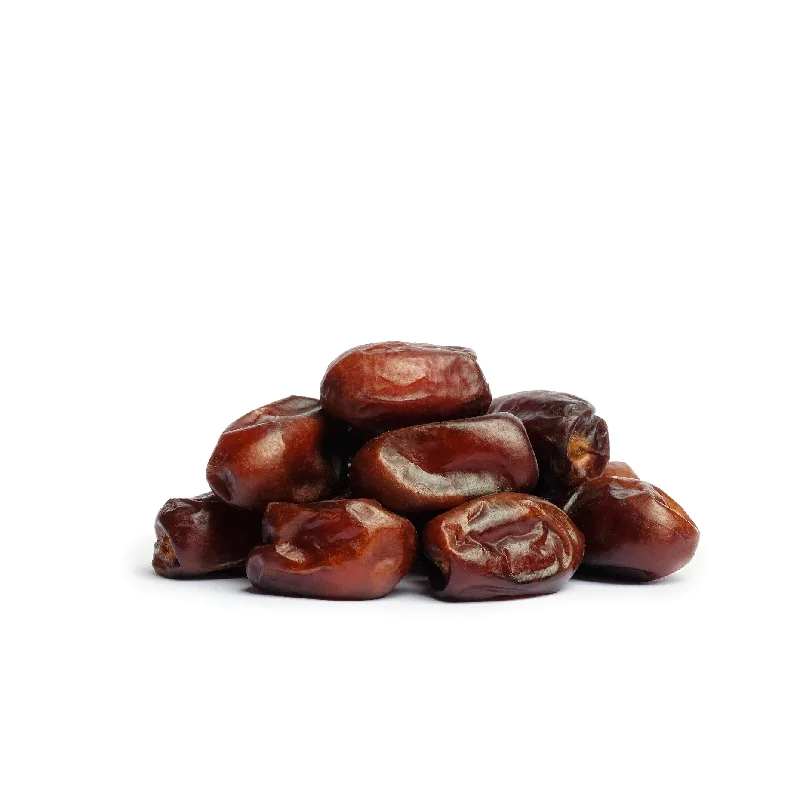
They have a soft texture, naturally sweet flavor, dark appearance, and relatively high moisture content. These characteristics distinguish them from semi-dry and dry varieties.
Demand can also benefit from the wider interest in natural snacks and dried-fruit products.
However, importers should evaluate actual market demand before placing large orders. Consumer preferences and retail prices can vary between Moscow, St. Petersburg, regional cities, wholesalers, and food-service businesses.
The Rising Russian Demand for Fresh, High-Moisture Sweets
Mazafati is different from many dry date varieties.
Its soft texture and rich sweetness make it suitable for direct consumption. It can also be sold as a natural alternative to processed sweet snacks.
For Russian distributors, potential selling points include:
- Naturally sweet flavor
- Soft texture
- Dark appearance
- No need for added sugar
- Suitable for snack consumption
- Suitable for retail and wholesale distribution
- Strong compatibility with tea and hot beverages
Seasonality can also influence demand. Importers should compare expected sales with current inventory and wholesale prices before planning large shipments.
Economic Viability: Competitive Pricing vs. High Retail Margins
Mazafati can be commercially attractive because Iranian suppliers can offer competitive prices at origin.
However, profitability should not be calculated from the purchase price alone.
The actual landed cost can include:
- Product price
- Packaging
- Inland transportation in Iran
- Freight
- Insurance
- Customs-related costs
- Import duties where applicable
- Cold storage
- Distribution
- Financing and payment costs
- Potential handling or inspection charges
A simple landed-cost calculation is:
Landed Cost per kg = Product Cost + Logistics + Insurance + Customs Costs + Other Import Costs ÷ Total Net Weight
Importers should compare this figure with their expected wholesale or retail selling price.

The city of Bam in southern Iran provides the perfect soil and climate for this specific fruit. This unique environment creates a quality and taste that no other country can copy.
Understanding the Moisture Content (32-35%) and Soft Texture
A moisture content of 32% to 35% in dates, known scientifically as the Rotab stage, indicates a high-water activity (a_w) level of approximately 0.61. This specific thermodynamic metric keeps the internal cellular structure of the fruit fully saturated. It physically prevents the internal sugars from crystallizing and hardening over time.
This means the date is incredibly soft, juicy, and full of natural syrup. It literally melts in your mouth. Your customers do not need to chew it hard like normal dry dates. This extreme softness is the main reason people love the Mazafati variety.
Nutritional Profile: The Natural Energy-Boosting Black Date
These dates act as completely natural energy bombs for the human body. They contain high levels of essential minerals like potassium, iron, and magnesium. They also provide a massive amount of dietary fiber. Russian buyers prefer them because they offer excellent daily nutrition. They provide fast, clean energy from natural fructose and glucose for the cold climate. They do this without using any chemical additives or artificial preservatives.
The Visual Appeal: Deep Black Color and High-Gloss Skin
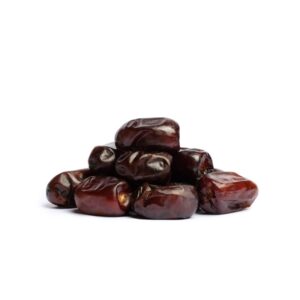
Visual appeal controls the sales volume in modern supermarkets. Bam Mazafati dates have a deep, dark black color. They also possess a highly glossy and shiny skin. This beautiful shiny look grabs the customer’s attention on the store shelf immediately. It clearly signals to the buyer that the product is premium, extremely fresh, and strictly high-quality. Grading and Sizing: Choosing the Right Mazafati for Your Needs All Mazafati dates do not share the same quality. A smart importer must understand the grading system to buy the correct product for their specific customers.
Grade A vs. Grade B: What Importers Must Know for Retail
Suppliers sort the dates into two main categories. Grade A dates have absolutely zero skin damage. They are physically large, very dark, and hold a perfectly balanced moisture level. You must choose Grade A for premium supermarkets and luxury retail shops. Grade B dates are slightly smaller in physical size. They might show minor skin separation or slight crushing from the packing process. You should choose Grade B for budget retail stores, open wholesale markets, or industrial food processing factories.
Sizing Standards: From 600g Retail Boxes to 5kg Bulk Cartons
Export packaging always follows strict international sizing standards. Iranian suppliers offer two main packaging options for the Russian market. The first option is retail boxes. Workers pack the dates into small 600-gram to 800-gram cardboard boxes. They then place 12 of these small boxes inside a large master carton, making the total weight around 7.2 to 9.6 kilograms. These small boxes go directly to supermarket shelves. The second option is bulk cartons. Workers pack 5 kilograms of loose dates directly into one large carton. These bulk boxes are perfect for wholesale distribution centers, commercial bakeries, or the food service industry.
read more: Iranian Dates vs Saudi Dates: Which Is Better for Importers?
Shelf Life and Cold Chain Logistics for Russia
High-moisture Mazafati requires more careful storage than dry dates.
Temperature management is therefore an important part of the supply chain.
The original specification of -5°C can be used as a commercial target only when it matches the supplier’s validated storage specification and the buyer’s requirements. It should not be presented as a universal rule for every Mazafati shipment.
Importers should confirm the following before loading:
- Recommended storage temperature
- Recommended transport temperature
- Expected shelf life
- Packaging specifications
- Maximum acceptable transit time
- Handling requirements
Important: Shelf life depends on the date’s moisture, quality, packaging, temperature, storage conditions, and handling history. A fixed “12-month” shelf life should only be stated when supported by the supplier’s validated specification or testing.
Maintaining -5°C Temperatures During Transit to Moscow
Because of the high moisture content, the fruit will start to ferment if you keep it in a warm environment. You must use refrigerated containers, called reefer containers, for the entire transit period. The strict and ideal temperature range for transport to Russia is exactly -5°C. This specific cold temperature completely stops any microbial growth and fermentation process during the long journey from Iran to Russia.
Storage Best Practices Upon Arrival at Russian Warehouses
You must never break the cold chain upon arrival. Once your cargo clears Russian customs, you must move the dates directly to standard cold storage warehouses. Do not leave them in warm transfer areas. If you strictly maintain the -5°C environment inside your warehouse, you completely guarantee a total shelf life of up to 12 months. This allows you to sell the product slowly throughout the entire year without any spoilage.
Timing your purchase correctly saves you a lot of money and guarantees that the factory actually has the product available.
Securing the Best Wholesale Prices Between August and October
The main harvest season in the Bam region begins in late August and finishes in October. Pre-ordering your cargo during this exact time window allows you to buy directly from the farm source. This strategy eliminates expensive middlemen. By ordering during the harvest season, you secure the lowest possible wholesale prices for the entire trading year.
Inventory Planning for the Russian Winter and Holiday Season
Smart importers plan their warehouse inventory very carefully. You need your cargo to arrive in Russia right before winter and the major holiday season. December is the peak consumption period for dates in the Eurasia region. Ordering your containers in September guarantees your warehouses are fully stocked and ready for heavy December retail sales.
Customs, EAC Certification, and Smooth Border Clearance
Border clearance requires highly precise documentation. Without the correct legal papers, customs officers will block your cargo at the border. The EAC (Eurasian Conformity) mark is a mandatory conformity certification. It demonstrates that a specific product fully complies with all harmonized technical regulations, safety protocols, and health standards enforced by the Eurasian Economic Union (EAEU). This certificate is basically a legal passport for your food cargo. It proves to customs officers in Russia, Belarus, and Kazakhstan that your dates are completely safe for humans to eat. With an EAC certificate, your shipment enters the Russian market quickly and without getting stuck at border checkpoints
Essential Phytosanitary Documents for the EAEU
A Phytosanitary Certificate is an official government document issued by a National Plant Protection Organization (NPPO). It legally certifies that agricultural consignments are totally free from quarantine pests and plant diseases, strictly adhering to the International Plant Protection Convention (IPPC) standards.
This means you get an official stamped letter from the Iranian Ministry of Agriculture. This letter proves to the Russian border control that your dates are 100% healthy, have no dangerous insects, and contain no illegal farm chemicals. You cannot cross the border without it.
Labeling Requirements: Cyrillic Text and Expiration Dates
Fast customs clearance requires correct packaging labels. The EAEU law requires that every single box must feature labels printed clearly in the Russian language using the Cyrillic alphabet. These labels must accurately display the production date, the exact expiration date, the net weight, and the required cold storage conditions. Missing labels will cause immediate cargo rejection by the customs officers.
How to Partner with Reliable Iranian Date Suppliers
Russian buyers must verify their Iranian suppliers carefully. Choosing a professional factory prevents poor quality shipments and financial losses.
Quality Assurance and Pest-Free Guarantees
A reliable supplier uses advanced laser sorting machines or strict manual sorting lines to remove any defective dates. They also use metal detectors to ensure food safety. Furthermore, they perform professional gas fumigation before loading the shipping container. This specific fumigation process completely guarantees a pest-free cargo for the Russian buyer. You must ask the factory about their exact sorting and fumigation methods before signing a contract.
Checking for International Standards: ISO 22000 & HACCP
You must always demand official documentation from your supplier. Work only with processing factories that hold global food safety certificates like ISO 22000 and HACCP. These documents prove that the factory follows strict hygiene rules during packaging. Checking for these certificates reduces your health and safety risks to absolute zero.
Secure Payment and Seamless B2B Trade Terms
Financial transactions require careful planning due to current regional banking conditions. However, trade flows very smoothly when you use the correct financial channels
Navigating Payments: T/T in Dubai, Ruble-Rial Mechanisms, and LC Options
Despite international banking restrictions, transferring money is a standard daily process. Russian importers frequently use third-party exchange companies located in Dubai for standard Telegraphic Transfers (T/T). You can also use direct Ruble-Rial banking mechanisms through state-approved banks in both countries. Furthermore, specific bilateral Letters of Credit (LC) are available for large corporate buyers who need extra financial security.
Mazafati Date Export Specifications & Quality Grades
| Metric / Feature | Grade A (Premium Retail) | Grade B (Standard / Processing) |
| Appearance & Skin | Uniform deep black, glossy skin, zero surface defects | Dark brown to black, minor skin separation/compression |
| Moisture Content | 32% – 35% (Rotab stage) | 28% – 32% |
| Primary Target Market | Premium supermarkets, luxury retail, gift packaging | Budget retail, open wholesale markets, food processing |
| Standard Packaging | 600g–800g retail boxes (12 per master carton) | 5kg loose bulk cartons |
| Transit & Storage Temp | Continuous -5°C (Reefer container) | Continuous -5°C (Reefer container) |
| Shelf Life at -5°C | Up to 12 months | Up to 12 months |
Iran-to-Russia Transport Routes Comparison (INSTC)
| Route Type | Primary Transit Corridor | Transit Time | Logistics Advantages | Key Considerations |
| Overland Trucking | Astara Border (Iran) $\rightarrow$ Azerbaijan $\rightarrow$ Dagestan $\rightarrow$ Central Russia | 10 – 15 Days | Direct door-to-door delivery; fast replenishment | Customs border queuing during peak harvest season |
| Caspian Sea Maritime | Amirabad/Anzali Ports (Iran) $\rightarrow$ Astrakhan/Makhachkala (Russia) | 15 – 25 Days | Cost-effective for high volumes; large container capacity | Requires strict temperature monitoring during port reefer plug-ins |
| Rail Transport | INSTC Rail Corridors directly to Moscow hubs | 12 – 18 Days | High bulk capacity; smooth customs clearing | Limited availability of specialized refrigerated rail cars |
Choosing the Right Incoterms: FOB vs. CIF for Russian Ports
You must select the delivery term that matches your logistics capacity.
● FOB/FCA: The supplier delivers the cargo to Iranian Caspian Sea ports like Bandar Anzali or Amirabad. This costs less upfront, but you must handle and pay for the shipping yourself across the sea.
● CIF/CPT: The supplier delivers the cargo directly to Russian ports like Astrakhan or Makhachkala. They can also deliver by train directly to Moscow. This costs slightly more, but the Iranian factory fully handles the freight booking and the cargo insurance for you.
Premium vs. Standard Mazafati
| Feature | Premium Retail Grade | Standard / Processing Grade |
|---|---|---|
| Appearance | More uniform | Greater variation accepted |
| Skin | Minimal visible damage | Minor separation may be accepted |
| Size | More consistent | More variation |
| Packaging | Retail-ready | Bulk packaging |
| Main buyers | Supermarkets and premium retailers | Wholesalers and processors |
| Price | Generally higher | Generally lower |
Cost Breakdown: Calculating Landed Cost and Retail ROI
Financial viability in this sector hinges on calculating the exact landed cost versus the retail market price. The landed cost encompasses the FOB (Free on Board) base price of the cargo, freight charges (sea or land), insurance, and Russian import duties applicable to agricultural goods. Due to specific tariff preferences and trade agreements regarding agricultural products entering the EAEU, the import duty on fresh dates remains relatively optimized. When the total landed cost per kilogram is measured against the standard retail shelf price in metropolitan areas like Moscow or St. Petersburg, the resulting margin structure accommodates the operational costs of cold storage while preserving significant profitability for regional distributors and retail networks.
Export-Grade Packaging: Protecting High-Moisture Cargo
Maintaining a 32-35% moisture content during international transit requires specialized packaging materials. Standard export protocols dictate that individual 600-gram to 800-gram cardboard boxes are tightly shrink-wrapped with food-grade cellophane. This airtight seal acts as a barrier, preventing moisture evaporation and sugar crystallization during the cold chain process.
For bulk stability, these retail boxes are aggregated into 5-ply, telescopic master cartons. The structural density of these cartons is engineered to withstand the vertical compression of high stacking inside a 40-foot reefer container. Finally, the master cartons are secured on standard Euro pallets, wrapped in heavy-duty stretch film, and strapped to ensure the cargo remains immobile and intact across extended transit routes.
Market Positioning: Mazafati vs. Competing Date Varieties
The Russian market features various date profiles, necessitating precise product positioning. North African dates and standard dry varieties generally cater to consumer segments seeking lower moisture and extended ambient shelf life. Within the spectrum of Iranian dates, varieties such as Kabkab and Zahedi provide semi-dry alternatives at lower price points.
However, the Mazafati variety occupies a distinct segment: the fresh-sweets category. Its ultra-soft texture, dark aesthetic, and high natural syrup content position it not merely as a dried fruit, but as a direct substitute for processed confectionery. This positions the product specifically for consumers seeking premium, natural alternatives to accompany daily tea consumption.
Optimizing Logistics: Land and Sea Corridors via the INSTC
Transit efficiency for perishable goods relies heavily on the International North-South Transport Corridor (INSTC). Two primary logistical routes facilitate the movement of refrigerated containers to the Russian Federation:
- The Overland Trucking Route: This path utilizes the Astara border crossing into Azerbaijan, continuing northward into Dagestan and further into central Russia. This route prioritizes speed and direct delivery, typically completing transit in 10 to 15 days, making it highly effective for time-sensitive inventory replenishment.
- The Caspian Sea Maritime Route: This alternative involves shipping Ro-Ro (Roll-on/Roll-off) or containerized cargo from northern Iranian ports directly to Russian ports such as Astrakhan or Makhachkala. While this maritime corridor offers scalability and cost advantages for high-volume shipments, it requires meticulous coordination of reefer plug-ins at port terminals to ensure the mandatory -5°C temperature is continuously maintained during vessel loading and unloading.
Private Labeling and OEM Integration
Large-scale distributors and retail networks frequently utilize OEM (Original Equipment Manufacturer) and white-label manufacturing services to build brand equity. Processing facilities at the origin offer comprehensive packaging customization, allowing for the application of custom Cyrillic branding, specific nutritional panels, and proprietary retail barcodes directly onto the consumer-facing boxes.
Frequently Asked Questions (FAQs) for Russian Importers
What is the Minimum Order Quantity (MOQ) for wholesale Mazafati dates?
The standard Minimum Order Quantity is usually one 20-foot or 40-foot refrigerated container. A 20-foot container easily holds approximately 12 tons of boxed dates. A 40-foot container holds around 20 tons of boxed dates.
How long does transit from Iran to Russia typically take?
The transit time depends entirely on the chosen transport route. If you use refrigerated trucks via the Astara land border, or ships across the Caspian Sea to Astrakhan port, the complete journey takes between 10 to 25 days.
Related Products