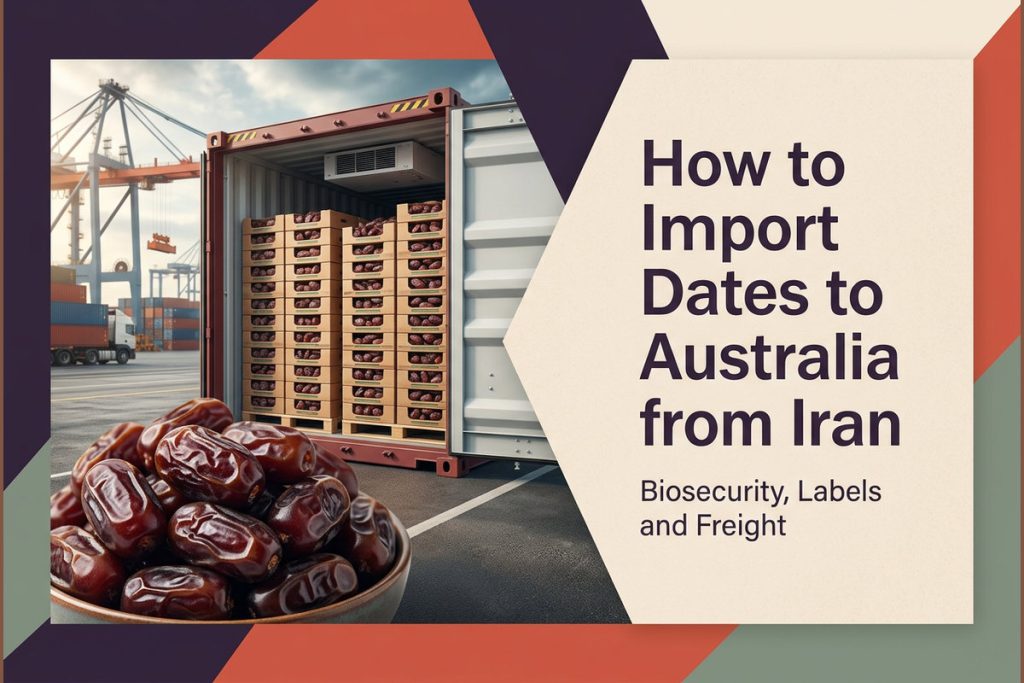
Businesses that import dates to Australia supply a market dependent on overseas growers, as local farms produce around 120 tonnes annually against more than 7,000 tonnes of imports. Iran accounts for over 2 million kilograms of that supply each year, providing commercial scale and distinct varieties for Australian retailers and food manufacturers. Clearing Australian customs without costly holds requires meeting strict quarantine, food safety, and labelling laws before cargo leaves port. This guide explains BICON moisture rules, FSANZ labelling, HS 0804.10.00 duties, ocean shipping from Bandar Abbas, and border clearance.
Why Do Australian Importers Source Iranian Dates?
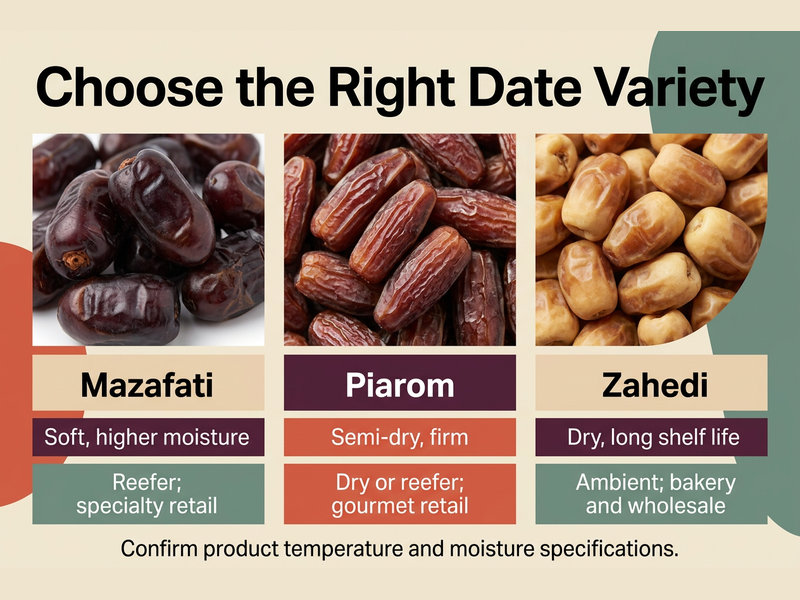
Australian importers source Iranian dates because domestic production covers less than 2% of national demand, while Iran offers reliable harvest volumes, competitive farm-gate pricing, and cultivars suited to specific retail and industrial channels. According to World Bank trade data (WITS), Iran ranks as Australia’s largest supplier by volume. Choosing the right cultivar and packaging format before ordering determines both shelf life and border compliance.
| Variety | Texture and Moisture | Container and Storage | Best Australian Sales Channel |
|---|---|---|---|
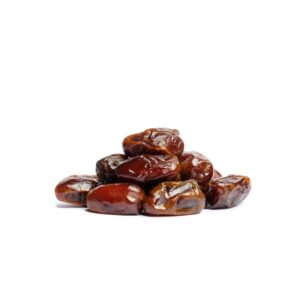
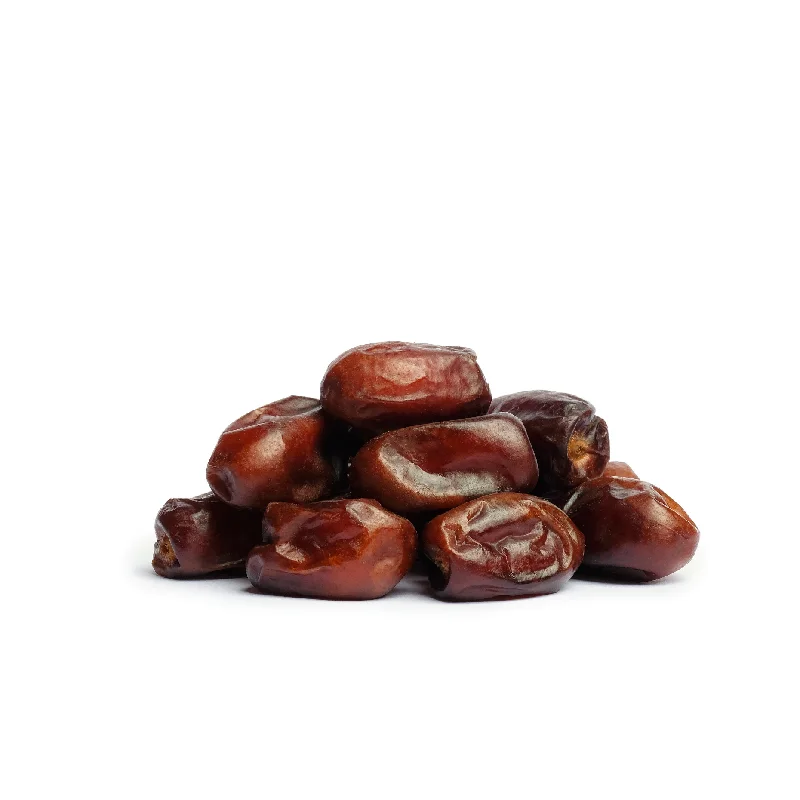
| Mazafati | Soft to semi-soft; higher moisture | Refrigerated (reefer) container and cold storage | Specialty grocers, fresh produce sections, fast-turnover retail |
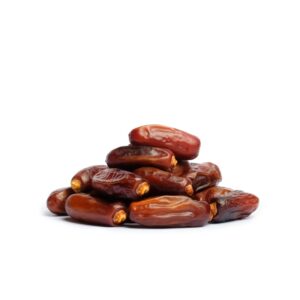
| Piarom | Semi-dry; thin skin, firm flesh | Dry container with moisture-barrier liners (or reefer in peak heat) | Health food stores, gourmet retail packs, gift hampers |
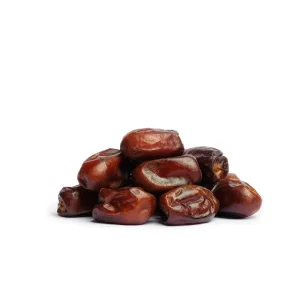
| Zahedi | Dry; firm flesh, long shelf life | Standard ambient dry container | Wholesale distribution, bakeries, food manufacturing |
Importers typically choose between two packaging formats based on local labour costs and branding needs:
- Bulk cartons, usually 5 kg or 10 kg, suit Australian wholesalers and food processors that repack dates locally under private labels.
- Retail-ready packs reduce local Australian packing expenses, provided every pouch or punnet complies fully with Australian food and origin labelling laws prior to export.
If you plan to source Iranian dates directly in bulk cartons or retail packs, confirming moisture levels and carton specifications before production avoids port delays.
How Do You Check BICON Conditions Before Ordering?
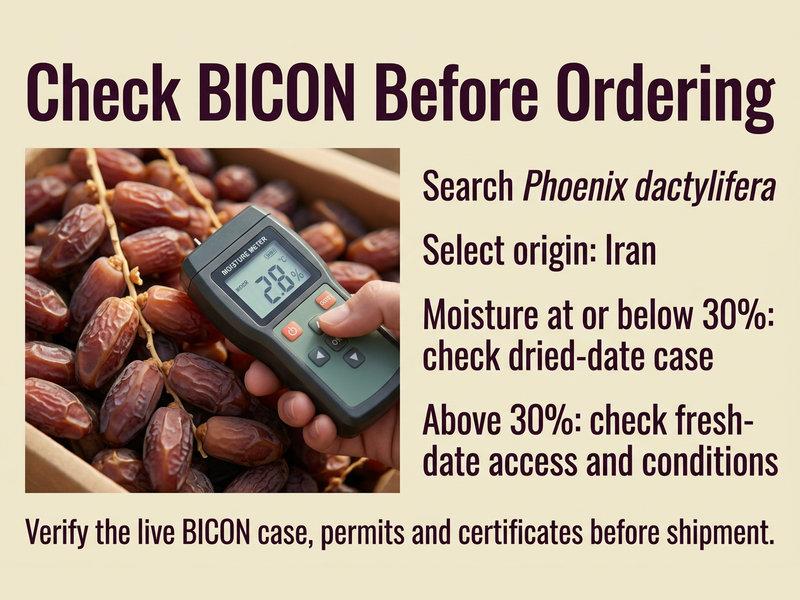
To verify import rules before buying, search the scientific name Phoenix dactylifera in the Department of Agriculture, Fisheries and Forestry (DAFF) BICON database, select Iran as the country of origin, and review the active commodity case. BICON divides dates into two strict biosecurity pathways based on moisture content.
- The 30% moisture threshold separates dried dates from fresh dates under Australian biosecurity rules. Dried and semi-dried dates at or below 30% moisture qualify from all countries under the “Dried dates (Phoenix dactylifera) or doums” pathway. Dates above 30% moisture fall under the “Fresh dates” case, which requires an approved country pathway, an official phytosanitary certificate, mandatory inspection, and potentially an import permit. Because Mazafati dates can sit close to 30% moisture depending on harvest timing, pre-shipment laboratory moisture testing is essential.
- Clean commercial packaging and accurate phytosanitary certificates keep consignments moving at the wharf. Shipments must arrive in new, clean packaging free from live insects, soil, seeds, and plant debris, supported by a phytosanitary certificate whenever specified by the active BICON case.
- Import permits and onshore treatments apply when goods sit outside standard dried conditions. Consignments exceeding 30% moisture, containing added ingredients, or failing arrival inspection may require a prior import permit, fumigation, re-export, or destruction at the importer’s expense.
DAFF updates BICON conditions periodically, so always check the live database entry before issuing a purchase order or proforma invoice.
What FSANZ and Labelling Rules Apply to Imported Dates?
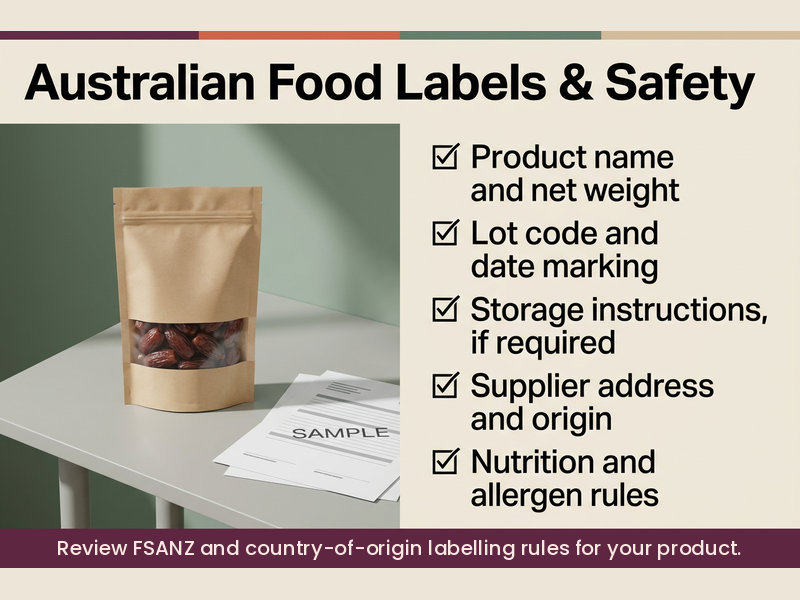
Once a container clears DAFF biosecurity checks, DAFF inspects the shipment for human food safety under the Imported Food Control Act 1992, enforcing standards set by Food Standards Australia New Zealand (FSANZ). Non-compliant packaging is one of the most common reasons retail food shipments are held at Australian ports.
- Under the Imported Food Inspection Scheme (IFIS), dried dates are classified as surveillance food, meaning roughly 5% of consignments are randomly referred for inspection and laboratory testing. Testing routinely screens for pesticide residues against the Maximum Residue Limits (MRLs) in Standard 1.4.2 of the Australia New Zealand Food Standards Code. If a shipment fails, DAFF issues a holding order on the overseas producer, subjecting 100% of future shipments from that facility to mandatory inspection until five consecutive consignments pass. FSANZ has also issued a risk statement on Hepatitis A virus in ready-to-eat fresh, chilled, and frozen dates, making it important for importers of high-moisture varieties to track current IFIS alerts.
- Retail labels must satisfy the Australia New Zealand Food Standards Code before sale. Every consumer package must display an accurate product name, lot or batch code, net weight, best-before date (for shelf lives under two years), storage directions such as refrigeration instructions for Mazafati, a Nutrition Information Panel (NIP), and the street address of the Australian or New Zealand importer or supplier. Post office boxes are not legally valid.
- Country of Origin Food Labelling (CoOL) rules, enforced by the Australian Competition and Consumer Commission (ACCC), govern how origin appears on retail packs. Dates packed for retail sale in Iran must carry an origin statement inside a defined box, such as “Product of Iran.” Bulk Iranian dates repacked in Australia must instead display the standard two-component mark featuring the bar chart and the text “Packed in Australia from imported ingredients,” without the kangaroo logo.
How Are Customs Duties and GST Calculated Under HS 0804.10?
When you import dates to Australia, plain fresh and dried dates enter free of customs duty and Goods and Services Tax (GST), though importers still pay border processing and inspection fees. Accurately separating product cost from freight on commercial invoices ensures proper valuation at customs.
- Under Schedule 3 of the Customs Tariff Act 1995, both fresh and dried dates fall under tariff classification 0804.10.00 with a general duty rate of Free (0%). Even though they share a tariff line, declaring whether dates are fresh or dried remains mandatory for biosecurity and food safety screening.
- Commercial consignments valued above AUD 1,000 require a Full Import Declaration (FID) lodged in the Integrated Cargo System (ICS) by a licensed customs broker. Australian Border Force (ABF) assesses customs value using the Free on Board (FOB) price converted into Australian dollars at the official ABF exchange rate, so invoices under CIF terms must itemize freight and insurance separately.
- According to Australian Taxation Office (ATO) food guidelines, plain, unprocessed fresh or dried dates are GST-free basic foods. Processed confectionery items, such as chocolate-coated or glace dates, attract 10% GST. Importers must also include the government Import Processing Charge (IPC), DAFF inspection charges, and broker fees in their landed cost calculations.
Shipping Iranian Dates from Bandar Abbas to Australian Ports
Moving dates reliably from Iran to Australia depends on matching container temperature control to cultivar moisture and meeting timber packaging rules.
- Ocean freight from Iran typically loads at Bandar Abbas and routes through regional transshipment hubs into Melbourne, Sydney (Port Botany), Brisbane, and Fremantle. Transit times vary by shipping line and transshipment connection, so buyers should build realistic buffer margins into best-before dates and stock schedules.
- Container choice protects product quality across warm equatorial sea lanes. Soft Mazafati dates require a temperature-controlled reefer container to prevent fermentation, souring, and sugar crystallization. Drier cultivars like Zahedi and Piarom usually travel in standard dry containers lined against humidity, though buyers shipping during peak summer months sometimes specify reefer transport for Piarom.
- Timber pallets and container cleanliness face strict arrival checks from DAFF. All solid wood pallets and dunnage must carry a legible ISPM 15 treatment stamp, or exporters should load onto plastic pallets. Containers must be clean, dry, and free from soil, insects, or plant residue, backed by a signed Packing Declaration.
Step-by-Step Clearance Sequence for Australian Date Importers
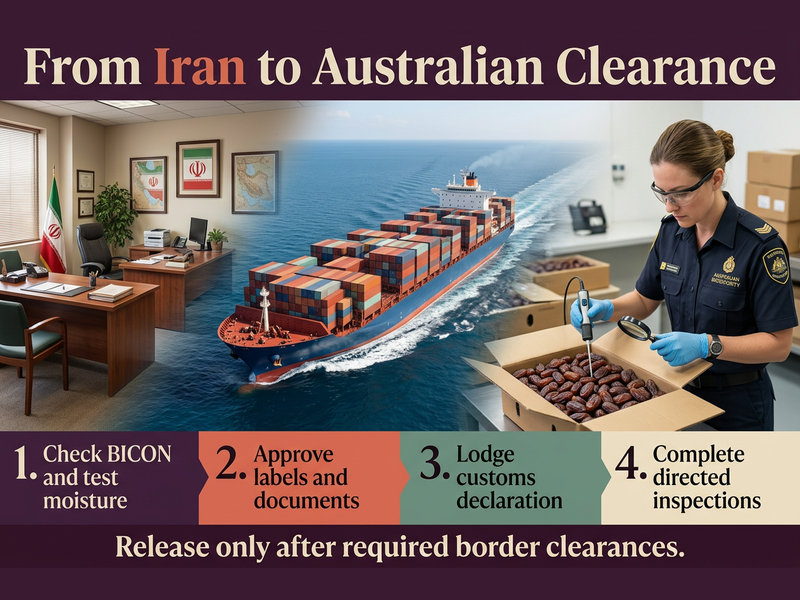
Following a clear sequence before and after vessel departure keeps clearance predictable when you import dates to Australia.
- Audit pre-shipment documents and label artwork before loading in Iran. Gather the commercial invoice, packing list, bill of lading, certificate of origin, phytosanitary certificate (if required by BICON), packing declaration, and ISPM 15 pallet records, and approve final FSANZ and CoOL label proofs prior to printing.
- Lodge the Full Import Declaration through your Australian customs broker before arrival. Send final shipping documents early so your broker can file in the ICS, register the overseas producer for IFIS screening, and pay the Import Processing Charge.
- Complete DAFF biosecurity and food inspection directions at the discharge port. Your broker will coordinate document checks, physical quarantine inspections, or IFIS laboratory sampling before releasing the container to your cold store or ambient warehouse.
Next Steps for Sourcing and Importing Iranian Dates
To import dates to Australia without border delays, verify the 30% moisture threshold in BICON, approve FSANZ and country-of-origin packaging artwork before printing, and book reefer transport for high-moisture cultivars like Mazafati. With duty-free access under HS 0804.10.00 and GST-free status for plain dates, compliance preparation is the primary driver of landed cost control. To check current harvest availability and request FOB or CIF quotes, contact Amin Farms with your preferred cultivar, packaging format, order volume, and Australian discharge port.
Related Products