Importing dates from Iran involves much more than choosing a variety and agreeing on a price. International buyers need to evaluate product specifications, supplier reliability, packaging, food-safety requirements, shipping conditions, customs procedures, and the regulations of the destination country.
Iran offers a broad range of commercial date varieties, including Mazafati, Piarom, Zahedi, Kabkab, Rabbi, and Sayer. Each variety has different characteristics in terms of moisture, texture, shelf life, storage requirements, market positioning, and transportation suitability.
For this reason, the best variety is not necessarily the most expensive one. The right choice depends on the buyer’s target market, distribution model, required shelf life, retail format, and logistics capabilities.
Importer’s takeaway: Before negotiating a price, define your required variety, grade, moisture level, packaging, minimum order quantity, destination requirements, Incoterm, and shipping conditions. A clear product specification reduces misunderstandings between the buyer and supplier.
Step-by-Step Guide to Import Dates from Iran
Successfully importing dates from Iran goes far beyond simply placing an order and waiting for delivery. It’s a structured journey that demands precision, familiarity with trade regulations, and a clear grasp of your market’s needs. In the following section, we’ll guide you step by step to avoid common pitfalls and secure a premium-quality shipment.
1. Research Your Target Market
Start by identifying what consumers and distributors in your destination market actually need.
Consider:
- Popular Iranian date varieties
- Preferred size and grade
- Retail or bulk packaging
- Consumer price range
- Organic or conventional requirements
- Required certifications
- Import duties and taxes
- Labelling requirements
- Maximum residue limits
- Storage and distribution conditions
For example, a distributor supplying supermarkets may require retail-ready cartons with specific labelling, while a food manufacturer may prefer bulk dates for further processing.
2. Select the Right Iranian Date Variety
The variety should be selected according to the final application rather than popularity alone.
| Variety | Texture | Moisture Profile | Typical Positioning | Logistics Consideration |
|---|---|---|---|---|
| Mazafati | Soft and moist | High | Fresh consumption, premium retail | Temperature-controlled storage may be required |
| Piarom | Semi-dry and firm | Lower than soft varieties | Premium/export markets | Generally easier to handle than high-moisture dates |
| Zahedi | Firm and semi-dry | Relatively low | Retail and food processing | Good handling characteristics |
| Kabkab | Soft to semi-moist | Medium to high | Value-oriented markets | Storage conditions should be agreed with supplier |
| Rabbi | Semi-dry and firm | Relatively low | Export and retail | Suitable for markets seeking longer shelf life |
| Sayer | Semi-dry | Relatively low | Bulk trade and processing | Commonly used in commercial export |
Actual specifications can vary according to harvest, grade, processing, storage conditions, and supplier specifications. Buyers should request a current product specification sheet before placing a commercial order.
3. Find and Vet an Iranian Date Supplier
Choosing a supplier is one of the most important decisions in the importing process.
Do not evaluate suppliers based solely on their quoted price. Instead, assess their ability to consistently provide the agreed specification.
Supplier Due-Diligence Checklist
Before placing an order, ask the supplier for:
- Company registration and export credentials
- Product specification sheets
- Available date varieties and grades
- Current certificates and food-safety documentation
- Packaging specifications
- Minimum order quantity
- Production and processing capacity
- Recent product samples
- References or export history where available
- Proposed Incoterm
- Payment terms
- Lead time
- Storage and transportation requirements
A supplier should also be able to explain how dates are sorted, graded, packed, stored, and prepared for export.
insight: A supplier’s ability to provide verifiable documentation and consistent product specifications is more useful to an importer than marketing claims such as “premium,” “best quality,” or “number one exporter.”
4. Essential Documents and Regulations
4. Verify Food-Safety and Export Documentation
Documentation requirements vary according to the destination country, product type, packaging format, and applicable regulations.
Common commercial documents may include:
- Commercial Invoice
- Packing List
- Certificate of Origin
- Bill of Lading or Air Waybill
- Phytosanitary documentation where required
- Health or conformity documentation where required
- Product specifications
- Certificate of Analysis where applicable
- Insurance documentation when applicable
Importers should confirm the exact requirements with the customs authority, food-safety regulator, or customs broker in the destination country.
For example, importing food into the United States involves requirements that can differ significantly from importing into the European Union or another market.
Do not assume that a document required for one destination is automatically required for another.
5. Agree on Product Specifications Before Payment
A common importing mistake is negotiating only on price and variety.
A commercial purchase agreement should clearly define the product specification.
Important specifications can include:
| Specification | What the Buyer Should Confirm |
| Variety | Exact date variety |
| Grade | Commercial grade and quality classification |
| Size | Fruit size or count specification |
| Moisture | Agreed moisture range where applicable |
| Appearance | Colour, skin condition, defects |
| Defects | Maximum permitted defects |
| Foreign material | Acceptance criteria |
| Packaging | Material, weight, dimensions |
| Labelling | Required language and information |
| Shelf life | Minimum remaining shelf life at shipment/arrival |
| Storage | Required temperature and humidity conditions |
| Inspection | Sampling and inspection procedure |
This document becomes particularly important when the buyer and supplier operate in different countries and use different quality terminology.
6. Choose the Right Incoterm
Incoterms determine important responsibilities between the buyer and seller, including aspects of transportation, costs, insurance, and risk transfer.
Common terms discussed in international trade include:
- EXW
- FOB
- CFR
- CIF
- DAP
- DDP, where legally and operationally appropriate
The best option depends on the buyer’s logistics network and destination.
For example, an experienced importer with established freight and customs relationships may prefer greater control over transportation, while a newer buyer may prefer a supplier-managed arrangement.
Always confirm the exact Incoterm and named place in the sales contract.
Discover more: Iran Dates Suppliers
Top Iranian Date Varieties for International Buyers
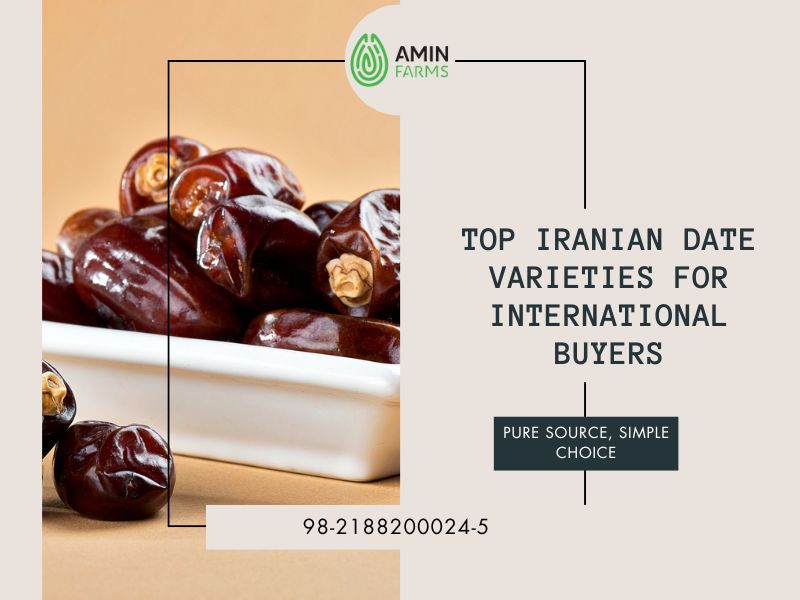
Iran stands proudly as one of the world’s leading producers of dates, offering an incredible variety of this nutritious and flavorful fruit to global markets. Each export variety has its own unique texture, sweetness, and moisture, making them suitable for different tastes and uses. From soft, juicy dates, perfect for fresh snacking, to semi-dry varieties ideal for long-term storage and international shipping, Iranian dates carry a reputation for authenticity and quality that resonates worldwide. For importers and distributors, knowing these top varieties is the key to choosing the right product for their market.
1. Mazafati Dates
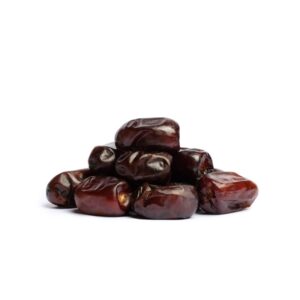
Grown mainly in Bam, Mazafati dates are among the most famous varieties worldwide. With its dark black skin, soft, moist flesh, and caramel-like sweetness, it’s a favorite for fresh consumption. Due to its high moisture, it typically requires refrigerated storage.
2. Piarom Dates
Often called the “chocolate date” and recognized as Iran’s most luxurious variety, Piarom dates grow in the foothills of Hormozgan. Semi-dry, elongated, with thin skin clinging to the flesh, Piarom offers balanced sweetness and excellent shelf life, making it perfect for premium exports to Europe and high-end markets.
3. Zahedi Dates
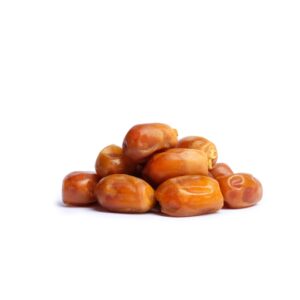
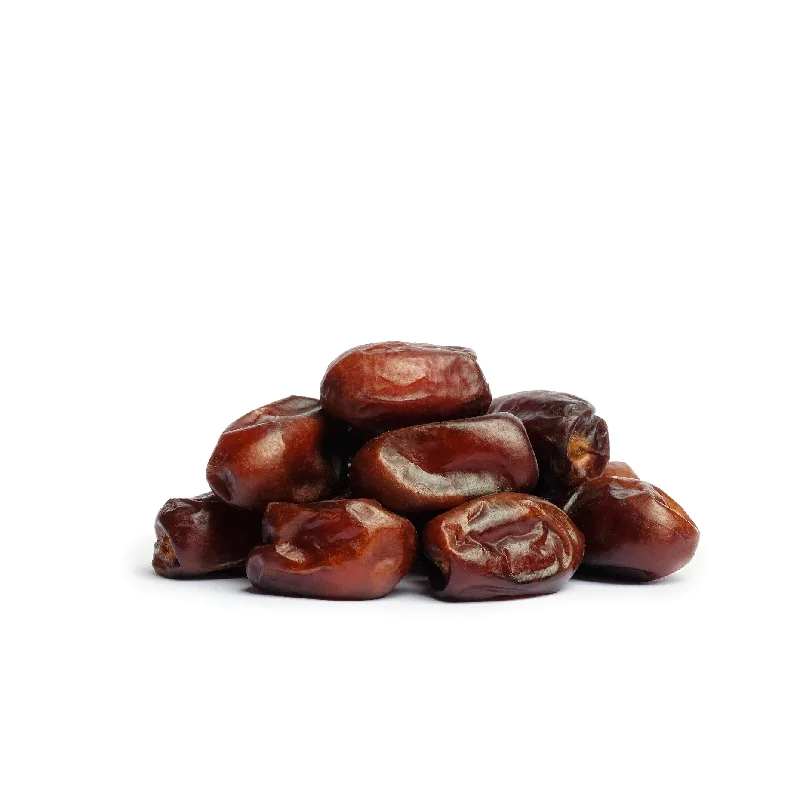
Distinguished by their golden-yellow to light brown color and oval shape, Zahedi dates are dry to semi-dry with a firm texture and mild sweetness. They’re easy to store and transport, making them a practical and affordable option, particularly for the food industry.
4. Kabkab Dates
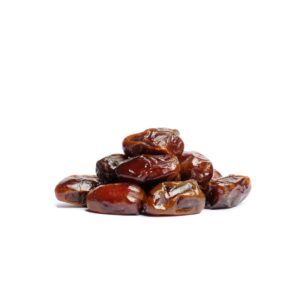
Cultivated in Bushehr and Fars, Kabkab dates are semi-moist, dark brown, and medium to large in size. Known for their rich sweetness and affordability, they are especially popular in price-sensitive international markets.
5. Rabbi Dates
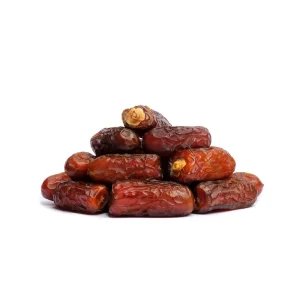
Produced mainly in Sistan and Baluchestan, Rabbi dates are a semi-dry variety with elongated black fruit and naturally high shelf life. Less dependent on cold storage, they are excellent for long-distance sea shipments and are gaining popularity across Asia and the Middle East.
From Mazafati to Piarom: What to Choose?
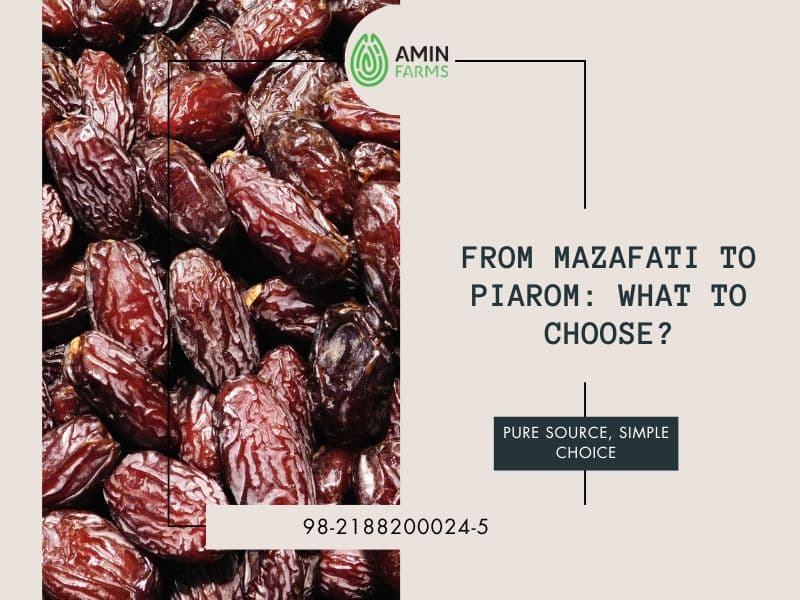
Choosing between Mazafati and Piarom largely depends on your export goals and your target market’s expectations. Mazafati, with its soft, juicy texture and deep dark color, is a fresh date variety beloved for its rich, caramel-like sweetness. It’s the perfect match for markets that value immediate consumption and the pleasure of a moist, melt-in-your-mouth fruit, common in neighboring and Asian countries. The trade-off, however, is that Mazafati requires careful handling, a cold chain, and consistent refrigeration.
Piarom, on the other hand, tells a different story. This semi-dry, premium variety, often called the “luxury date”, has a firmer, leathery texture, a long, elegant shape, and a more balanced sweetness. Because it keeps well for more extended periods and demands less strict refrigeration, Piarom is ideal for long-distance exports to Europe and North America. It also appeals to customers who seek not just flavor, but sophistication and durability in their product.
In short, if your market values freshness and affordability, Mazafati is your go-to choice. If prestige, longevity, and high-end positioning are the priorities, Piarom takes the crown. For anyone planning to import dates from Iran, understanding this distinction helps ensure the right variety reaches the right consumers.
Discover more: Mazafati Iran Dates Suppliers
Key Tips for Successfully Importing Dates from Iran
To succeed in importing dates from Iran, it is essential to understand your target market and work with a reliable supplier. Importers should evaluate not only the price of dates in Iran but also factors such as product quality, export-grade packaging standards, storage conditions, and harvest timing. Iranian dates are highly demanded in global markets thanks to their wide variety, natural sweetness, and strong nutritional value. Choosing the right variety—such as Mazafati, Piarom, or Zahedi—can significantly influence the profitability of your business. In addition, familiarity with customs regulations, export documentation, and international shipping methods helps buyers manage the import process more efficiently and reduce potential risks. With careful planning and cooperation with experienced Iranian exporters, businesses can streamline the purchasing process and build a stable, profitable supply chain for Iranian dates.
Finding Reliable Suppliers in Iran
Finding a reliable supplier is the backbone of every successful date business. Buyers need partners who not only have direct access to orchards and a wide range of varieties, such as Mazafati, Piarom, and Zahedi, but also meet international packaging standards, hold global quality certifications such as HACCP and ISO, and can arrange temperature-controlled transport. Transparent pricing, a firm commitment to quality, and a proven track record in customs clearance are equally important factors to consider.
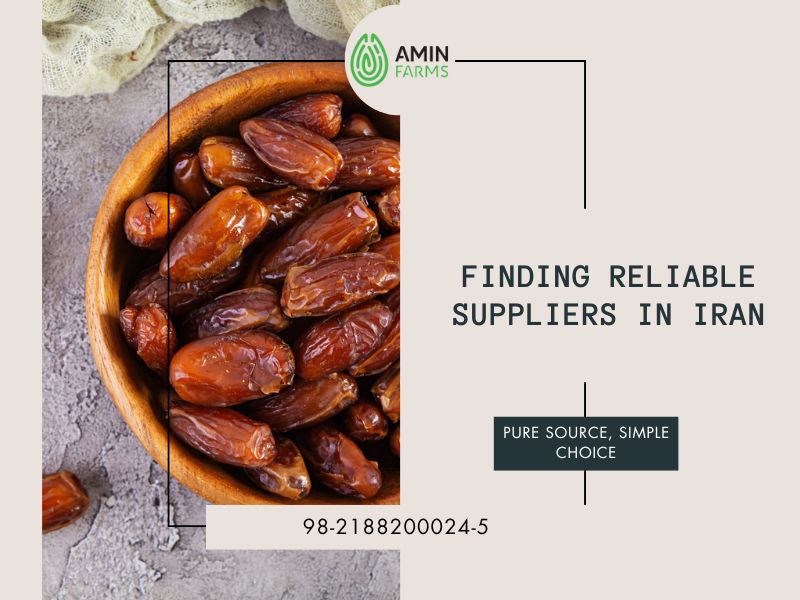
What truly minimizes risk, though, is working with a partner who oversees the entire supply chain, from harvest to final loading. This level of control ensures consistency, reduces surprises, and builds long-term trust. Amin Farms is a well-recognized supplier in Iran that has earned the confidence of international buyers by focusing on direct sourcing of premium-quality dates. With deep expertise in processing and packaging tailored to global market needs, the company has become a trusted link in the worldwide date supply chain.
For anyone planning to import dates from Iran, collaborating with a supplier like Amin Farms is more than a business decision; it’s a wise investment in reliability and peace of mind.
Costs and Logistics for Global Imports
Importing dates involves more than just the purchase price. Costs include sea or land freight, export-standard packaging, insurance, and customs duties. Logistics are critical: moist varieties like Mazafati require refrigerated containers (reefers), which raise expenses but preserve freshness. Semi-dry types such as Sayer and Piarom can travel at regular temperatures, lowering costs and making long-distance shipping more economical. Import tariffs and destination clearance fees also affect the final price. For companies planning to import dates from Iran, understanding these key factors ensures accurate budgeting, smoother trade operations, and more substantial profit margins.
Quality Assurance Tips for Imported Dates
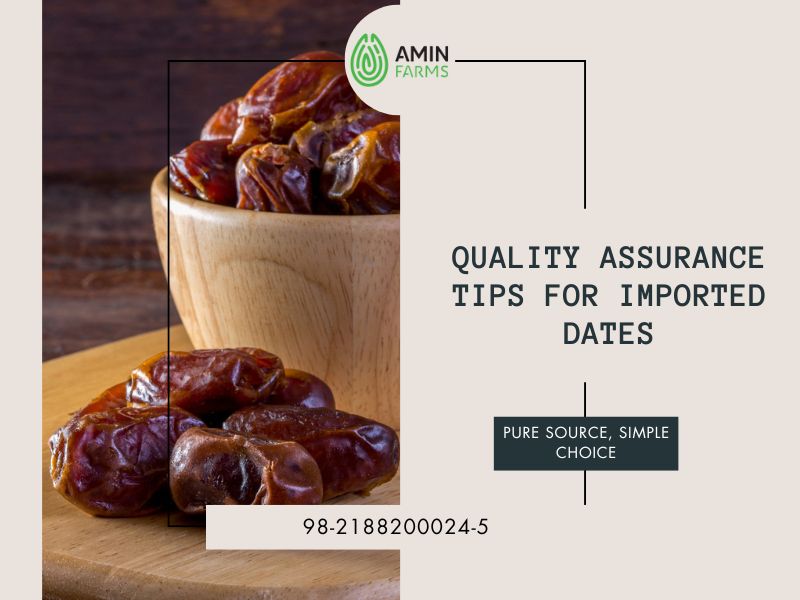
Ensuring top-quality dates is key to satisfying customers and protecting your investment. When importing dates, international buyers should pay attention to these essential steps:
- Work with suppliers holding international certifications such as HACCP and ISO 22000, supported by official Iranian health documents.
- Conduct random pre-shipment sampling to check size, color, texture, moisture, and to ensure there is no mold or pests.
- Use sturdy, hygienic packaging; for moist varieties like Mazafati, employ refrigerated containers (0–5 °C) with data loggers to monitor temperature.
- Label packaging clearly with harvest and expiration dates.
- Re-inspect shipments upon arrival, comparing them to initial samples to confirm consistency and quality.
Best Time to Import: Iran Date Harvest Calendar
Timing your imports just right can make all the difference when bringing Iranian dates into your market. Understanding the harvest seasons isn’t just about logistics—it’s your key to locking in the freshest products at the best prices, before storage fees kick in. This calendar helps you plan, ensuring you get premium quality while keeping costs in check.
Why Seasonality Matters for Price and Freshness
Dates thrive on nature’s schedule, and aligning your orders with harvest times means fresher fruit, lower prices, and happier customers.
The best time for importing dates from Iran is:
- August to September: The season kicks off with juicy, fresh varieties like Mazafati from the Bam region and early Zahedi dates. This is prime time to pre-book and snag those fresh, high-moisture loads straight from the trees.
- October to November: Things heat up with premium dry and semi-dry options, including luxurious Piarom and versatile Sayer. It’s ideal for stocking up on items with longer shelf life that travel beautifully.
- December Onwards: Supplies shift to cold storage, where modern refrigeration maintains top-notch quality. Prices might nudge up a bit to cover those costs, but the reliability is worth it for year-round availability.
Why Iran Leads in Date Exports Worldwide?
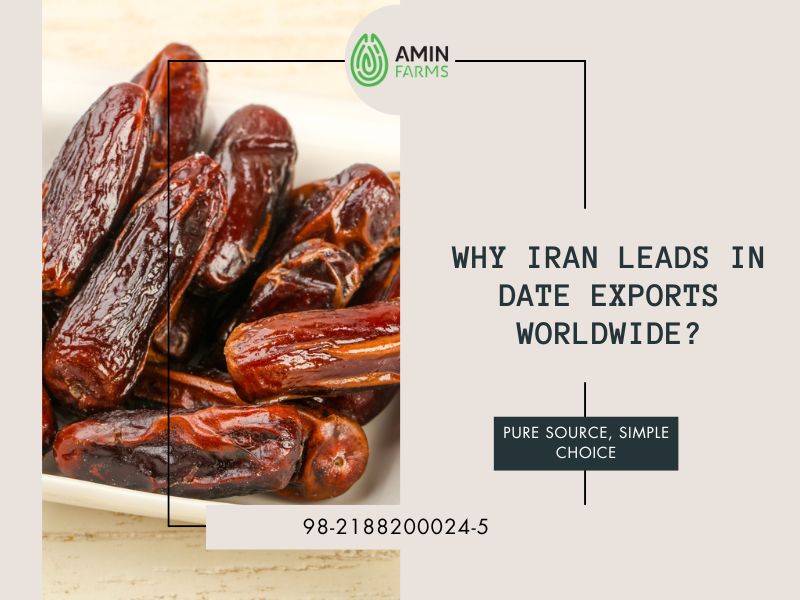
Several factors have made Iran a global leader in date exports. First, the country’s diverse climate allows for the cultivation of dozens of unique date varieties, ranging from soft, juicy dates to semi-dry types with extended shelf life. Second, the centuries-long experience of Iranian farmers ensures exceptional quality, earning worldwide praise for flavor and nutritional value.
In addition, Iran produces dates in high volumes and offers competitive pricing, especially for popular varieties such as Sayer and Kabkab. Companies like Amin Farms strengthen this advantage by sourcing premium dates directly from growers and adhering to international standards for processing and packaging. Their efforts play a crucial role in connecting local producers with global markets, making it easier and more reliable for businesses worldwide to import dates from Iran.
Government Incentives and Support for Importing Dates from Iran
Iran’s government bolsters date imports through export incentives, indirectly benefiting international buyers with stable supply and competitive pricing. Programs under the Ministry of Agriculture drive 5-10% growth in exports, ensuring adherence to standards like EU MRLs.
- Export Rebates: 10-15% subsidies on freight for certified shipments; lowers landed costs for bulk buyers.
- Trade Agreements: Preferential tariffs via FTAs with Eurasia/Asia; reduces duties by 5-20% for Iranian dates.
- Quality Funding: Grants for HACCP/ISO upgrades; ensures compliant products for global markets.
- Market Promotion: Subsidized participation in fairs like Anuga; facilitates buyer-supplier connections.
- Financing Schemes: Low-interest export credits; stabilizes pricing for long-term bulk contracts.
Related Products