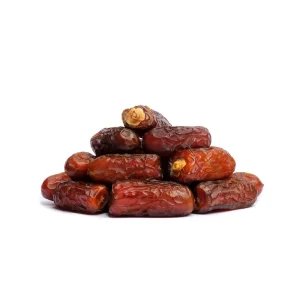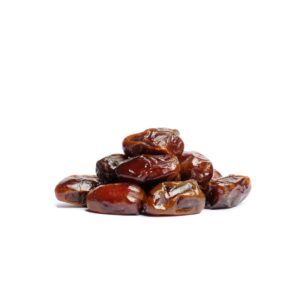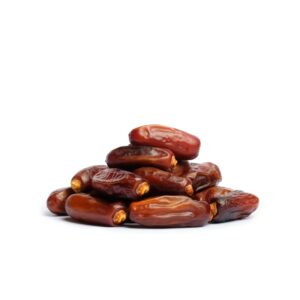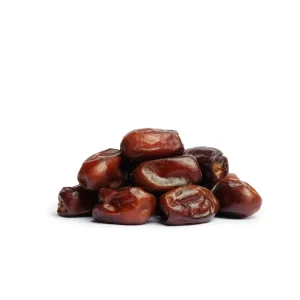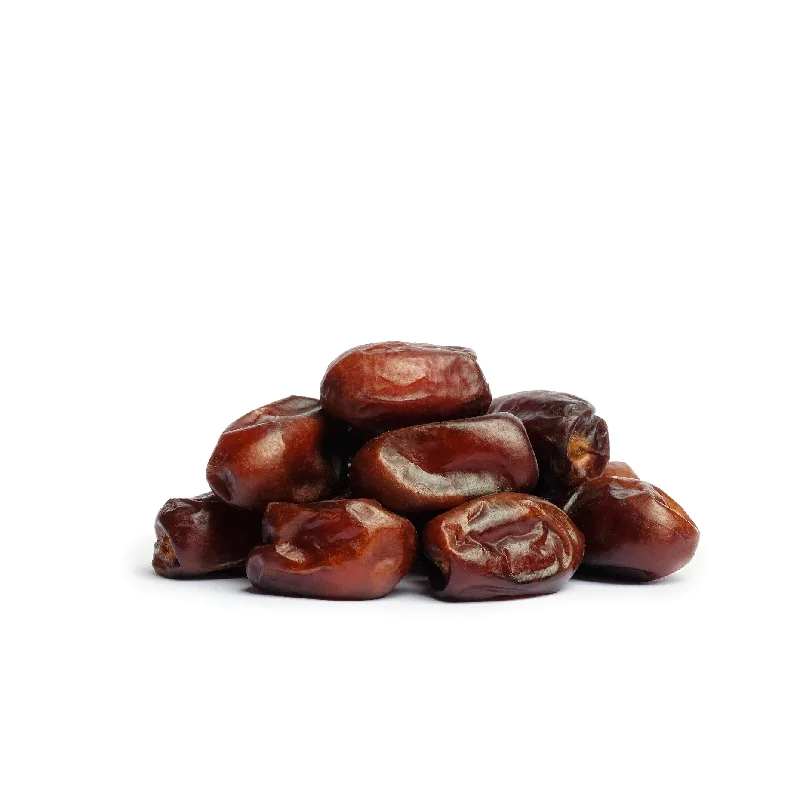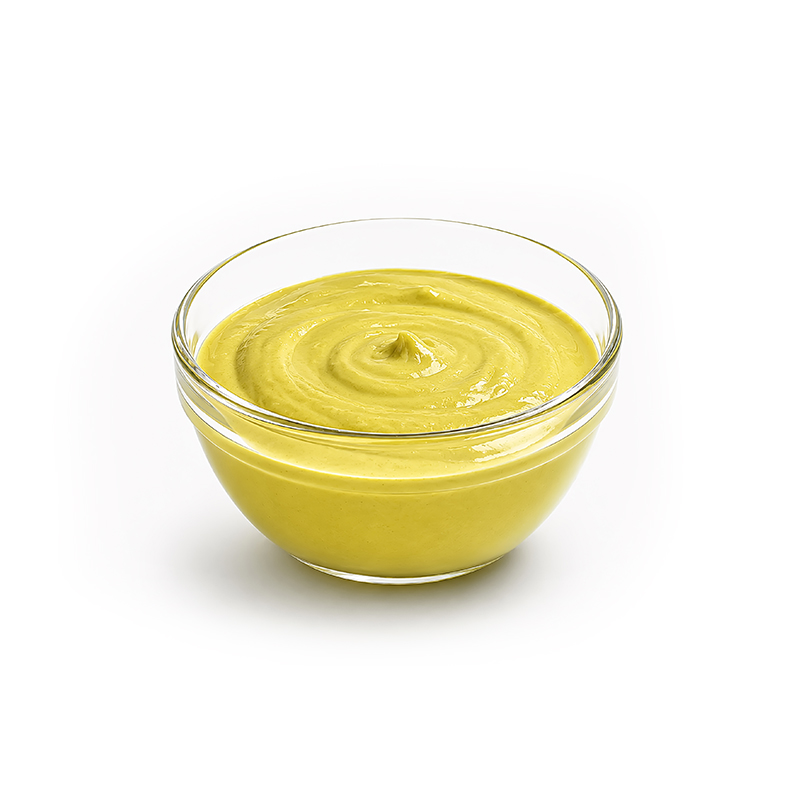
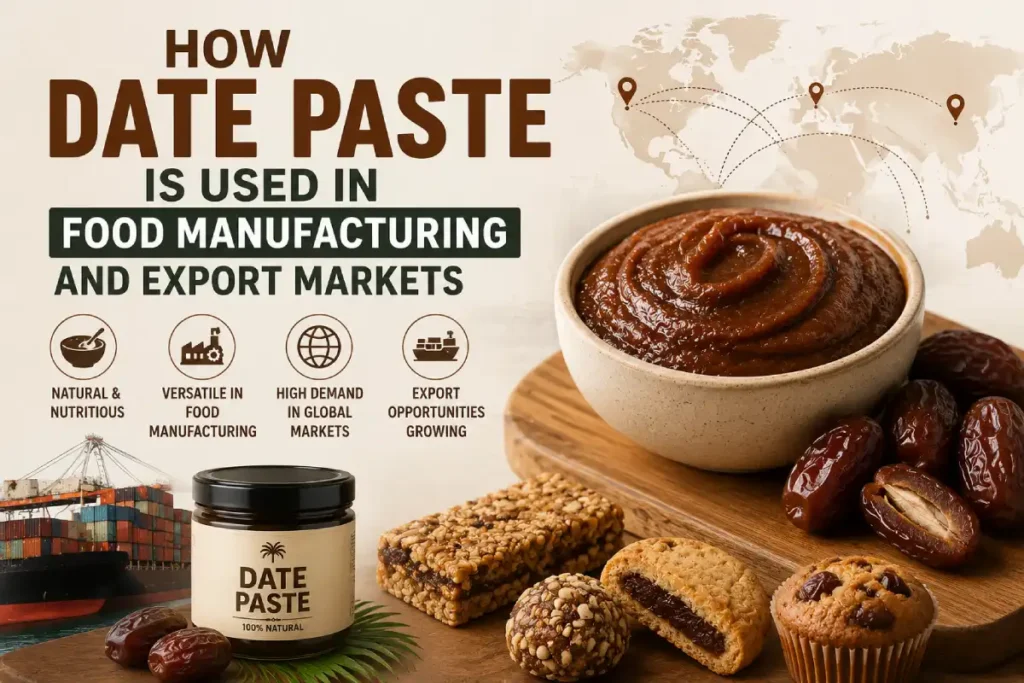
Date paste is a high-viscosity fruit-based ingredient used in food manufacturing for sweetness, binding, moisture retention, and texture control. It is becoming more relevant as bakeries, confectionery producers, snack manufacturers, and functional food brands reformulate products with recognizable ingredients. Russia, CIS countries, and Europe are important demand markets, while Iran is a major supply origin. This article explains industrial applications, buyer requirements, and export factors behind Date Paste import.
Introduction to Date Paste
Date paste is not only a sweet fruit product. In industrial food production, it is treated as a functional raw material with measurable specifications. Buyers usually evaluate moisture, texture, particle size, microbiological quality, color, odor, packaging, and documentation before approving a supplier.
What Is Date Paste?
Date paste is a semi-solid food ingredient made from cleaned and pitted dates that are ground and homogenized into a uniform mass. A proper industrial paste has controlled moisture, stable texture, acceptable particle size, clean odor, and no visible foreign material.
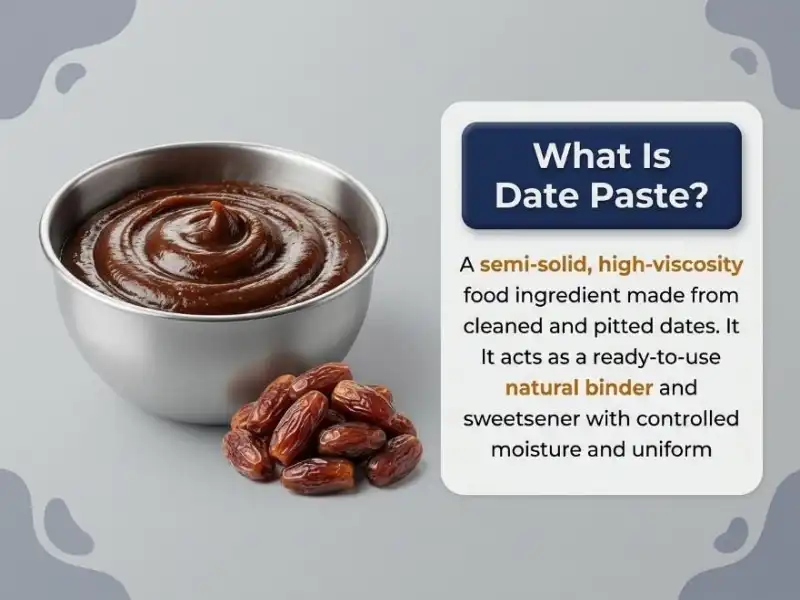
In simple terms, it is a ready-to-use ingredient for sweetening, binding, filling, and improving texture in food products. It can be used in bakery goods, confectionery, energy bars, dairy desserts, sauces, and thick beverage applications.
How Date Paste Is Produced
Industrial production usually includes sorting, washing, pitting, softening, grinding, homogenizing, quality checking, and packing. In higher-standard factories, pasteurization or heat treatment may also be used to reduce microbial risk.
Main quality points include:
- no pit fragments
- controlled moisture
- uniform texture
- acceptable color
- clean natural odor
- microbiological safety
- stable packaging for transport
For B2B buyers, these points are essential because the paste must behave consistently in automated production.
Why Date Paste Is Growing in Global Demand
Demand is growing because food manufacturers are looking for fruit-based sweeteners, clean-label ingredients, and natural binders. Snack bars, bakery fillings, soft confectionery, and plant-based foods are key categories. In Russia and CIS markets, manufacturers evaluate Date Paste import for cost control, product differentiation, and access to bulk natural ingredients.
Nutritional and Functional Properties of Date Paste
Date paste contains natural sugars, mainly glucose and fructose. These sugars provide sweetness and help retain moisture in products such as biscuits, muffins, bars, and fillings. Unlike refined sugar or syrup, date paste also brings fruit solids and fiber, which affect texture and mouthfeel.
It also contains dietary fiber and minerals such as potassium and magnesium. These values do not make date paste a medical or health product, but they support its use in foods positioned around recognizable fruit ingredients. This is one reason Date Paste import matters for bakery, snack, and confectionery manufacturers seeking cleaner ingredient lists.
Main Applications of Date Paste in Food Manufacturing
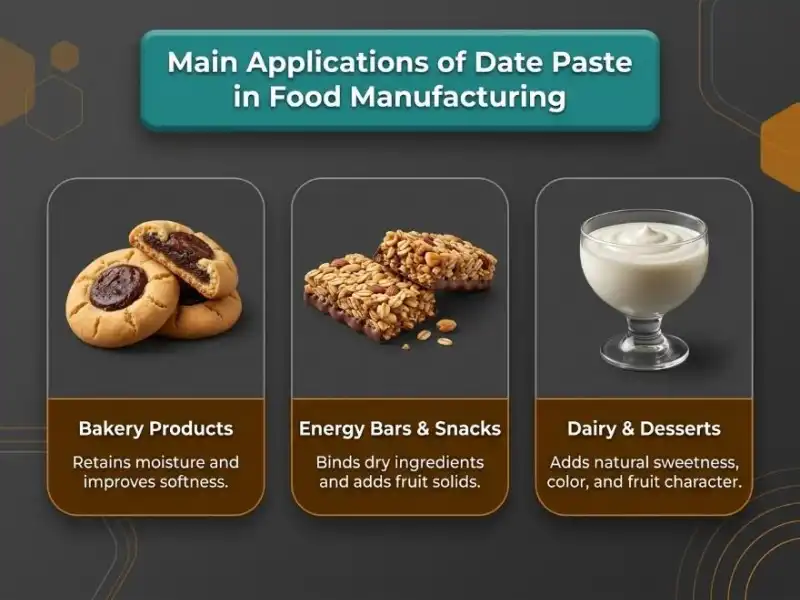
Date paste is most useful when sweetness and structure are needed together. It is not a direct replacement for every sugar or syrup, because it adds color, flavor, solids, fiber, and viscosity. However, in the right formula, it can simplify production and improve product performance.
Bakery Products
In bakery manufacturing, date paste is used in biscuits, cookies, cakes, muffins, filled pastries, soft bakery products, and date-filled items. It provides sweetness, helps retain moisture, and improves softness.
When using date paste, factories often adjust:
- sugar level
- water addition
- fat content
- baking time
- filling viscosity
For filled pastries, stability is important. The paste should not become too runny during baking or too hard during storage.
Confectionery and Snacks
In confectionery, date paste is used in fruit bites, filled sweets, coated snacks, chewy products, and soft confectionery bases. Its binding capacity helps hold nuts, cereals, dried fruits, seeds, and powders together.
The main technical requirements are smooth texture, controlled moisture, clean taste, and batch consistency. If the paste is too wet, it can cause stickiness. If it is too dry, it may become hard to process.
Energy Bars and Health Foods
Date paste is widely used in energy bars, protein bars, granola bars, and functional snacks. It binds dry ingredients while adding sweetness and fruit solids. This makes it suitable for products where manufacturers want to reduce reliance on glucose syrup or artificial binders.
For this segment, Date Paste import is mainly linked to bulk sourcing, stable viscosity, microbiological quality, and supplier reliability.
Dairy and Dessert Applications
Date paste can be used in yogurt preparations, dessert fillings, ice cream inclusions, sauces, and dairy desserts. It adds sweetness, color, and fruit character. Manufacturers must control viscosity, microbial limits, dispersion, and flavor balance.
In dairy applications, the paste should be tested with the final process, because heat treatment, pH, and mixing conditions can change texture and stability.
Beverage and Smoothie Production
Date paste can be used in thick smoothies, blended drinks, and fruit-based beverage preparations. Because it contains fiber and insoluble solids, dispersion must be controlled. High-shear mixing may be required to reduce sedimentation and achieve a uniform texture. Date Paste import for beverage producers should focus on fine texture, low contamination risk, and stable viscosity.
Why Food Manufacturers Prefer Date Paste
Food manufacturers prefer date paste because it can do several jobs at the same time. It sweetens, binds, adds body, improves moisture retention, and supports clean-label positioning. This can reduce the need for multiple separate ingredients in some formulas.
It is not always cheaper than sugar or syrup. Cost depends on origin, date variety, processing level, certification, packaging, freight, and order volume. Its real value is strongest when manufacturers need both sweetness and structure. Date Paste import is therefore more relevant for factories focused on formulation performance, not only raw material price.
The Role of Date Paste in Export Markets
Date paste has become a practical export product because processed food manufacturers need bulk fruit-based ingredients. Global date production is commonly estimated at around 9–10 million metric tons per year, with major production in the Middle East and North Africa.
Demand comes from bulk buyers, contract manufacturers, private-label brands, distributors, bakeries, and snack producers. Organic and functional food markets also use date paste, but only certified organic products can be sold as organic. Date Paste import is especially relevant where buyers need traceable supply, stable quality, and complete export documentation.
Top Countries Importing Date Paste
Import demand differs by region. Europe usually focuses on traceability, certifications, residue limits, allergen declarations, and food safety systems. North America has strong demand from snack bars, private-label brands, natural food companies, and plant-based product developers. Asia and the Middle East show demand depending on category, price, certification, and local taste preferences.
| Region | Key demand sectors | Main buyer priorities |
|---|---|---|
| Russia and CIS | Bakery, confectionery, snacks, ingredient distribution | Price, customs papers, packaging strength, delivery reliability |
| Europe | Bakery, organic snacks, private label, desserts | Traceability, food safety certification, contaminant control |
| North America | Protein bars, natural foods, plant-based products | Consistency, label compliance, supplier audits |
| Asia and GCC | Snacks, desserts, regional food processing | Price, certification, flavor suitability |
Russia and CIS Import Trends
Russia and CIS markets are important because bakery, confectionery, and snack producers need stable supplies of functional ingredients. Buyers usually evaluate price, customs documents, payment terms, transport route, Russian-language documentation if required, and packaging strength. Date Paste import into these markets depends heavily on reliable logistics and accurate paperwork.
Iran’s Position in the Global Date Paste Industry
Iran is an important date-producing country with established experience in date processing. Common Iranian varieties include Mazafati, Kabkab, Zahedi, Sayer, and Piarom, although not all are used equally for paste production. Processing-grade dates are often suitable for industrial paste because they can provide strong natural sweetness and good solids.
Advantages of Importing from Iran
Iran offers several advantages for regional buyers: availability of processing-grade dates, date-processing knowledge, competitive supply in some categories, and geographic relevance for Russia and CIS routes. Iranian date paste can be attractive when suppliers provide stable specifications, proper pitting, controlled moisture, and reliable export packaging.
For Russian and CIS buyers, Date Paste import from Iran may also benefit from practical regional routes, including road, rail, and Caspian Sea logistics. However, buyers should still check shipment terms, customs requirements, certificates, and destination-market compliance before placing large orders.
Key Factors Buyers Should Consider Before Importing Date Paste
Before approving a supplier, buyers should request samples and compare them with the technical data sheet. A low price is not useful if the product causes production problems or fails documentation checks. Date Paste import should be managed through clear technical, commercial, and logistics criteria.
Product Quality and Consistency
Important quality indicators include moisture percentage, texture, color, odor, taste, particle size, Brix if provided, foreign matter control, pit fragment control, and batch consistency. Buyers should request:
- technical data sheet
- certificate of analysis
- sample approval
- microbiological results
- packaging photos
- production and expiry format
Packaging Options for Bulk Export
Common packaging includes plastic pails, cartons with food-grade liners, drums, and other bulk formats. Packaging must protect the paste from contamination, moisture change, leakage, and transport damage. For long routes to Russia or Europe, pallet quality and carton strength are important.
Food Safety Certifications and Standards
Relevant certifications may include HACCP, ISO 22000, FSSC 22000, BRCGS, halal, kosher, and organic certification where applicable. For Russia and CIS markets, buyers should also confirm customs documents, sanitary requirements, labeling information, and certificates matching local import rules.
Shelf Life and Storage Conditions
Shelf life depends on moisture, hygiene, packaging, storage temperature, and processing quality. Many industrial date pastes are supplied with 12 to 18 months of shelf life under cool, dry storage, but buyers must confirm the supplier’s actual specification. Storage temperature, warehouse handling, and transport exposure can affect texture and quality.
Challenges and Opportunities in the Date Paste Market
Date paste competes with refined sugar, glucose syrup, high-fructose syrup, and artificial sweeteners. It is not a perfect replacement in every formula because it adds solids, color, flavor, and viscosity. Its value is highest when sweetness and structure are both needed.
Logistics is another challenge. Freight cost, transit time, customs clearance, temperature exposure, pallet quality, packaging durability, and document accuracy all affect successful delivery. For Russia and CIS markets, payment terms and route planning are also important. Date Paste import will continue to grow where suppliers can combine competitive pricing with consistent technical quality.
Future Trends in Date Paste Manufacturing and Export
Future demand is linked to plant-based foods, snack bars, bakery reformulation, clean-label products, and natural sweetener development. Manufacturers are also asking for smoother pastes, customized moisture levels, organic options, improved texture control, and application-specific blends for bars, bakery, and confectionery.
Sustainability is another driver. Processing-grade dates can be converted into higher-value ingredients instead of being wasted. This supports both food efficiency and commercial value in date-producing countries.
Conclusion
Date paste is a practical industrial ingredient for food manufacturers that need natural sweetness, binding, moisture retention, texture improvement, and clean-label compatibility. It works well in bakery products, confectionery, snack bars, desserts, and selected beverages when formulas are properly adjusted.
For importers, the best supplier is not only the lowest-cost supplier. Buyers should compare sample consistency, specifications, certificates, packaging, shelf life, logistics reliability, and documentation accuracy. A well-managed Date Paste import strategy can help manufacturers secure a stable fruit-based ingredient for modern food production.
Related Products