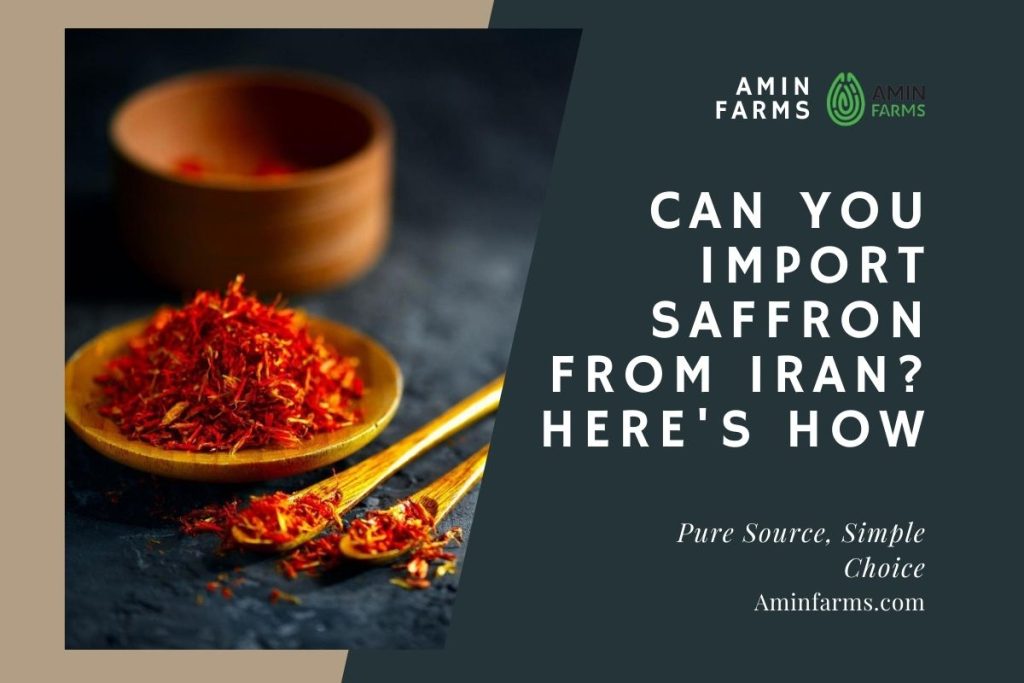
Saffron, often called the “red gold” of spices, is one of the world’s most valuable culinary ingredients. Its distinctive colour, aroma, and flavour have made it an important product in food, beverage, pharmaceutical, and cosmetic industries for centuries.
Iran is one of the world’s major saffron-producing countries and is particularly well known for its large-scale cultivation and diverse grades of Iranian saffron. For international buyers, however, sourcing saffron from Iran involves more than finding a supplier and arranging shipment.
So, can you import saffron from Iran?
The answer depends primarily on the laws of your destination country, sanctions that may apply, customs requirements, food-safety regulations, payment restrictions, and the documentation required for the shipment.
This guide explains the major considerations involved in importing Iranian saffron, from supplier selection and quality testing to documentation, logistics, customs clearance, and commercial purchasing.
Important: Import regulations and sanctions can change. Before placing an order, confirm the current rules with your country’s customs authority, an experienced customs broker, and, where necessary, a qualified international-trade lawyer.
Legal Insights: Can You Import Saffron from Iran?

Can I Import Saffron from Iran?
In many markets, Iranian saffron can be imported legally, but there is no universal rule that applies to every country.
Before purchasing, an importer should verify:
- Whether Iranian-origin saffron is permitted in the destination country
- Applicable import duties and tariffs
- Food-safety and phytosanitary requirements
- Product labelling requirements
- Required import licences or permits
- Rules governing Iranian-origin goods
- Sanctions and restricted-party requirements
- Permitted payment methods
- Required certificates and customs documents
- Transportation and carrier restrictions
For example, the United States maintains a broad Iran sanctions regime administered by OFAC, with specific rules and authorizations that must be reviewed for individual transactions. The existence of a food-related exception or authorization does not automatically mean that every transaction involving an Iranian supplier, bank, carrier, or intermediary is permitted.
Therefore, the correct answer to “Can I import saffron from Iran?” is:
Yes, importing Iranian saffron may be possible, but legality depends on the destination country’s regulations and the specific parties, payment channels, shipment structure, and applicable sanctions involved.
Discover more: Exploring the World of Iranian Spices
Understanding Global Sanctions and Exceptions
Legal and Regulatory Considerations When Importing Iranian Saffron
International saffron trade involves two separate compliance questions:

- Is the product legally importable into the destination country?
- Are the transaction, supplier, financial institutions, carriers, and other parties legally permitted to participate?
Both questions need to be addressed before a commercial order is confirmed.
Key Areas to Check
| Compliance Area | What the Importer Should Verify |
|---|---|
| Import eligibility | Whether Iranian-origin saffron can legally enter the destination market |
| Customs | HS classification, customs value, duties, and clearance requirements |
| Food safety | Applicable food-safety, contamination, residue, and hygiene requirements |
| Labelling | Country-of-origin, ingredient, weight, batch, and other mandatory information |
| Certificates | Certificate of origin, health/food-safety documents, and laboratory reports where required |
| Sanctions | Restrictions involving Iran, the supplier, banks, carriers, or other counterparties |
| Payment | Whether the proposed payment mechanism is legally available |
| Shipping | Whether the carrier and logistics structure can lawfully handle the shipment |
Do not assume that a product is legal to import simply because other businesses appear to be importing it. Sanctions and customs compliance are transaction-specific.
Step-by-Step Process for Saffron Imports

Importing saffron from Iran, like any international trade process, requires careful planning and a straightforward step-by-step approach. From the very first research to the final delivery, every stage matters. Skipping or overlooking details can easily lead to delays or even the cancellation of a deal. So, if you’ve ever wondered Can I import saffron from Iran, here’s a practical breakdown of the key steps you’ll need to follow.
1. Market Research and Supplier Selection
The first step is thorough market research and choosing reliable Iranian suppliers. Look for companies with international quality certifications (such as ISO) and a proven export track record. Always request samples before placing large orders to confirm authenticity and quality. Trade fairs and trusted online platforms can also help you connect with reputable sellers.
2. Legal and Regulatory Compliance
Before moving forward, make sure you understand your country’s import rules for agricultural and food products. These typically include customs tariffs, food safety regulations, and required permits. Working with an experienced customs broker can simplify this process. It’s also essential to know how financial and banking restrictions, including saffron sanctions import rules, may affect your transactions.
3. Logistics and Shipping
Because saffron is so valuable, safe and fast shipping is crucial. Air freight is often the preferred method of transportation. Proper, standardized packaging protects the product during transit. Partnering with a shipping company experienced in handling trade with Iran can save you time and reduce risks. Make sure all shipping documents, such as the commercial Invoice, packing list, and bill of lading, are prepared accurately.
Discover more: Import Cardamom from Iran
4. Customs Clearance and Documentation
Once the shipment arrives, the customs clearance process begins. This requires a complete set of documents, including the commercial Invoice, packing list, bill of lading, certificate of origin, and health certificate. Missing or inconsistent paperwork can result in delays and additional costs. Again, a skilled customs broker can be a valuable asset in this situation.
5. Quality Control and Inspection
Saffron must meet international standards for purity, moisture, colour strength (crocins), aroma (safranal), and taste (picrocrocin). Independent laboratories usually handle these tests to confirm quality. Reliable testing not only protects your investment but also helps maintain your reputation in the marketplace.
6. Secure Payment Methods
Due to banking restrictions, payments to Iranian suppliers can be challenging. Many importers use trusted exchange houses or alternative payment mechanisms that comply with local and international laws. In some cases, payments are routed through third-party companies in other countries. Whatever method you choose, ensure it is safe, transparent, and legally acceptable in both countries.
By following these steps and preparing in advance, the process of importing saffron becomes much smoother. Careful planning, reliable partners, and attention to the rules will help you navigate challenges successfully and bring this golden spice to your market with confidence.
Discover more: Import Turmeric from Iran
Documentation and Compliance Requirements
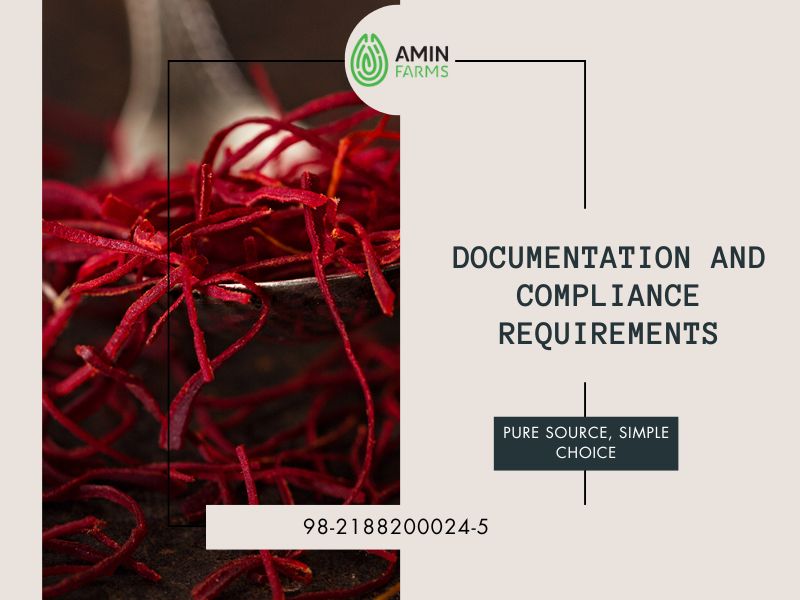
Detailed and accurate documentation plays a vital role in the process of bringing saffron from Iran into international markets. Even a small mistake or missing detail in the paperwork can cause long delays, extra costs, or, in some cases, even lead to your shipment being held at customs. These documents serve as legal proof of the product’s origin, its quality, and compliance with international regulations.
The primary documents you’ll need include:
- A Commercial Invoice, which outlines the full details of the transaction.
- The packing list provides a detailed breakdown of everything inside the shipment.
- A Bill of Lading serves as the official proof of ownership while the goods are in transit.
- Certificate of Origin issued by the Iranian Chamber of Commerce, verifies that the saffron was grown in Iran.
- A Health Certificate provided by Iran’s Ministry of Health, which verifies that the saffron is safe and suitable for human consumption.
Can I import saffron from Iran? The answer starts with making sure every one of these documents is in order before the shipment leaves Iran.
Working with the best Iranian saffron suppliers is also a smart move, since they are usually experienced in handling international exports and can provide all the necessary paperwork without issues. This not only saves you from headaches at customs but also ensures your saffron arrives safely and legally at its destination.
Discover more: Import Pepper from Iran
Top Quality Factors in Iranian Saffron

When it comes to saffron, quality is the most critical factor that determines its value and price in global markets. Iranian saffron, with its unique characteristics such as strong colouring power, rich aroma, and distinct flavour, is widely regarded as one of the best in the world. For importers, understanding these quality markers is essential to identifying authentic saffron and protecting their investment. If you’ve ever wondered Can I import saffron from Iran, knowing what defines top-quality saffron is the first step.
1. Crocin (Colouring Strength)
Crocin is the key compound responsible for saffron’s deep red colour and its colouring power. This carotenoid is measured in laboratories using a spectrophotometer at 440 nm. The higher the crocin value, the better the saffron. Premium Iranian varieties, such as Negin and Sargol, typically score between 220 and 260, placing them in the top-quality category.
2. Safranal (Aroma)
Safranal gives saffron its signature aroma. It forms during the drying process when picrocrocin breaks down. A high concentration of safranal indicates fresh, well-preserved saffron, which is crucial for culinary, medicinal, and even fragrance uses.
3. Picrocrocin (Taste and Bitterness)
This compound is responsible for saffron’s slightly bitter yet pleasant taste. During drying, it transforms partly into safranal. Picrocrocin levels, like crocin and safranal, are tested in laboratories and evaluated according to international saffron standards, such as ISO 3632.
Discover more: Import Cinnamon from Iran
4. Moisture Content
Moisture is another factor that directly affects the quality and shelf life of saffron. Too much moisture can cause mould and spoilage, while too little makes the threads brittle and prone to breaking during transport. International standards recommend a moisture content between 10 and 12 percent to maintain balance and durability.
5. ISO 3632: The Global Benchmark
ISO 3632 is the international gold standard for grading saffron. It classifies saffron based on crocin, safranal, and picrocrocin levels. Category I saffron represents the highest quality and must meet strict criteria. Importers should always work with suppliers who provide certified ISO 3632 test results, ensuring authenticity and protecting against fraud.
Understanding these technical details doesn’t just help you spot premium saffron; it also gives you confidence when navigating the process of importing saffron from Iran. With the proper knowledge and trusted suppliers, you can make sure that the saffron you bring into your market is both authentic and world-class.
Alternative Routes for Restricted Markets
For importers in countries facing strict restrictions or sanctions on trade with Iran, finding alternative ways to bring saffron to market is often necessary. One standard solution is to work with intermediary companies based in third countries such as the United Arab Emirates (Dubai), Turkey, or Spain. These firms handle the initial import from Iran and then re-export the saffron to the final destination.
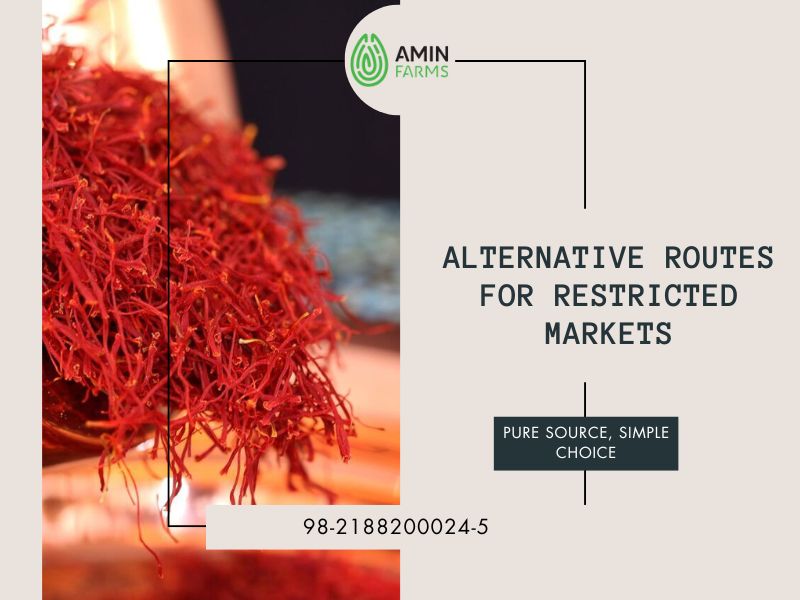
While this route may involve higher costs and added complexity, it gives businesses the ability to access authentic Iranian saffron without violating local regulations. In these cases, it’s crucial to carefully review all documents and certificates of origin to make sure the saffron is moving through legal and approved channels. Partnering with a reputable intermediary that has a proven track record can make all the difference.
Many business owners ask, “Can I import saffron from Iran?” The answer often depends on local rules and compliance requirements. For example, in some markets, such as Iranian saffron import to India, specific regulations and pathways need to be followed to ensure a smooth and lawful process.
Ultimately, with the proper guidance and reliable partners, importers can still access the richness of Iranian saffron while staying fully compliant with international trade laws.
Discover more: Exporting Cinnamon to Iran
Benefits of Importing Premium Iranian Saffron
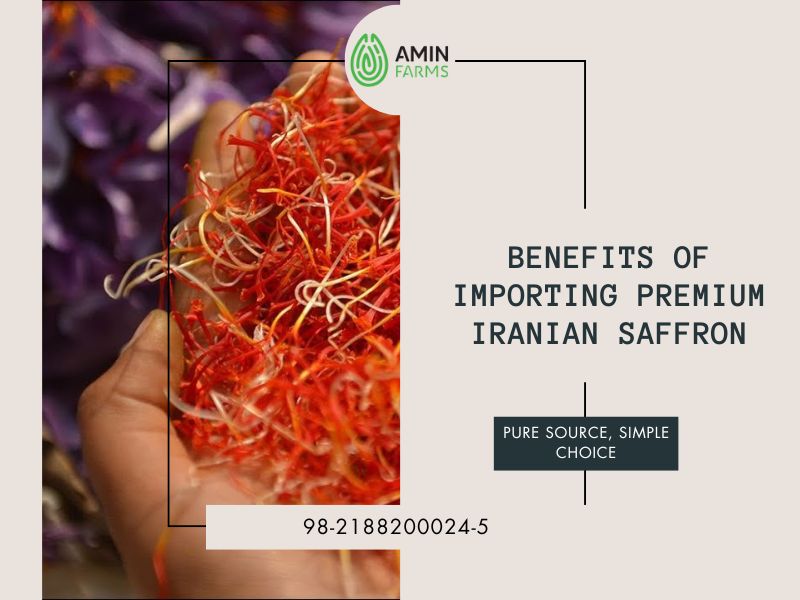
Importing premium Iranian saffron brings countless advantages for both traders and end consumers. Its superior quality not only adds significant commercial value to the product but also strengthens and protects your brand reputation. Investing in high-grade saffron means better returns and the ability to build long-lasting customer loyalty.
- Unmatched Quality: Iranian saffron is globally renowned for its rich aroma, deep flavour, and exceptional colouring power.
- High Profitability: Consistent global demand for top-quality saffron ensures attractive profit margins for importers.
- Market Advantage: Incorporating Grade A saffron enables you to compete confidently against lower-quality products and establish a stronger market position.
- Versatile Applications: From food to pharmaceuticals and cosmetics, Iranian saffron adds value across multiple industries.
A common question importers ask is, “Can I import saffron from Iran?” The answer often depends on your country’s trade rules and whether sanctions on saffron imports apply. Understanding these regulations and working with reliable suppliers is crucial to maximizing the benefits of this golden spice while ensuring full compliance.
Discover more: how to export pepper from india to Iran
Bulk Packaging Options for Saffron Exports
Saffron’s high value and sensitivity to light, oxygen, moisture, and contamination demand specialized, food-grade, tamper-evident packaging that complies with international export standards and preserves crocin/safranal levels.
| Packaging Type | Material | Capacity | Key Benefits |
| Vacuum-Sealed Foil Pouches | Triple-layer PET/Al/PE | 100g–1kg | Light/oxygen/moisture barrier; 24+ months shelf life |
| Nitrogen-Flushed Tins | Metal with PE inner liner | 500g–5kg | Superior protection; ideal for premium grades |
| Bulk Multi-Layer Bags | Food-grade foil + PE liner | 5–25kg | Cost-effective for wholesale; stackable cartons |
| Vacuum Glass/HDPE Jars | Amber glass or opaque HDPE | 50–500g | Retail-ready; premium presentation |
Why Amin Farms is Your Trusted Saffron Import Source?
In today’s highly competitive saffron import market, selecting a reliable and experienced business partner is crucial for achieving long-term success. With decades of expertise in cultivation, processing, and packaging, Amin Farms has earned a reputation as one of the best Iranian saffron suppliers. The company takes pride in delivering authentic, premium-quality saffron that meets the expectations of global buyers.
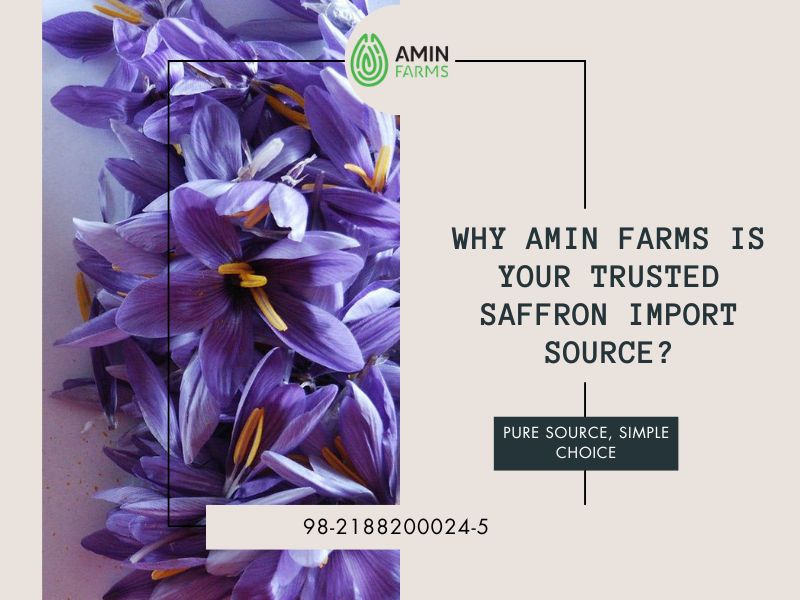
By following the strictest international standards and using modern production methods, Amin Farms ensures every shipment is pure, safe, and consistent in quality. Each batch is backed by certifications from internationally recognized laboratories, guaranteeing compliance with global benchmarks.
For importers wondering, “Can I import saffron from Iran?”, the answer is yes, with the right partner. Working with Amin Farms doesn’t just mean securing world-class saffron; it also provides peace of mind through a transparent, trustworthy, and risk-free business process.
Related Products