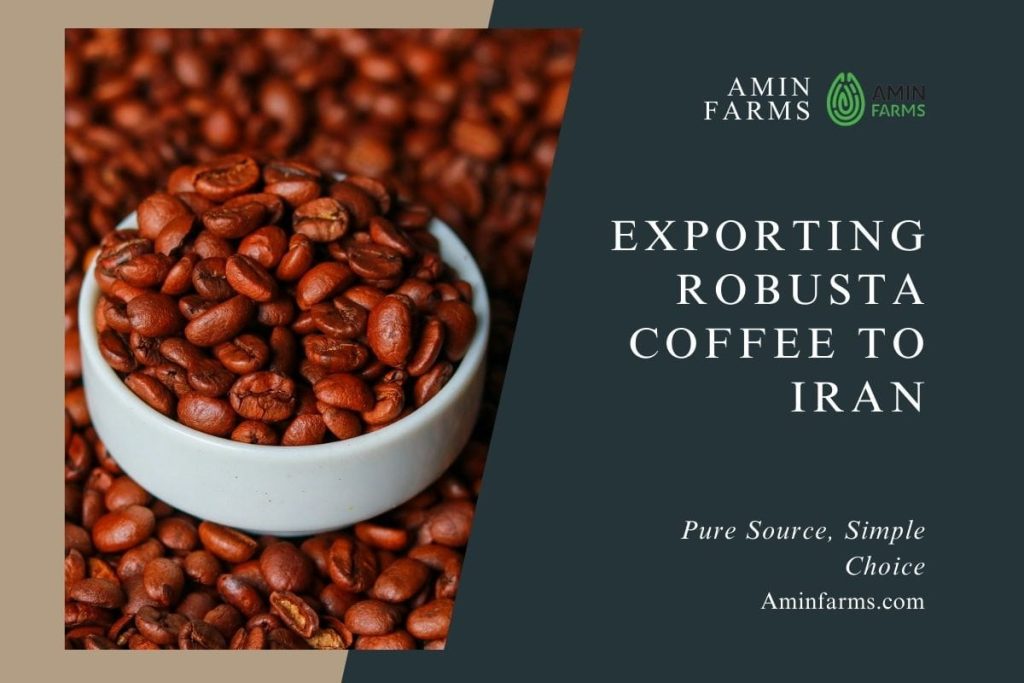
So, you’re eyeing the Iranian market for your Robusta coffee exports? Iran can offer significant volume potential for suppliers that understand the country’s commercial coffee market, buyer expectations, documentation requirements, logistics, and payment challenges. However, exporting coffee to Iran requires more than simply finding a buyer and arranging transportation.
This guide explains the key considerations involved in exporting Robusta coffee to Iran, from understanding market demand and selecting a reliable supplier to quality control, documentation, shipping, pricing, payment, and long-term buyer relationships.
Expert insight: Successful coffee exports are built around consistency. Competitive pricing may secure an initial order, but reliable quality, accurate documentation, predictable logistics, and responsive communication are what help turn that order into a long-term business relationship.
Analysis of the Robusta Coffee Market in Iran
Iran’s coffee market includes specialty coffee, commercial roasting, hospitality, institutional consumption, and instant coffee production. For many bulk buyers, however, purchasing decisions are strongly influenced by price, availability, consistency, body, and caffeine strength.
Robusta coffee is particularly relevant to commercial applications because it can provide a strong cup profile while helping buyers manage the cost of large-volume production.
Think of the market in terms of:
- Commercial coffee roasters
- Instant coffee manufacturers
- Hotels and hospitality businesses
- Restaurants and cafés
- Corporate and institutional buyers
- Large-scale distributors
- Private-label coffee producers
For exporters, understanding these segments is essential. A supplier targeting an industrial buyer should approach the market differently from a supplier selling premium specialty coffee.
Main Reasons Behind Iran’s Demand for Robusta Coffee
Robusta is valued in many commercial coffee applications for its distinctive characteristics, including:
- Strong and full-bodied flavor
- Higher caffeine content than Arabica
- Good performance in espresso blends
- Contribution to crema in espresso preparation
- Competitive economics for high-volume applications
- Suitability for blending and industrial coffee production
The exact value of these characteristics depends on the bean origin, grade, processing method, moisture level, defect rate, and the buyer’s intended application.
So, why does Iran import such large quantities of Robusta? The answer lies in everyday commercial logic. Look past the specialty café scene, and you’ll find the real drivers in factory cafeterias, office kitchens, and industrial-scale instant coffee production. For these segments, choosing Robusta is a straightforward, practical decision.
1. Cost Is Everything for Bulk Buyers
For businesses purchasing coffee in large quantities, raw material costs have a direct effect on the final product.
When thousands of kilograms are required for roasting or manufacturing, even a relatively small difference in the price per kilogram can significantly affect total procurement costs.
Robusta can therefore be attractive to commercial buyers looking for:
Suitable coffee for blends and industrial applications
Competitive raw material costs
Consistent supply
Strong flavor characteristics
High-volume procurement
2. The Heart of Iran’s Coffee Blends
Iranian roasters have mastered the art of the blend. Local preferences lean toward a deep, potent cup with plenty of body. To achieve this, they rely on Robusta as their foundation. While Arabica may add aromatic high notes, it’s the Robusta that delivers the dense crema and the sustained, powerful flavor that defines many popular local coffee products.
3. Feeding a Market of Massive Scale
The demand is rooted in sheer volume. Institutions, the hospitality sector, and the instant coffee industry require a consistent, hardy bean that can be sourced and roasted on a large scale. Robusta, with its resilient cultivation and uniform profile, is ideally suited to meet this relentless, high-volume need, forming the backbone of Iran’s daily coffee supply.
4. A Natural Cultural and Economic Fit
Finally, Robusta aligns with both taste and practicality. The traditional preference for a strong, bitter-free brew that stands up to sweetening matches Robusta’s profile. Economically, it’s stable and at an accessible price point, offering crucial predictability in a fluctuating market, making exporting Robusta coffee to Iran a strategically sound endeavor for suppliers who understand these fundamentals.
Robusta Coffee Export Rules and Trade Policies in Iran
In real export work, Robusta coffee shipments follow a routine that most traders learn over time. The rules are there, but day-to-day experience matters more than reading long policy documents. Exporters usually start with business registration and basic approvals, then move into the regular flow of export paperwork and customs handling.
What slows things down is rarely a big legal problem. It is usually small details. A figure that looks inconsistent. A product description that feels unclear. A packing list was prepared too quickly.
These small issues can stop a shipment even when the coffee quality is fine. Because of this, many exporters spend extra time reviewing documents before the container is loaded. Knowing the Robusta coffee export rules in Iran often means understanding how to avoid these practical mistakes, not memorizing official texts.
When exporters handle this process carefully, buyers feel more comfortable. Fewer questions, fewer delays, and smoother communication all help turn one shipment into repeat business.
Approved Standards, HS Classification, and Mandatory Certificates
Buyers closely monitor how Robusta coffee meets the agreed quality level. Grade, condition, and consistency are usually checked before shipping. These checks affect whether a buyer wants to continue working with the same supplier.

HS classification also plays a big role in smooth clearance. Using the wrong code can lead to additional inspections or unexpected charges. Many exporters prefer to rely on previously confirmed HS codes to avoid problems.
Certificates are part of everyday export operations. A Certificate of Origin is commonly requested. Inspection and quality documents are also normal. Some destinations require health or phytosanitary papers. Preparing all of this early helps keep shipments moving and reduces pressure at the last minute.
Complete Guide to Exporting Robusta Coffee to Iran
For many traders, exporting Robusta coffee to Iran is learned on the job. There is a general process, yes, but each shipment brings small differences. One order may move fast. Another may need extra coordination. Much of it depends on timing, communication, and how well the parties involved understand each other.
Supplier choice is usually the real starting point. A supplier who answers quickly, confirms details clearly, and sticks to agreed schedules often saves more time than one who only offers a lower price. Changes happen. Shipping dates shift. Grades are adjusted. How a supplier handles these moments often matters more than what is written in the contract.
Supplier Sourcing, Documentation, and Customs Procedures
Sourcing is about more than coffee itself. It is about working with someone who knows export routines. Documents need to match the shipment, line by line. Customs looks for consistency. When everything aligns, clearance feels simple; when it does not, even a good shipment can sit and wait.
Robusta Coffee Packaging and Quality Control Requirements
When preparing Robusta coffee for export to Iran, every detail counts. Beans are packed in sturdy, dry bags. Liners help keep moisture away, and careful stacking prevents crushing. Even small slips, a torn bag, damp spots, or uneven filling, can ruin a shipment.
Before loading, exporters often inspect a few bags from each batch. They check moisture, size, and look for any visible defects. Some handle beans by hand to make sure nothing is broken or off-grade. These steps may seem small, but they save a lot of trouble later.
Paying attention to packaging and following strict quality checks when exporting Robusta coffee to Iran ensures the product arrives in good condition. Buyers notice the difference, shipments move smoothly, and trust builds over time. Consistency here is key.
Shipping Methods and Logistics Solutions for Robusta Coffee to Iran
Moving Robusta coffee into Iran requires a tactical approach to navigate complex global trade barriers. While international sanctions add layers of difficulty, utilizing proven corridors ensures your cargo reaches its destination efficiently.
- Transshipment Hubs: Leveraging ports like Jebel Ali or Mersin helps manage documentation and bypass direct shipping constraints.
- Sanction Compliance: Working with specialized freight forwarders who understand the nuances of banking restrictions and port regulations.
- Key Entry Points: Directing bulk shipments toward Bandar Abbas for the fastest access to Iran’s internal distribution networks.
Robusta Coffee Pricing Structure, Payment Methods, and Trade Risks
The pricing for Robusta coffee exports to Iran is primarily based on the global ICE futures market, adjusted for origin premium, quality grade, and logistics costs. Secure payment remains the foremost challenge due to international sanctions.
Common solutions include advance payment via third-country intermediaries, confirmed letters of credit from non-sanctioned banks, and escrow services. Key trade risks involve currency fluctuation, complex customs clearance, and ensuring delivery compliance.
Exchange Rates, Sanctions Regulations, and Secure Transactions
Volatile Iranian foreign exchange rates and stringent sanctions critically impact transactions.
Supply Chain Coordination and Buyer Relationship Management
Successful Robusta coffee exports to Iran depend heavily on smooth coordination across all points of the supply chain. From synchronizing production schedules with vessel departures to ensuring documents arrive before the cargo, timing is everything. Exporters who maintain clear, consistent communication with their Iranian buyers avoid misunderstandings that often lead to delays. Building a dependable relationship—where updates are shared early and issues are resolved quickly—creates long‑term stability and repeat orders.
Export Documentation Checklist
Before loading a shipment, exporters should review:
| Document / Information | Purpose |
|---|---|
| Commercial Invoice | Establishes transaction value and product details |
| Packing List | Specifies packaging, quantities, and weights |
| Certificate of Origin | Identifies the origin of the coffee |
| Shipping Documents | Supports transportation and cargo clearance |
| Product Specification | Defines agreed quality parameters |
| Inspection / Quality Documents | Provides evidence of agreed product characteristics |
| HS Classification | Supports correct customs declaration |
Post‑Delivery Support and Market Expansion Opportunities
Once a shipment reaches Iran, the exporter’s role doesn’t end. Buyers appreciate post‑delivery follow‑up, especially when it comes to verifying quality, comparing expectations with results, and planning future orders. This after‑sales support not only strengthens partnerships but also helps identify new opportunities in sectors such as instant coffee manufacturing, private‑label roasting, and large institutional purchasing. Exporters who treat post‑delivery service as a strategic step often expand faster and secure a stronger foothold in the Iranian market.
At Amin Farms, we partner with leading global coffee exporters to facilitate seamless entry into the Iranian market. Our integrated service manages secure financial transactions through reliable channels, navigates all legal and customs regulations, and provides end-to-end logistics solutions. We turn complex trade barriers into a streamlined, dependable supply chain for your Robusta coffee.
Related Products