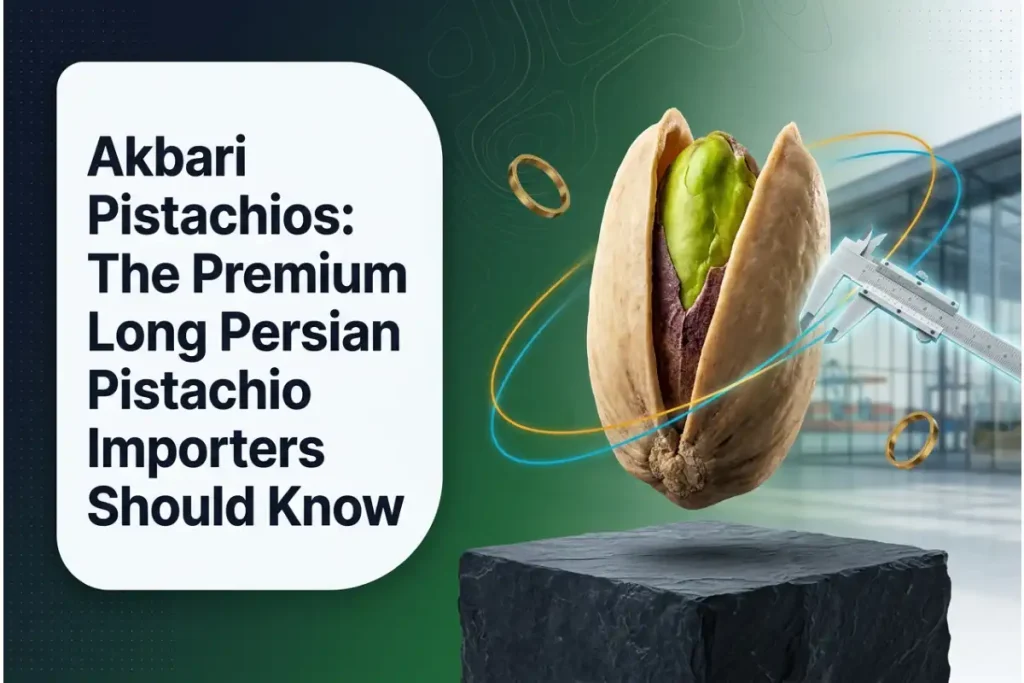
Akbari pistachios are the longest and most valued cultivar in the Iranian nut trade. Known globally as the super long pistachio, this variety is a top choice for international buyers. This guide gives importers the exact specifications, grading standards, and procurement steps needed to buy Akbari pistachios bulk safely and efficiently.
What Are Akbari Pistachios?
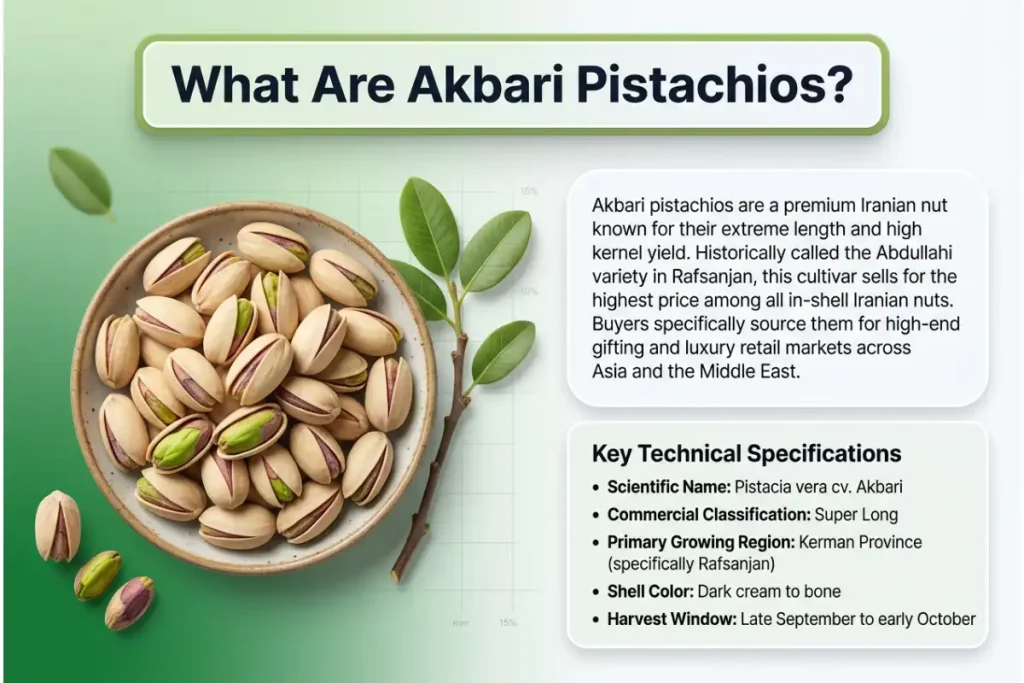
Akbari pistachios are a premium Iranian nut known for their extreme length and high kernel yield. Historically called the Abdullahi variety in Rafsanjan, this cultivar sells for the highest price among all in-shell Iranian nuts. Buyers specifically source them for high-end gifting and luxury retail markets across Asia and the Middle East.
Key Technical Specifications:
- Scientific Name: Pistacia vera cv. Akbari
- Commercial Classification: Super Long
- Primary Growing Region: Kerman Province (specifically Rafsanjan)
- Shell Color: Dark cream to bone
- Harvest Window: Late September to early October
Origin and Growing Regions (Rafsanjan and Kerman Terroir)
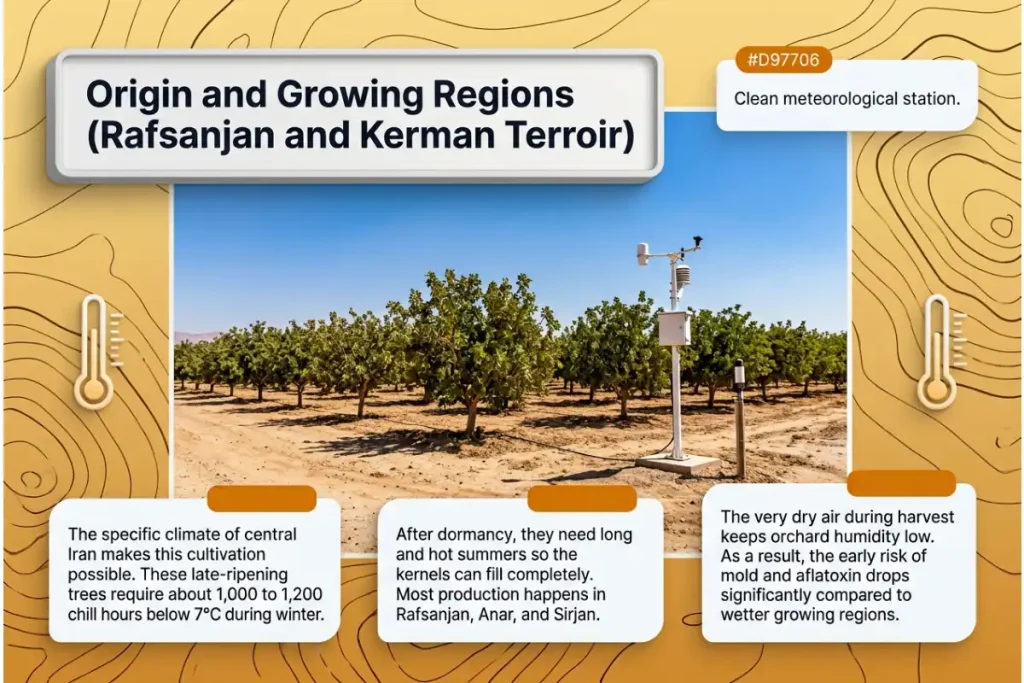
The specific climate of central Iran makes this cultivation possible. These late-ripening trees require about 1,000 to 1,200 chill hours below 7°C during winter. After dormancy, they need long and hot summers so the kernels can fill completely. Most production happens in Rafsanjan, Anar, and Sirjan. The very dry air during harvest keeps orchard humidity low. As a result, the early risk of mold and aflatoxin drops significantly compared to wetter growing regions.
Why This Cultivar Is the Super Long Benchmark
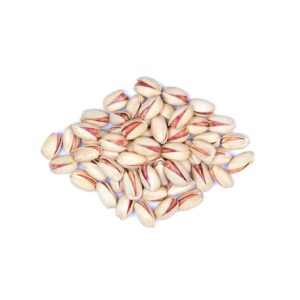
The physical shape of these nuts sets their premium market value. Both the kernels and shells have an elongated, almond-like shape with the highest length-to-diameter ratio in the commercial market. At harvest time, the shell naturally splits wide open on both sides. This natural opening allows consumers to shell the nuts easily. The shell has a dark cream color, while the kernel skin looks purple-brown over a bright green interior.
Akbari vs Other Iranian Pistachio Varieties
When looking at Iranian pistachio export options, importers must select the right variety for their specific retail segment. The table below compares the four main Iranian cultivars.
| Variety | Trade Classification | Shape & Geometry | Standard Size Range (CPO) | Kernel Yield Ratio | Primary Market Segment |
|---|---|---|---|---|---|
| Akbari | Super Long | Highly elongated, almond-like | 20/22, 22/24, 24/26 | 50% to 53% | Luxury gifting, premium retail |
| Ahmad Aghaei | Long | Elongated, lighter shell | 22/24, 24/26, 26/28 | 52% to 55% | Mediterranean, East Asia |
| Kaleh Ghouchi | Jumbo | Hazelnut-shaped, heavy | 18/20, 20/22, 22/24 | 49% to 52% | European confectionery, Middle East |
| Fandoghi | Round | Small, spherical | 26/28, 28/30, 30/32 | 50% to 54% | Global wholesale, processing |
Akbari vs Ahmad Aghaei
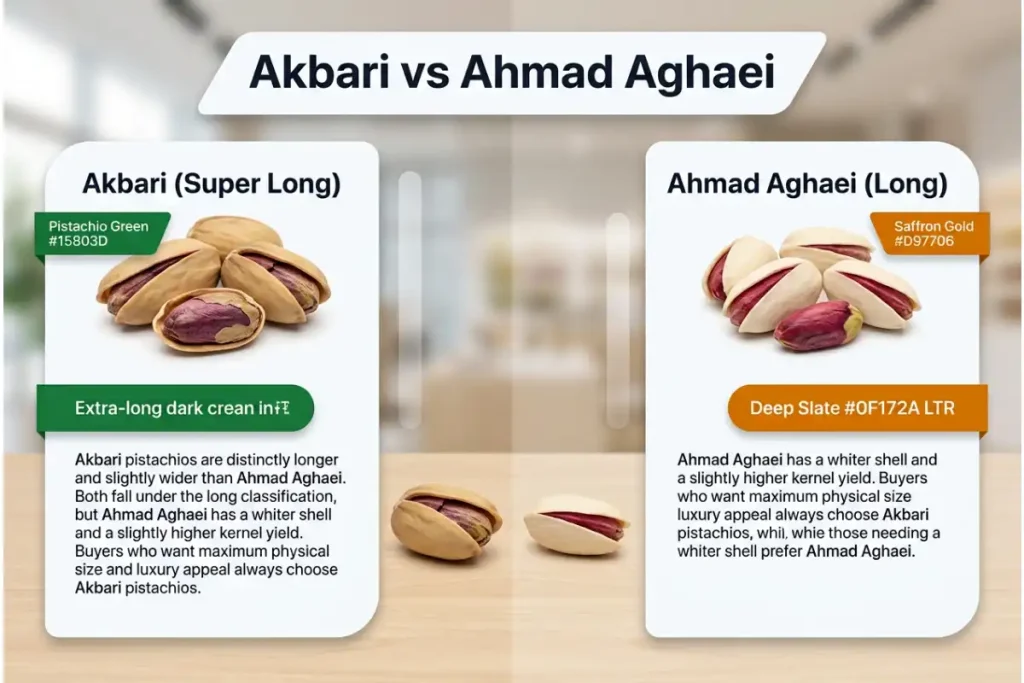
Akbari pistachios are distinctly longer and slightly wider than Ahmad Aghaei. Both fall under the long classification, but Ahmad Aghaei has a whiter shell and a slightly higher kernel yield. Buyers who want maximum physical size and luxury appeal always choose Akbari pistachios, while those needing a whiter shell prefer Ahmad Aghaei.
Fandoghi and Kaleh Ghouchi Alternatives
Fandoghi and Kaleh Ghouchi serve different market needs. Fandoghi is small and round, making it the most affordable choice for large-scale food processing. Kaleh Ghouchi provides a heavy, jumbo-sized round nut. However, neither offers the elegant shape of the Super Long classification.
Size and Grading Standards
Akbari pistachio grading depends heavily on physical size and the shell opening mechanism. Buyers must define these metrics in their contracts to get the right product.
Pistachio Count Per Ounce (CPO)
The pistachio count per ounce determines the standard size and directly influences the wholesale price. This metric counts how many in-shell nuts weigh exactly one ounce on average. A lower number means the nuts are larger and heavier. The standard export grades for Akbari pistachios are 20/22, 22/24, and 24/26. The rare 20/22 grade represents the largest and most expensive premium size.
Naturally Open vs Mechanically Opened
Naturally open pistachios split on the tree during the growth cycle. These Khandan nuts develop full kernels, better flavor, and carry a much lower risk of contamination. Mechanically opened nuts, called Abkhandan, are harvested completely closed. Factories use hot water and heat to force the shells open. These have smaller kernels and higher mold risks. Mixing the two types lowers the overall Akbari pistachio price per kg.
Flavor Profile, Texture, and Culinary Uses
The dry climate of Kerman province gives these nuts a high unsaturated fat content. This creates a buttery texture and a strong earthy flavor that holds up very well to high heat roasting. Because of their high cost and great visual appeal, long Persian pistachios are rarely used as hidden ingredients in baking. Instead, companies package them as whole snacks for luxury nut mixes and corporate gifts.
Nutritional Profile and Chemical Properties
A 100-gram serving of raw kernels delivers about 20 grams of plant-based protein and 45 grams of healthy fats. They also contain high levels of dietary fiber, potassium, and vitamin B6. Because the oil content is so high, shippers must control temperature and humidity carefully during ocean transit to keep the fats from spoiling.
Raw vs Roasted and Salted Processing Options
Buyers who import raw Akbari pistachios wholesale get the longest shelf life. This allows them to roast the nuts in their own facilities using local flavor profiles. Transit requires strict moisture control, keeping internal moisture below 5 percent. Suppliers also sell pre-roasted and salted batches. Traditional processors in Iran use saffron and sea salt for roasting, which adds value but significantly shortens the remaining shelf life.
Packaging Formats and Bulk Export Logistics
Proper packaging prevents mold growth and physical damage during shipping. Premium naturally open pistachios travel in 10kg or 12.5kg vacuum-sealed polyethylene bags placed inside strong corrugated cartons. Standard 20-foot shipping containers hold 12 to 14 metric tons of these cartons. Buyers must use food-grade containers with moisture control to prevent condensation during the ocean voyage.
Pricing Factors in Global Trade
The Akbari pistachio price per kg changes frequently based on harvest yields and sizing grades. The rare 20/22 CPO grade costs much more than the 24/26 grade. Lots that contain 100 percent naturally open nuts will always sell for the highest prices. Additionally, pistachio trees produce heavy yields one year and light yields the next, causing natural market price cycles.
How to Source and Import Akbari Pistachios
To source this commodity safely, buyers must vet an Iranian Akbari pistachio supplier carefully. You must check their export history and facility certifications like HACCP. Always demand pre-shipment samples and use independent inspectors at the loading port to confirm the size and quality.
Regulatory Compliance and Aflatoxin Testing
Global food safety laws heavily regulate aflatoxin, a natural mold byproduct. Importers need a Certificate of Analysis from an HPLC lab test before shipping. For example, European Union regulations limit aflatoxin B1 to 8.0 micrograms per kilogram for direct human consumption. Suppliers must also provide a Phytosanitary Certificate from the local agriculture ministry to prove the cargo is free of pests.
Frequently Asked Questions (FAQs)
What is the difference between Akbari and Ahmad Aghaei pistachios?
Akbari pistachios are distinctly longer and wider than the Ahmad Aghaei variety.
What does Count Per Ounce (CPO) mean in pistachio grading?
It is a standard weight metric indicating how many individual pistachios make up one ounce.
Are naturally open pistachios better than mechanically opened ones?
Yes, naturally open pistachios have fully developed kernels, better flavor, and lower mold risks.
How are bulk pistachios packed for international shipping?
They are packed in 10kg or 12.5kg vacuum-sealed bags inside strong corrugated cartons.
Conclusion
Importing Akbari pistachios requires a clear understanding of sizing, grading, and safety testing. Buyers secure the best value by choosing naturally open nuts and enforcing strict lab testing for aflatoxin. Partnering with a reliable Iranian Akbari pistachio supplier guarantees compliance and protects the quality of this premium commodity from the farm to the final retail shelf.
Related Products