From the outside, exporting black pepper from India to Iran might seem straightforward. But step inside, and you’ll quickly feel its unique rhythm, those quiet turns, little surprises, and nuanced details no one thinks to mention upfront. Anyone who’s genuinely tried to learn how to export pepper from India knows it’s far more than forms and logistics; it feels like a careful, daily dialogue with real people, real expectations, and real stakes.
Iran, as a market, has its own distinct personality: a specific taste for pepper, clear preferences for grades like MG1 or TGEB, and familiar ways of handling ports and payments. India, rich with spice heritage, offers tremendous opportunity, but only to those who navigate its systems with patience and clarity.
This guide is for that quiet moment when you’re wondering just how to export pepper from India without getting overwhelmed by regulations, surprise quality checks, or tangled banking channels. Think of it as a calm, honest map, the kind seasoned traders often wish they’d had from the very start.
The India-Iran Spice Route: Opportunities for Pepper Traders
The trade lane between India and Iran has a rhythm that feels surprisingly alive. It connects old-world routes with new-world demand, driven by a steady appetite for high-quality pepper. Every trader who seriously sets out to understand how to export pepper from India eventually realizes this corridor is far more than a straightforward path; it is a vibrant, living marketplace shaped fundamentally by trust, consistency, and precise timing.
Here is a calm, friendly look at why this route still holds such strong, accessible potential:
- Natural and Strong Demand: Iran grows almost no pepper at home, so Indian suppliers naturally become the go-to source. The demand is steady, quiet, and waiting, like a river that never dries.
- Cost-Friendly Logistics: Utilizing corridors like Chabahar reduces transit times and keeps freight costs reliably predictable, addressing a key challenge in efficiently exporting pepper from India.
- Cultural Familiarity: Iranian buyers inherently trust the quality of Indian spices due to historical ties, making market entry smoother for reliable exporters.
- Flexible Purchasing: Iranian importers often buy in mixed, manageable volumes, a beneficial trait for new traders testing market fit without huge commitments.
- Attractive Margins: High-grade batches (especially Malabar Garbled 1, or MG1) command premium pricing in Iranian wholesale markets, rewarding consistent quality exceptionally well.
- Relationship-Driven Ecosystem: Once an Iranian buyer establishes trust with you, repeat orders become the norm rather than the exception, providing business stability.
Understanding Iranian Preferences: MG1 vs. TGEB Grades
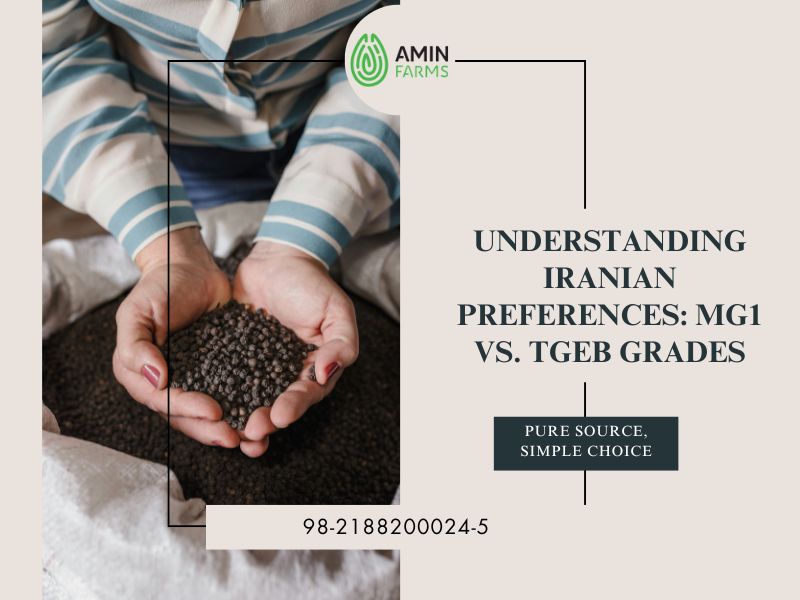
Forget complex strategies for a moment. The real secret to how to export pepper from India to Iran lies in understanding two simple grades: MG1 and TGEB.
- Think of MG1 as your reliable partner. Its uniform, vibrant berries build trust with Iranian processors for their everyday premium needs. It’s the steady rhythm that keeps business flowing.
- TGEB, however, is your masterpiece. These rare, bold berries speak to connoisseurs. Offering them shows you appreciate the art behind the trade, not just the transaction.
Consistent MG1 wins their trust, the rare TGEB wins their admiration, and in those little moments, you’re doing more than shipping pepper; you’re connecting with the market itself.
Regulatory Compliance: Spices Board India and Iranian Customs
It’s easy to get lost in the paperwork when exporting spices. Still, suppose you’re learning how to export pepper from India. In that case, this part becomes less intimidating once you understand who does what. Think of the regulatory side as a gentle checklist, one that keeps your shipment clean, trusted, and fully aligned with both countries’ expectations. With the proper documents in hand, the whole process feels calmer, more predictable, and far less stressful. What you need to pay attention to:
- Spices Board India Certifications: Your pepper must be clean, graded, and officially inspected. Exporters need a valid CRES certificate and quality clearance before anything moves.
- FSSAI & Phytosanitary Documents: These confirm purity, moisture limits, and that the shipment is free from pests, details that Iranian customs take seriously.
- Iranian Customs Requirements: Accurate HS codes, country-of-origin details, and clean labelling matter. Minor inconsistencies can cause delays.
- Pre-Shipment Testing: Lab reports that verify aflatoxin, microbial safety, and density help build instant trust with Iranian buyers.
Banking and Payments: Navigating the Rupee-Rial Mechanism
Let’s talk about the part most exporters worry about, getting paid securely.
When you’re learning how to export pepper from India to Iran, the payment stage is often the most sensitive step. With direct dollar transactions off the table due to international restrictions, the Rupee–Rial settlement system serves as the reliable, government-backed channel keeping this trade route alive.
Here are a few key points to help you understand the payment and financial settlement process for exporting black pepper from India:
1. The Core Mechanism
Here’s what actually happens: your Iranian buyer pays in Rials into an approved Iranian bank. That amount is then converted into Indian Rupees and transferred to your exporter’s account in India through a regulated Vostro banking channel. It’s a structured, compliant pathway that protects both sides.
2. Clarity Matters More Than Anything
Your Proforma Invoice must be transparent. List every cost component (FOB/CFR), quote the final amount in INR, and clearly include the line: Payment via Rupee–Rial Vostro Mechanism. This prevents delays, misunderstandings, and last-minute friction.
3. Secure Every Step
Never release the shipment until your bank confirms receipt of funds. And always work with banks that have experience specifically with this mechanism; their expertise ensures your export process stays smooth, verified, and fully aligned with how trade actually happens between India and Iran.
Logistics: The Strategic Advantage of Chabahar Port
When mapping out how to export pepper from India effectively, savvy traders look beyond traditional routes straight to the game-changer: Chabahar Port. It’s a strategic choice that dramatically cuts down transit time and costs, making your offering more competitive in the Iranian market.
Using this port is about choosing efficiency and predictability over lengthy detours. Here are the tangible benefits this route unlocks for your shipments:
- Shorter Sailing Time: Dramatically reduces the time your precious cargo spends on the water, minimizing risk.
- Reduced Road Distance: It offers a more direct land route into Afghanistan and Central Asia, expanding your market reach.
- Lower Freight Costs: The reduced transit time directly translates into savings on shipping fees.
- Bypassing Congestion: Avoids the often-clogged and bureaucratic ports in the Persian Gulf.
- Strategic Reliability: Provides a dedicated, government-supported corridor that enhances your logistics security and reliability.
Looking for a Buyer? Sell Your Pepper to Iran’s Top Importers

Finding the right buyer is almost half the journey after you understand how to export pepper from India. What really moves the needle is connecting with Iranian partners who know their market inside out, buyers who handle large volumes, understand grading standards, and have strong distribution networks of their own.
These importers are the ones who open the doors to Iran’s main wholesale hubs and central processing units, where MG1 is consistently in high demand.
When you’re choosing a partner, look for people with a solid track record, clean financial practices, and a reputation for honouring long-term commitments. Those qualities matter far more than any quick deal.
If you need guidance inside the Iranian market, Amin Farms is one of the trusted black pepper suppliers in Iran. We work closely with leading companies worldwide, and if you’re planning to export black pepper to Iran, you can count on our support to ensure a smooth, confident move.
Criteria We Look for in Our Indian Pepper Suppliers

At Amin Farms, understanding how to export pepper from India is about building trust. Every partnership counts, and when we choose suppliers, price is only a small part of the equation. Integrity, consistency, and ethical practices matter most, primarily when serving the discerning Iranian market. Here’s what we prioritize in our Indian pepper suppliers:
- Consistent Grading: MG1 or other requested grades arrive reliably, batch after batch.
- Purity: Free from dust, foreign matter, and additives.
- Accurate Documentation: Phytosanitary certificates and other papers submitted on time.
- Ethical Sourcing: Transparent practices meeting labour and sustainability standards.
- Stable Pricing: Fair prices that support long-term planning.
When these align, exporting pepper becomes a smooth, trustworthy journey, and partnerships grow stronger with every shipment.