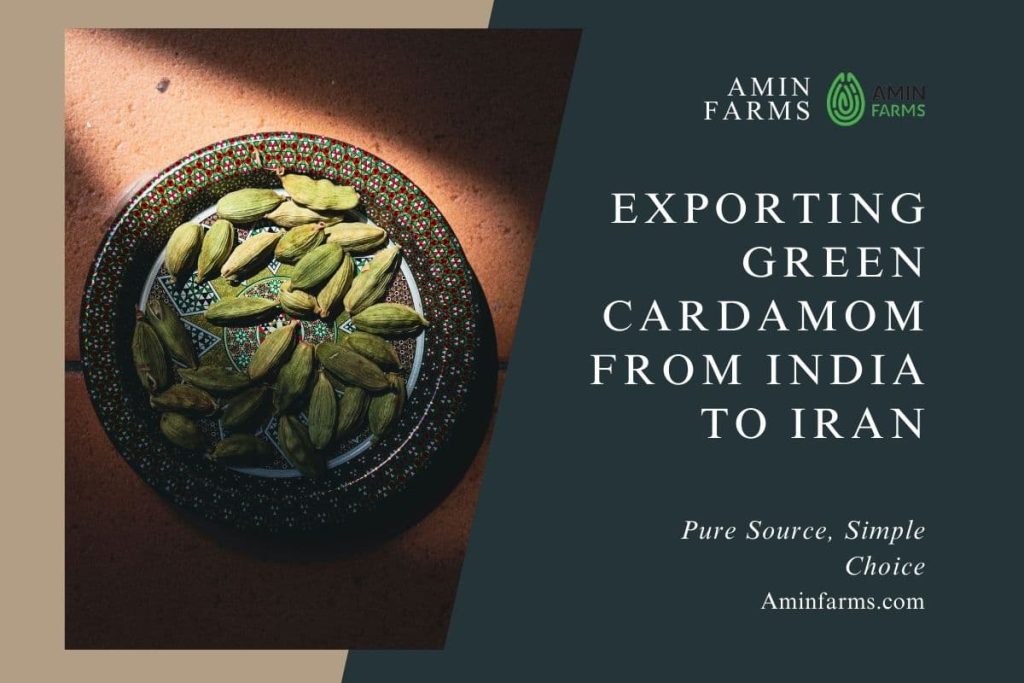
Have you ever paused to think about how the finest green cardamom from India carries a value far beyond its aroma? Many traders call it “Green Gold,” and for good reason, it has held its place as one of the most influential agricultural commodities for years.
If you’re exploring serious, high-return opportunities, it may be time to focus on a market that consistently rewards quality and reliability: Iran. With its long-standing love for premium tea blends and artisanal confectionery, the demand for vibrant, fragrant cardamom remains remarkably strong.
What often separates top exporters from everyone else is their understanding of the details that shape this trade. This article is crafted to show you how to export cardamom from India in a way that aligns with Iran’s expectations, from mastering AGEB and AGB grades to protecting that prized “Parrot Green” color through careful handling and packaging.
You’ll also learn how logistics choices influence both freshness and profit margins. As you move through this guide and uncover how to export cardamom from India to Iran with confidence, you’ll find a clear path toward entering and securing one of the most reliable markets for green cardamom today.
Why Iran is the Top Destination for Indian Green Cardamom?
When considering global spice markets, the relationship between Indian green cardamom and Iran stands out as particularly profitable. Forget the notion of a mere trade deal. What we see here is the ideal convergence of supply and demand: the globe’s most prolific cardamom source meeting a nation whose cultural rituals command both the highest quality grades and massive quantities.
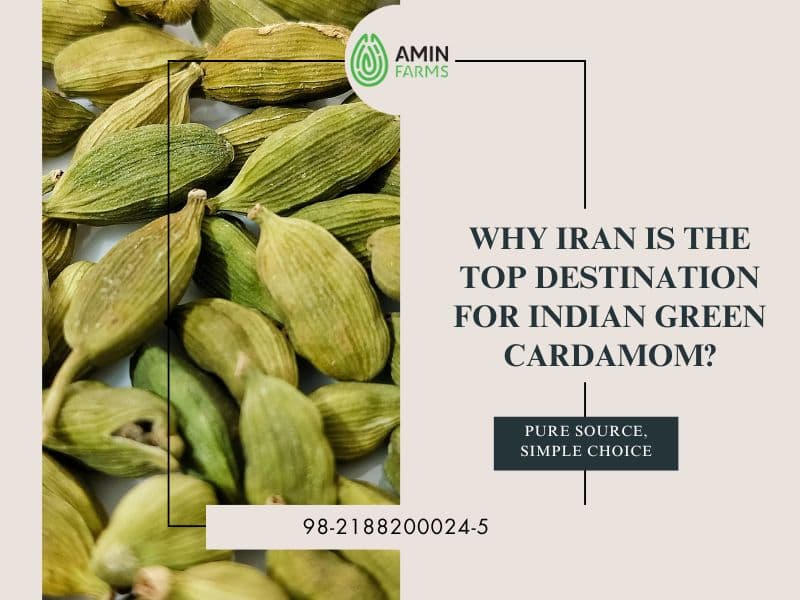
For exporters looking beyond traditional markets, Iran presents a stable, high-value destination where the product is deeply integrated into daily life and celebrations. Success in this sector hinges on understanding this high demand and tailoring your logistics to meet the specific requirements of the Iranian market.
Here are the compelling factors that make Iran the top destination for exporters who have successfully mastered how to export cardamom from India:
- Immense Volume Requirements: Iran is one of the world’s largest net importers of cardamom, driven by household consumption and its vast, traditional sweets industry, guaranteeing a consistent need for large shipments.
- Cultural Premium on Quality: Unlike markets that prioritize cost, Iranian consumers and manufacturers are highly discerning and consistently demand the highest grades (AGEB and AGB), creating a premium niche for Indian exporters.
- Year-Round Demand: Cardamom is not seasonal; it is a core ingredient in daily tea, a staple at religious and social gatherings, and a key flavor in Sohan and Ghaz (traditional sweets).
- Favorable Import Policies (Historically): Despite occasional fluctuations, government policies have often supported the import of high-value commodities such as cardamom to stabilize prices and meet national demand.
- Proximity and Established Trade Routes: The shorter transit times via sea or air compared to Western markets reduce logistics costs and preserve the spice’s crucial freshness and aroma.
- A Taste for Specificity: Iranian consumers prefer the powerful aroma, bold flavor, and characteristic “Parrot Green” color of Elettaria cardamomum from the Indian subcontinent over other varieties.
The Role of Cardamom in Iranian Tea and Confectionery
In Iran, cardamom feels like something that has always been around, a quiet part of daily life that people use almost without noticing. You see it most clearly when tea is made. Black tea is brewed several times a day, and many families drop a few pods into the pot out of habit. Others add one to the glass right before drinking.
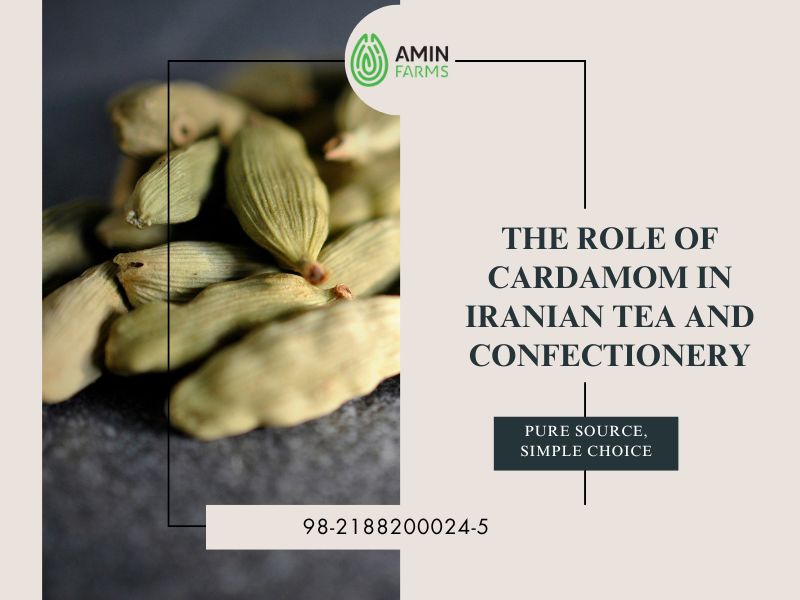
It’s a small gesture, but it gives the tea a scent and warmth that many Iranians associate with home, comfort, and even better digestion after meals. Because this habit is so old and widespread, anyone interested in exporting cardamom from India eventually realizes how central this spice is to the Iranian market.
The same attachment appears in traditional sweets. Sohan, Ghaz, and many local desserts depend on cardamom for their signature flavor. During celebrations and holidays, demand rises sharply, and importers move quickly to secure high-quality batches. These steady cycles of use are what keep the market strong and are worth understanding for any exporter.
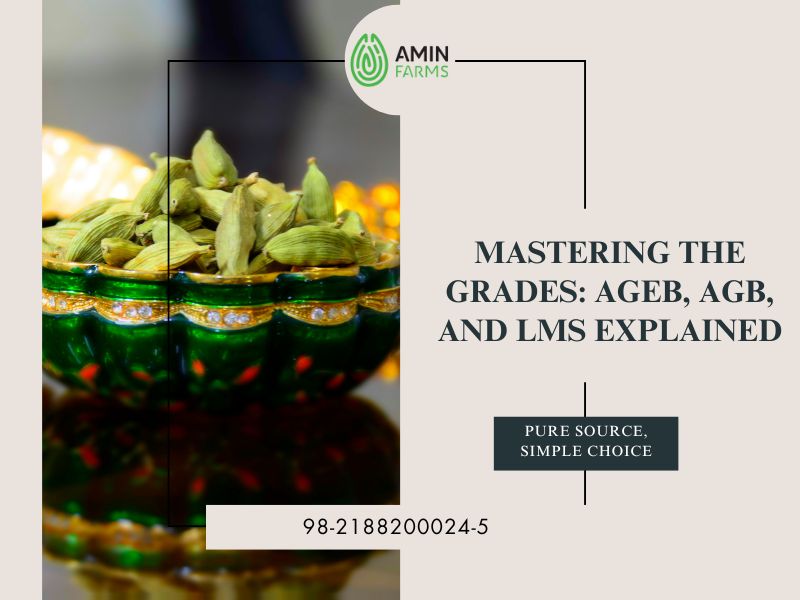
Mastering the Grades: AGEB, AGB, and LMS Explained
This is where many well-intentioned exporters trip up. Imagine walking into an art gallery and calling every piece simply “nice”, you’d miss the entire story behind the brushstrokes, the era, the technique. It’s the same with cardamom. To truly master exporting cardamom from India successfully, you need to speak the language of grades fluently.
It’s not jargon; it’s the precise vocabulary of quality that your Iranian buyer uses and trusts. Let’s break down the three key acronyms you’ll live by.
AGEB: The Premium Benchmark
AGEB stands for “Alleppey Green Extra Bold.” Think of these as the elite, top-tier pods. They’re the largest (often 7mm or more), have that vibrant, uniform “parrot green” colour, and are packed with seeds.
They’re also packed with aroma; their volatile oil content is highest. When your buyer is crafting a premium tea blend or a luxury confectionery line, this is what they’re asking for. Sending AGEB when it’s requested builds instant credibility.
AGB: The Versatile Standard
AGB, or “Alleppey Green Bold,” is your high-quality, all-rounder. The pods are slightly smaller (6-7mm) but still robust, green, and aromatic. For a considerable portion of the market, from daily-use tea to a wide range of sweets, AGB is the gold standard.
It offers exceptional quality without the premium price of AGEB. Knowing when to offer AGB is key to a competitive and sustainable strategy for exporting cardamom from India.
LMS: The Specialized Option
LMS stands for “Light Mixed Seeds” or sometimes “Light Medium Small.” These are the smaller, often paler pods from the harvest. Now, before you dismiss them, understand their niche. They are ideally suited for grinding into powder for spice mixes or for use in industries where whole pod appearance is less critical. While they command a lower price, they represent a valuable part of the crop, and understanding their place completes your market knowledge.
Preserving the “Parrot Green” Color: Packaging Best Practices
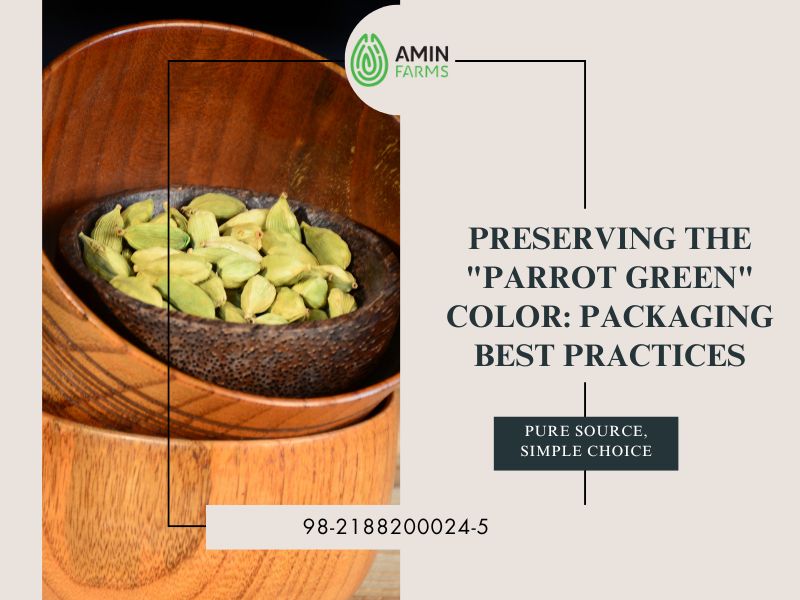
Here’s something most exporters learn the hard way: that vibrant “parrot green” color your buyer expects? It can fade before the shipment even docks at Bandar Abbas. That bright green color carries a clear message for buyers, signaling freshness, potent essential oils, and the full flavor they expect from high-quality cardamom. Mastering this part of exporting cardamom from India is what separates a good supplier from an indispensable one. Think of the color as a living element you need to protect. Here’s how:
- The First Enemy is Moisture: Even a hint of humidity is a disaster. We use multi-barrier packaging with food-grade desiccants as a non-negotiable first step. It’s a small cost for a massive guarantee.
- Oxygen is a Silent Thief: It steals color and aroma through oxidation. Vacuum-sealing or nitrogen-flushing the bags before boxing is our standard practice. It puts the pods into suspended animation.
- Light and Heat are Accomplices: Ever leave spices on a sunny counter? They fade. We insist on opaque, UV-resistant outer packaging and strict temperature-controlled logistics from our warehouse to the vessel. No compromises.
Getting this right means the moment your buyer opens a box, they see and smell the freshness of the Malabar coast, not a faded memory of it. That’s the moment trust becomes permanent.
Logistics and Shipping: Air Freight vs. Sea Freight
Moving cardamom from India to Iran comes down to choosing between air and sea routes, each with its own logic. Air freight helps preserve colour and aroma by reducing transit time, which matters when buyers expect bright, fresh pods. Sea freight is cheaper, but it requires careful planning and moisture-resistant packaging. Anyone studying how to export cardamom from India eventually learns that timing, climate control, and reliability shape the entire shipment more than the route itself.
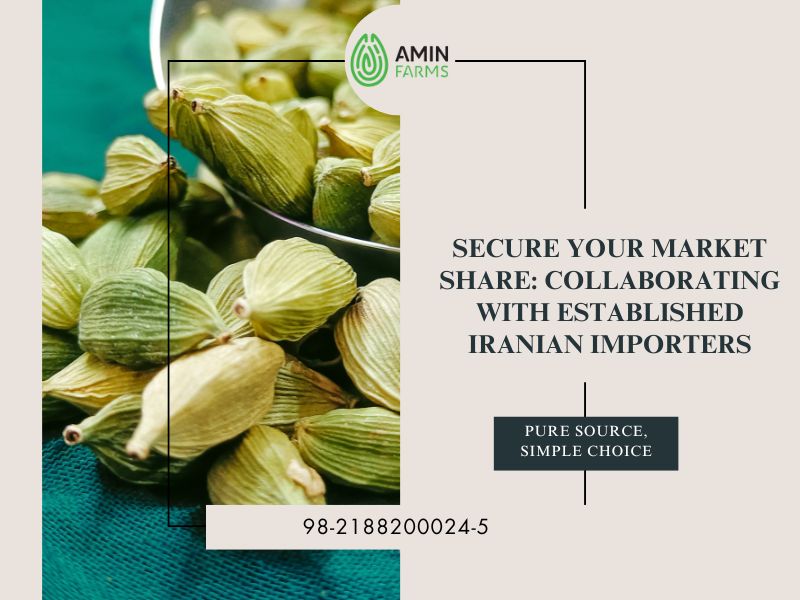
Secure Your Market Share: Collaborating with Established Iranian Importers
Going solo in international trade is a tough road. The real game-changer? Partnering with an experienced Iranian importer. They’re your local compass, navigating customs, distribution, and buyer relationships with ease. They understand the market’s heartbeat, turning significant risks into managed routines.
This partnership is the core of mastering sustainable cardamom export from India. It ensures your premium grades move from port to consumer without delay or drama.
For a seamless entry, aligning with a trusted local partner is key. This is precisely why many successful exporters choose to work with Amin Farms, a recognized name for consistent, high-grade cardamom that meets exacting standards. It’s the smartest shortcut to turning your exceptional product into their trusted staple.